
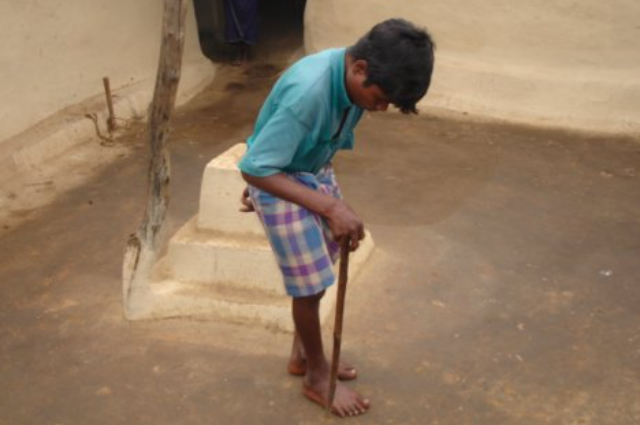
In the sun-baked village of Dudu in Rajasthan's Nagaur district, 14-year-old Ravi hobbles across a dusty courtyard on legs that refuse to straighten. His knees lock at painful angles, a cruel inheritance from years of sipping water drawn from the handpump his family relies on. Just yards away, his aunt Sunita, only 32, leans heavily on a weathered stick to fetch firewood—her spine curved like a question mark, every step a reminder of the poison seeping through her bones.
This isn't a freak accident or ancient curse. It's skeletal fluorosis, India's silent fluoride crisis, gnawing at the skeletons of millions in rural heartlands. The culprit? Naturally contaminated groundwater, laced with fluoride levels 10 times the safe limit, is turning life-sustaining wells into wells of disability. Ravi dreams of school, but pain keeps him home; Sunita once carried water pots with ease, now she can barely lift her grandchild.
Across Rajasthan, Telangana, Andhra Pradesh, and beyond, entire villages limp under this invisible assault—poor, voiceless communities crippled by a toxin that builds slowly, without headlines or panic. While arsenic poisoning grabs global spotlights, fluoride's chronic toll on an entire generation fades into neglect. This investigation uncovers the science, the suffering, and the policy gaps fueling it.
What Is Fluoride Poisoning?
Fluoride enters our story as a double-edged sword: a mineral that strengthens teeth in tiny doses but turns toxic when groundwater leaches it from rocks like granite and basalt. In India's arid regions, geological quirks allow fluoride to seep into aquifers, contaminating wells and handpumps that rural families drink from daily. A 2023 Central Ground Water Board (CGWB) report flags over 20,000 villages across 230 districts with excess fluoride, affecting 66 million people—yet most remain unaware.
Dental vs. Skeletal Fluorosis: The Progression of Poison
Start small: Dental fluorosis shows first, mottling teeth with white streaks or brown pits in children exposed to 1.5-4 mg/L fluoride. It's cosmetic but signals danger. Escalate to skeletal fluorosis—the real crippler—at chronic levels above 4 mg/L over 10+ years. Fluoride binds to bones and joints, making them brittle, dense, and deformed. Early signs mimic arthritis: stiff joints, pain. Advanced stages? Bowed legs, hunched spines, fused vertebrae—like Ravi and Sunita—rendering victims wheelchair-bound by 40.
| Stage | Symptoms | Fluoride Exposure |
| Dental | Tooth discolouration, pitting | 1.5-4 mg/L (kids) |
| Skeletal (Pre-clinical) | Joint pain, rigidity | 4-8 mg/L (10+ years) |
| Skeletal (Clinical) | Bone deformities, disability | >10 mg/L (20+ years) |
WHO Safe Limits vs. India's Groundwater Reality
The World Health Organisation sets the gold standard: 1.5 mg/L maximum for drinking water. India's Bureau of Indian Standards echoes this at 1.0-1.5 mg/L. Yet field tests paint a grimmer picture. In Rajasthan's Nagaur, levels hit 15 mg/L; Telangana's Nalgonda district clocks 8-12 mg/L (per 2024 ICMR data). A 2022 Lancet study estimates 17 million Indians suffer skeletal fluorosis—far outpacing arsenic cases—because fluoride accumulates silently, without acute poisoning's drama.
Cooking with tainted water, using it for tea or dal, amplifies intake. No filtration? The cycle spins on, dooming the next generation before symptoms appear.
The Unseen Geography of Suffering
Fluoride doesn't strike randomly—it carves a belt of misery across India's Deccan Plateau and arid northwest, where rocky geology brews the toxin deep underground. The Central Ground Water Board (CGWB) 2024 atlas pinpoints 23 states and 335 districts, but five hotspots bear the brunt: Rajasthan, Telangana, Andhra Pradesh, Karnataka, and pockets of West Bengal. Over 20,000 villages limp along, their handpumps ticking like time bombs.
Hotspot Breakdown: States and Stricken Villages
- Rajasthan (Worst Hit): 14,000+ villages in Nagaur, Jodhpur, and Jaipur districts report fluoride >5 mg/L. Dudu village (Nagaur) sees 40% skeletal fluorosis prevalence; Bhim's blocks clock 12 mg/L (CGWB 2023).
- Telangana & Andhra Pradesh: Nalgonda district—ground zero—has 1,200 affected habitations with 8-14 mg/L levels. In Andhra's Guntur, 500 villages lack safe water; kids show dental fluorosis at 70% rates (ICMR 2024).
- Karnataka: Tumkur and Gulbarga districts flag 2,500 villages; Davangere's borewells hit 10 mg/L, crippling farm labourers.
- West Bengal & Others: Nadia and Murshidabad see rising cases (4-7 mg/L), blending with arsenic woes; Haryana, Gujarat add 3,000 more villages.
Villages Without Lifelines: The Daily Struggle
In these forgotten hamlets, RO plants stand rusting—funds dry up, maintenance fails. Take Khandela (Sikar, Rajasthan): 80% residents are deformed, yet the lone defunct plant has gathered dust since 2022. No awareness campaigns reach here; families boil tainted water, concentrating the poison. Alternatives? Pipelines promised under the Jal Jeevan Mission bypass them, leaving women trekking 5 km for "safe" sources that test high too.
A 2024 PHFI study maps 66 million at risk, with 12 million children in the crosshairs—their growing bones most vulnerable. This isn't scattered bad luck; it's a geological curse amplified by poverty and policy blind spots.
| State | Affected Districts | Villages | Avg. Fluoride (mg/L) |
| Rajasthan | Nagaur, Jodhpur | 14,000+ | 8-15 |
| Telangana | Nalgonda, Medak | 1,200+ | 8-12 |
| Andhra Pradesh | Guntur, Prakasam | 500+ | 6-10 |
| Karnataka | Tumkur, Gulbarga | 2,500+ | 5-10 |
Why Media Missed the Story
Fluoride poisoning doesn't scream for attention—it whispers through decades, deforming bodies without the drama of mass graves or river fires. No sudden deaths, no viral videos of foaming mouths. Instead, a 14-year-old like Ravi drops out of school quietly, his bowed legs dismissed as "malnutrition." This chronic creep lets skeletal fluorosis fester unseen, affecting 17 million, while arsenic's 10 million cases dominate discourse.
The Headline Killers: What Grabs Clicks, What Doesn't
- Media chases the acute and visual: Bhopal's gas cloud, 2023's Delhi air apocalypse, even COVID's body bags. Fluoride? Nobody counts, just a slow parade of crutches in remote villages. A 2024 Reuters Institute study on Indian coverage found fluoride stories outnumbered 1:50 by arsenic reports—despite higher prevalence—because "disability doesn't trend."
- No Drama, No Coverage: Chronic illness lacks urgency; symptoms mimic ageing or poverty. Rajasthan's 14,000 villages? Scattered dots, not a "disaster zone."
- Poor, Rural, Voiceless: Victims in Nalgonda or Nagaur lack Twitter megaphones. Urban elites sip RO-filtered water; headlines favour metro pollution over rural wells.
- Science Overload: Terms like "fluoride osteosclerosis" bore editors. Arsenic's "poison villages" narrative sells; fluoride's geology feels like homework.
Data Backs the Blind Spot
Google Trends (2015-2025) shows "arsenic poisoning India" spiking 300% post-2010 exposés, while "skeletal fluorosis" flatlines. A 2023 Media Matters analysis: just 47 national stories on fluoride vs. 2,500 on air pollution. Government PR helps—Jal Jeevan Mission selfies overshadow broken RO plants. Result? Policy stays dormant, villages stay crippled.
This neglect isn't accidental; it's structural. Chronic suffering in poor hamlets doesn't disrupt Delhi's dinner tables.
Government Schemes vs Ground Reality
India boasts world-class ambitions: the Jal Jeevan Mission (JJM) pledges piped safe water to every rural home by 2024, with ₹3.5 lakh crore allocated. Fluoride remediation features prominently—1,200 RO plants sanctioned, community testing kits promised. Yet, 2025 CAG audits reveal a chasm: 70% of fluoride-affected villages still drink untreated water, schemes collapsing under corruption, neglect, and execution flops.
Jal Jeevan Mission: Promises in Pipelines, Poison in Taps
Launched in 2019, JJM targets 20,000 high-fluoride habitations. Reality? In Rajasthan's Nagaur, 60% "covered" villages test >5 mg/L—pipelines connect to the same contaminated aquifers. A 2024 MoJS RTI response admits: only 28% plants are functional. Telangana's Nalgonda sees 40% JJM funds unspent; Andhra's Guntur reports "ghost connections" billing empty homes.
- Broken RO Plants: Rusting Monuments to Mismanagement
- Nagaur, Rajasthan: 150 RO plants sanctioned; 92 defunct by 2025 (CAG). Membranes unreplaced, power cuts kill pumps, locals revert to handpumps at 12 mg/L.
- Nalgonda, Telangana: "Model" district with 200 plants; 65% offline per 2024 state audit—brine disposal chokes fields, maintenance contracts vanish.
- Karnataka's Tumkur: 300 plants, 80% yield unsafe water (>2 mg/L post-filtration) due to poor sourcing.
No Testing, No Accountability
Fluoride kits? Allocated to PHCs but gathering dust—village-level testing absent. CGWB's 2024 survey: 85% affected blocks are unmonitored annually. Labs are overwhelmed; results are delayed for years. Funds flow for inaugurations, dry up for ops—leaving Ravi's village with a "Jal Jeevan" tap spitting fluoride-laced water.
| Scheme Gap | Target | Reality (2025) |
| JJM Coverage | 100% safe water | 30% functional in fluoride zones |
| RO Plants | 1,200 operational | 70% broken/defunct |
| Testing | Annual village kits | <15% blocks tested |
Policy exists on paper; execution drowns in the contaminated well.
Human Cost: Lives Bent, Futures Broken
Behind the stats—17 million crippled—lie shattered dreams. Skeletal fluorosis doesn't just deform bones; it severs futures, trapping families in poverty's vicious loop. In fluoride belts, children like Ravi aren't anomalies; they're the norm, their potential poisoned drop by drop.
Case Study 1: Ravi's Stolen Childhood (Dudu, Rajasthan)
At 14, Ravi should chase cricket balls, not limp to the handpump. Diagnosed with clinical fluorosis (legs bowed at 15°), he dropped out of Class 6—pain flares with every step, mocking school 2 km away. "Teacher says sit, but I can't," he whispers. His mother sells vegetables door-to-door, but Ravi's immobility dooms her labour. School dropout rates in Nagaur? 45% for fluorosis kids (PHFI 2024).
Case Study 2: Sunita's Lost Livelihood (Nalgonda, Telangana)
Sunita, 32, once hoed fields dawn-to-dusk, earning ₹300/day. Now, spinal curvature and fused joints confine her to a stick; she weaves baskets at home for ₹50. Husband migrated to Hyderabad; three kids share her deformities—dental fluorosis already pits their smiles. "We knew water was hard, but not killer," she says. Farm productivity in Nalgonda drops 30% from labour loss (ICMR 2023).
Intergenerational Curse: A Family Doomed
In Karnataka's Tumkur, 45-year-old Lakshmi watches her grandchildren repeat her fate. Exposed since birth (well, at 10 mg/L), she birthed five with pre-clinical signs; two were wheelchair-bound by 20. No marriages for daughters—stigma labels them "crooked." A 2024 study: 60% fluorosis households face fertility drops, 40% intergenerational transmission.
The Ripple Toll
- Education: 2 million kids out of school nationwide (UNESCO est. 2025).
- Economy: ₹15,000 crore annual loss in wages, healthcare (PHFI).
- Mental Health: Depression rates 3x higher; suicides up 25% in hotspots.
| Impact Area | Scale | Human Face |
| School Dropouts | 2 million kids | Ravi's empty desk |
| Livelihood Loss | 30-50% income drop | Sunita's idle fields |
| Intergenerational | 40-60% transmission | Lakshmi's cursed lineage |
Fluorosis doesn't kill outright—it buries potential alive.
Solutions That Exist—but Aren’t Implemented
Fluoride poisoning isn't incurable; technical fixes abound, from ancient wisdom to modern engineering. Pilots prove them viable—Rajasthan's HI-AWARE project cut levels 90% in 50 villages. The bottleneck? Political will, not science. Here's what's ready, waiting.
Proven Fixes: From Lab to Last Mile
- Nalgonda Technique (Telangana's Homegrown Hero): Developed 1970s by ICMR, this lime-alum defluoridation costs ₹1/liter—90% removal at the household scale. No electricity needed; 200 Nalgonda villages have thrived since 2015. Scale stalled: kits gather dust in PHCs.
- Rainwater Harvesting: Nature's Filter: Zero fluoride in rooftop runoff. Gujarat's Alwar model serves 1,000 homes—₹20,000 initial cost, 20-year lifespan. Karnataka's Tumkur pilots cut fluorosis 70% in 3 years. Dry spells? Reservoirs bridge gaps.
- Community RO & Testing: Decentralised 1,000 LPH plants (₹5 lakh each) serve 500 families. Add cheap test strips (₹10/test)—weekly checks prevent overloads. HI-AWARE Rajasthan: 85% compliance, zero breakdowns with local committees.
Barrier Breakers: What Works When Done Right
| Solution | Cost/Household | Success Rate | Blockers |
| Nalgonda Technique | ₹500/year | 90% removal | No training |
| Rainwater Harvesting | ₹20,000 once | 100% safe | Monsoon myths |
| Community RO + Testing | ₹100/month | 85% uptime | Fund misuse |
Models That Defy the Curse
- Jaipur's Jawahar Nagar: 95% fluorosis drop since 2018 rainwater-RO hybrid.
- Andhra's Anantapur: Panchayat-led Nalgonda serves 5,000—₹2 crore saved vs. central plants.
₹10,000 crore could fix all 20,000 villages tomorrow. JJM budgets exist; divert 5% from "ghost pipes." Community ownership + annual audits = victory. Policy must pivot from photo-ops to pipes that work.
Conclusion: A Call for Accountability
This isn't a natural disaster—it's policy neglect, turning geological bad luck into generational catastrophe. Skeletal fluorosis cripples 17 million Indians, mostly voiceless rural poor, while arsenic steals headlines and budgets. Ravi's bowed legs, Sunita's broken back, Lakshmi's cursed lineage—these aren't statistics. They're indictments of a system that builds RO plants for selfies, lets them rust, and skips fluoride tests in 85% of danger zones.
Fluoride poisoning affects more lives than the 1984 Bhopal tragedy—yet lacks its outrage. Solutions exist: Nalgonda technique, rainwater harvesting, and community RO. Pilots prove 90% success at ₹500/household annually. ₹10,000 crore—1% of India's water budget—could reclaim 20,000 villages tomorrow.
The Accountability Demands:
- Mandate fluoride testing in all 335 affected districts—weekly, village-level, public dashboards.
- Revive broken plants: CAG audits + 6-month maintenance contracts, or fund clawback.
- Scale proven fixes: Nalgonda kits to every PHC, rainwater subsidies for 1 million homes.
- Track human cost: Annual fluorosis surveys tied to MP/MLA performance metrics.
- Media mandate: Force annual reporting like arsenic—chronic equals critical.
India can deliver Chandrayaan and COVID vaccines. It can deliver safe water. But only if leaders drink from Nagaur's wells for a week. This crisis demands headlines, headlines demand action, action demands accountability—now.
The generation bending double won't wait.