
Imagine sitting across from a patient whose lung scans reveal years of accumulated damage.
The question almost asks itself.
"How long have you been smoking?"
The patient shakes their head.
"I've never smoked a cigarette in my life."
At first, the answer sounds impossible. For decades, darkened lungs and chronic respiratory disease were closely associated with tobacco. Yet modern medicine has uncovered an uncomfortable reality: millions of people are exposing their lungs to harmful particles every day without ever lighting a cigarette.
Their source is the air around them.
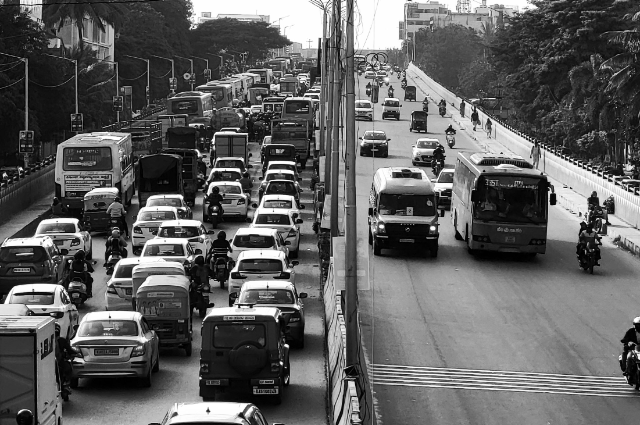
Every morning, commuters weave through traffic, children walk to school, and workers spend hours outdoors. With each breath, microscopic particles from vehicle exhaust, construction sites, industrial emissions, road dust, crop burning, and household fuels enter the body. Most are far too small to see. There is no smell warning of danger, no label listing side effects, and no moment when a person consciously chooses to inhale them.
Yet the lungs remember every breath.
Unlike a cigarette, pollution does not arrive as a personal habit. It arrives as part of daily life. A crowded intersection, a traffic jam, a smoky winter morning, or a haze hanging over a city skyline can all become sources of exposure. The damage accumulates quietly, often over years, while people continue working, studying, raising families, and believing that serious lung disease happens to someone else.
Scientists have spent decades investigating what prolonged exposure to polluted air does to the human body. Their findings are deeply concerning. Tiny pollutants can travel deep into the lungs, trigger chronic inflammation, and even pass into the bloodstream, affecting organs far beyond the respiratory system. What begins as an environmental problem ultimately becomes a health crisis.
This danger is especially significant in countries where unhealthy air quality affects millions of people for weeks or even months each year. In such places, exposure is not limited to factory workers or traffic police. It becomes a shared reality for entire populations.
The most troubling aspect of air pollution is not that it is harmful.
It is that it is ordinary.
Most people would never willingly smoke a pack of cigarettes every day. Yet many spend years inhaling polluted air with little awareness of what it may be doing inside their bodies.
The world's most dangerous inhaled substance may not be tobacco.
It may be the air we have learned to live with.
The Enemy Too Small to See
Human beings are naturally afraid of dangers they can see.
We fear approaching storms, rising floodwaters, and spreading fire because the threat is visible. Air pollution is different. Its most dangerous component is often completely invisible, allowing it to enter the body unnoticed with every breath.
Among the many pollutants found in urban air, none has drawn more concern from scientists than PM2.5, tiny particulate matter measuring less than 2.5 micrometres in diameter. To put that into perspective, a single human hair is roughly thirty times wider.
Their size is precisely what makes them so dangerous.
The body is equipped with remarkable defence mechanisms. Nose hairs, mucus, and the structures of the upper respiratory tract help trap larger particles before they can reach the lungs. PM2.5, however, is small enough to slip past many of these barriers. Instead of being filtered out, the particles travel deep into the respiratory system and settle in the delicate air sacs responsible for transferring oxygen into the blood.
The journey does not necessarily end there.
Research has shown that some of these microscopic particles can cross the lung's protective barrier and enter the bloodstream, allowing pollution to travel throughout the body. Once inside, they trigger inflammation and oxidative stress, a process similar to slow biological wear and tear that damages cells and tissues over time.
What begins as polluted air can therefore become a problem for multiple organs.
The lungs struggle to clear the invading particles. Blood vessels become inflamed. The heart works under greater strain. Even the brain may be affected as pollutants circulate through the body. Scientists now understand that exposure to PM2.5 is associated with a wide range of health problems, extending far beyond coughing or breathing difficulties.
This realisation has transformed how experts think about air pollution.
It is no longer viewed merely as an environmental issue or a respiratory concern.
It is increasingly recognised as a whole-body health threat, capable of influencing how long people live, how well their organs function, and how healthy future generations may become.
The greatest danger is not what we can see floating in the air.
It is what we cannot see entering our bodies every single day.
When Every Breath Reaches the Heart
For much of the last century, air pollution was viewed primarily as a respiratory problem.
People associated dirty air with coughing, irritated eyes, or difficulty breathing. The lungs were seen as the main victims, and the danger seemed limited to those already suffering from respiratory illness.
Modern science tells a very different story.
Researchers now understand that polluted air affects far more than the respiratory system. Once microscopic particles enter the lungs and cross into the bloodstream, they can travel throughout the body, triggering inflammation in places far removed from where they were inhaled.
This is why long-term exposure to PM2.5 has been linked to a wide range of serious health conditions, including:
- Heart disease
- Stroke
- Lung cancer
- Chronic Obstructive Pulmonary Disease (COPD)
- Asthma attacks
- Respiratory infections
- Reduced lung function
- Premature death
The connection between pollution and heart disease is particularly alarming. Every breath of polluted air can contribute to inflammation within blood vessels, making them narrower, less flexible, and more vulnerable to blockages. Over time, this increases the likelihood of heart attacks and strokes, two of the world's leading causes of death.
In other words, polluted air does not simply stay in the lungs.
It enters the body's transportation network.
The bloodstream carries oxygen to every organ. Unfortunately, it can also carry the consequences of pollution. As inflammation spreads, the heart is forced to work harder, the immune system remains under constant stress, and vital organs face damage that accumulates silently over years.
What makes this threat especially dangerous is its invisibility.
A person exposed to polluted air rarely feels immediate harm. There is no sudden pain, no warning alarm, and often no obvious symptom. The damage develops gradually, hidden beneath everyday life, until it appears as a chronic illness years later.
The human body responds to pollution as it would to any foreign invader.
The difference is that most invaders eventually leave.
Air pollution returns with the next breath.
And the next.
And the next.
That is the tragedy of living in polluted environments. The body is constantly fighting a battle it never truly wins, defending itself against an enemy that arrives thousands of times every day through the simple act of breathing.
Growing Up Breathing Risk
Adults exposed to air pollution often have one advantage.
Many spent at least part of their lives breathing cleaner air.
Millions of children do not.
For them, pollution is not an occasional environmental problem or a seasonal inconvenience. It is the atmosphere in which they grow, learn, play, and develop. From the moment they take their first breath, their bodies begin interacting with the environment around them, and that environment increasingly contains pollutants that previous generations encountered in far smaller amounts.
This is particularly concerning because a child's lungs are still under construction.
Unlike adult lungs, which are largely developed, children's respiratory systems continue growing throughout childhood and adolescence. Every year of development matters. When harmful pollutants enter the lungs during these critical stages, they can interfere with normal growth and reduce the maximum lung capacity a child may achieve later in life.
Research has linked long-term exposure to air pollution in children with:
- Reduced lung growth
- Increased risk of asthma
- More frequent respiratory infections
- Impaired cognitive development
- Greater vulnerability to chronic diseases later in life
The impact extends beyond breathing.
Scientists are increasingly finding connections between pollution exposure and the developing brain. A child struggling to breathe is visible. A child whose concentration, learning ability, or neurological development is subtly affected may not be. Yet the consequences can follow them for years.
What makes this reality especially troubling is that children have little control over their exposure.
They cannot choose where roads are built.
They cannot regulate factory emissions.
They cannot decide the quality of the air outside their classroom window.
They simply inherit the environment adults create.
For a child, air pollution is not merely today's health risk.
It can become tomorrow's limitation.
A reduced lung capacity may affect athletic performance. Chronic respiratory problems may increase hospital visits. Repeated illness can interrupt education. The effects ripple outward, influencing opportunities and quality of life long before adulthood arrives.
Before children choose a school, a profession, or a path through life, the air around them may already be shaping what their bodies can achieve.
And perhaps that is the most unsettling truth about air pollution.
Its youngest victims have done nothing to earn the risk, yet they may live with its consequences the longest.
The Risk We Cannot Simply Opt Out Of
When a lifelong smoker develops lung disease, the cause appears straightforward.
The person made a choice, repeated it for years, and eventually paid the price.
Air pollution does not follow the same logic.
Most people exposed to polluted air never agreed to the risk. They did not buy it, consume it, or willingly invite it into their bodies. Yet every day, millions inhale pollutants simply because they need to travel to work, attend school, earn a living, or step outside their homes.
People can quit cigarettes.
They cannot quit breathing.
That reality makes air pollution one of the most difficult public health challenges of the modern age. Unlike many health risks, exposure is often involuntary. A construction worker surrounded by dust, a student waiting for a school bus, a taxi driver navigating congested roads, and an elderly woman walking to a neighbourhood market may lead completely different lives, yet all can inhale the same harmful particles.
Pollution does not discriminate by profession, age, or income.
Its reach extends wherever the air carries it.
Perhaps the most deceptive aspect of air pollution is how slowly it works. Human beings are conditioned to fear immediate dangers. We react to accidents, natural disasters, and sudden illness because the consequences are visible. Pollution operates differently. It accumulates silently, often without causing obvious symptoms for years.
One breath seems harmless.
A morning walk seems harmless.
A day spent in traffic seems harmless.
Even a month may seem harmless.
But pollution is not measured in breaths.
It is measured in millions of them.
That is why the danger often feels distant until it becomes personal. By the time persistent coughing develops, lung function declines, or a serious disease is diagnosed, the exposure that contributed to it may have begun years or even decades earlier.
The body keeps a record long after the mind forgets.
Every polluted day leaves a small mark. Most are too small to notice in isolation. Together, they can shape health outcomes for an entire lifetime.
And that is the illusion of personal choice.
We often speak about health as though it depends entirely on individual decisions. Eat better. Exercise more. Avoid smoking.
All good advice.
But some risks cannot be solved through willpower alone.
No matter how healthy a person tries to be, they cannot choose not to breathe the air around them.
That is what makes air pollution different.
It is a health threat that enters our bodies not through a bad habit, but through a basic requirement of being alive.
What Individuals Can Actually Do
The uncomfortable truth about air pollution is that there is no perfect defence against it.
No mask can filter every particle. No air purifier can clean an entire city. No food can erase years of exposure. If polluted air is the problem, cleaner air remains the only complete solution.
Until that happens, however, individuals are not powerless.
Science suggests that several practical steps can reduce exposure and help the body cope with some of the stress caused by pollution.
One of the most effective measures is wearing a properly fitted N95, KN95, or FFP2 respirator during periods of poor air quality. Unlike cloth masks, these respirators are specifically designed to filter a large proportion of fine particles, including PM2.5, reducing the amount that reaches the lungs.
Home environments matter too.
Most people spend the majority of their time indoors, making indoor air quality especially important. A HEPA air purifier can remove a significant amount of airborne particulate matter from enclosed spaces. For many experts, the bedroom is the most valuable place to start because people spend several uninterrupted hours there every night.
Physical activity presents another challenge. Exercise is essential for health, but during periods of severe pollution, intense outdoor workouts can increase exposure by causing people to breathe faster and deeper. Checking the Air Quality Index (AQI) before exercising and choosing indoor alternatives on heavily polluted days can help limit the amount of harmful particles inhaled.
Diet cannot block pollution, but it may help the body respond more effectively to it.
Foods rich in antioxidants, such as amla, oranges, guava, berries, nuts, seeds, and omega-3 sources, help combat oxidative stress, one of the key mechanisms through which pollution harms cells. Similarly, anti-inflammatory foods including turmeric, ginger, garlic, and tulsi can form part of a healthy diet that supports overall well-being.
Simple habits matter as well. Staying adequately hydrated helps maintain the natural protective barriers of the respiratory system and supports the body's ability to clear mucus and trapped particles from the airways.
None of these measures can create clean air.
They cannot eliminate the pollution outside our windows or above our cities.
What they can do is reduce the burden placed on the body, lowering exposure where possible and helping vulnerable organs withstand a threat that many people face every day.
In a polluted world, protecting health often becomes a battle fought one breath at a time.
And while individuals can take important steps, they should not have to fight that battle alone.
What If the Problem Is Not Individual?
Whenever air pollution reaches dangerous levels, the advice is familiar.
Wear a mask.
Buy an air purifier.
Check the AQI before going outside.
Eat foods that support respiratory health.
All of these recommendations are sensible. They help reduce risk and give people some measure of control in an environment they cannot fully control.
But beneath this advice lies an uncomfortable question.
What if the problem is bigger than anything individuals can solve on their own?
After all, not everyone can afford a high-quality air purifier. Not every worker can stay indoors during peak pollution hours. Not every child can choose a school with filtered air. The ability to protect oneself often depends on income, location, and circumstances.
Clean air should not be a luxury product.
Yet in many places, it increasingly feels like one.
This reveals a limitation in the way pollution is often discussed. Public health campaigns tend to focus on personal responsibility because individual actions are easier to communicate. They tell people how to reduce exposure, but rarely address why exposure became necessary to manage in the first place.
No society can purchase its way out of polluted air.
A city cannot solve a pollution crisis by selling more masks. A nation cannot protect future generations simply by recommending air purifiers. These tools reduce harm, but they do not remove its source.
The most effective solutions are collective.
Cleaner energy can reduce emissions from power generation. Stricter vehicle standards can cut pollutants from transportation. Better public transport can reduce traffic congestion. Smarter urban planning can separate residential areas from major pollution sources. Strong environmental enforcement can hold industries accountable when regulations are ignored.
These changes are rarely as visible as a person wearing a mask.
But they are far more powerful.
History shows that some of the world's biggest public health victories came not from individual choices, but from collective action. Clean drinking water, safer food systems, sewage treatment, and vaccination programs transformed health because societies addressed the source of the problem rather than asking individuals to navigate it alone.
Air pollution demands the same approach.
Because individual protection treats the symptom.
Cleaner air treats the cause.
And until that distinction becomes the centre of the conversation, millions of people will continue fighting a problem that was never created by a single person in the first place.
A Warning We Never Read
Every cigarette packet carries a warning.
Every smoker knows the risk, even if they choose to ignore it.
Air pollution is different.
It comes without labels, without packaging, and without our consent.
One arrives in a packet.
The other arrives with the sunrise.
Yet both enter the same lungs.
For generations, humanity treated clean air as something permanent, an invisible resource so abundant that few imagined it could become a public health crisis. We worried about what we drank and what we ate, but rarely about what we breathed. Air was simply there, surrounding us, sustaining us, asking nothing in return.
Today, that assumption is becoming harder to defend.
Every winter haze hanging over a city skyline, every air-quality alert flashing on a smartphone, and every child reaching for an inhaler tells the same story. The danger is no longer distant. It is not confined to factory zones or industrial corridors. It travels through neighbourhoods, schools, offices, and homes, affecting people who may never realise it until the consequences appear years later.
When people think about environmental threats, their minds often jump to melting glaciers, disappearing forests, or rising sea levels. These challenges are real and serious.
But there is another environmental threat that does not wait in the future.
It enters the body today.
With every breath.
That is what makes air pollution uniquely dangerous. It does not require a special trip, a risky decision, or a harmful habit. It reaches people during the most ordinary moments of life: walking to work, waiting at a traffic signal, playing in a park, or sleeping with a window open.
The body keeps inhaling.
The exposure keeps accumulating.
And the damage keeps growing.
Perhaps the greatest tragedy is not that polluted air exists.
It is that we have become accustomed to it.
We notice traffic jams. We notice noise. We notice extreme weather.
But the air itself often escapes our attention until it becomes impossible to ignore.
The world's most widespread health threat may not be the one people fear the most.
It may be the one they breathe every day.
Because unlike a cigarette, air pollution does not ask for permission.
And unlike a cigarette, avoiding it is not simply a matter of choice.
Until cleaner air becomes a collective priority rather than an individual responsibility, millions will continue inhaling a risk they never chose, carrying its consequences in silence, one breath at a time.
The world's most widely consumed harmful substance isn't sold in stores, taxed by governments, or carried in pockets. It's the air millions breathe every day.