
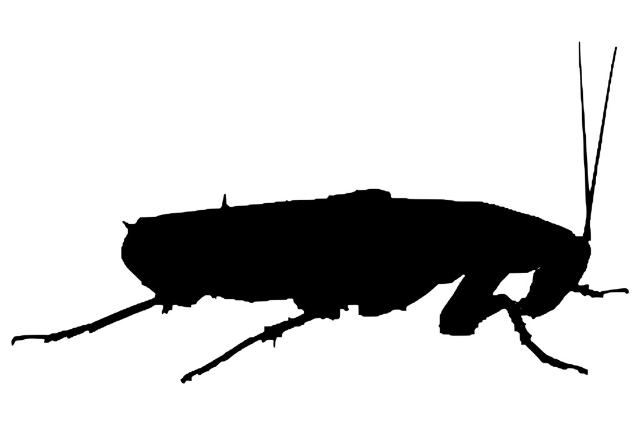
Image by Mohamed Hassan from Pixabay
Imagine standing before a panel of funding agencies and announcing:
"I want to study milk produced by a cockroach."
Most people would laugh.
For decades, cockroaches have symbolised disgust, disease, and survival in the darkest corners of human settlements. They are creatures we exterminate, not creatures we study for nutritional innovation.
Yet in 2016, an international team of researchers looked beyond the revulsion and asked a surprisingly serious question: How does a tiny insect provide enough nutrition to sustain its unborn offspring? What they discovered inside the embryos of the Pacific beetle cockroach would challenge conventional assumptions about nutrient storage and eventually earn the 2026 Ig Nobel Prize in Chemistry.
The Cockroach That Broke the Rules
When most people think of a cockroach, they imagine a resilient pest scurrying across a kitchen floor. Rarely does anyone associate the insect with motherhood, nourishment, or one of nature's most sophisticated survival strategies. Yet hidden within the dense forests of the Pacific region lives a remarkable species that challenges everything we assume about cockroaches.
Unlike the thousands of cockroach species that reproduce by laying eggs, Diploptera punctata, commonly known as the Pacific beetle cockroach, follows a very different path. It is one of the few known cockroach species that gives birth to live young. Instead of depositing eggs and leaving the next generation to fend for itself, the female carries developing embryos within a specialised brood sac. This biological arrangement resembles pregnancy more closely than the reproductive cycle most people associate with insects.
This unusual reproductive strategy presents a difficult biological problem. If the embryos remain inside the mother's body throughout development, how are they nourished? Evolution's answer is both elegant and extraordinary. The mother secretes a nutrient-rich, milk-like fluid that feeds her developing offspring. As the embryos consume this secretion, something remarkable happens. Inside their digestive systems, the nutrients crystallise into tiny protein-packed structures that act as concentrated reservoirs of energy.
For years, these microscopic crystals remained little more than a scientific curiosity. They were hidden from public attention and overshadowed by the insect's unpopular reputation. Yet to researchers, the crystals represented an evolutionary masterpiece. Nature had engineered a way to compress proteins, lipids, and sugars into an incredibly compact form, ensuring that growing embryos received a steady and efficient supply of nutrition in a limited space.
The discovery forces us to reconsider a common human habit: judging biological value based on appearance. We celebrate the milk produced by cows and admire the sophistication of mammals, but rarely imagine that an insect could develop a nutritional system of comparable scientific interest. The Pacific beetle cockroach reminds us that evolution does not care about beauty, popularity, or public perception. Its only concern is efficiency.
Long before scientists began analysing these crystals in laboratories, nature had already spent millions of years perfecting them. What appeared to be just another cockroach was, in reality, carrying one of the most fascinating examples of biological innovation ever observed in the insect world. And it was this hidden innovation that would eventually transform a seemingly bizarre observation into an award-winning scientific story.
Looking Beyond the Joke
The phrase "cockroach milk" was almost destined to become a headline. It combined two words that seemed completely incompatible: one associated with nutrition and comfort, the other with disgust and infestation. Predictably, much of the public reaction focused on the novelty of the discovery rather than its scientific significance. What many people saw as an amusing curiosity, however, researchers recognised as a complex biological phenomenon worthy of serious investigation.
Behind the unusual name lay years of painstaking research. Scientists from India, Japan, France, and the United States set out to understand the structure of the mysterious protein crystals found inside the embryos of Diploptera punctata. Rather than treating the crystals as a biological oddity, they approached them as a natural engineering solution created through millions of years of evolution. Using advanced X-ray crystallography techniques, the researchers mapped the crystals at an atomic level, revealing how nature had designed an exceptionally compact package for storing nutrients.
Their findings were remarkable. The crystals were not composed of protein alone. They contained a carefully balanced combination of proteins, fats, and sugars arranged in a tightly packed structure. This architecture allowed an extraordinary amount of nutrition to be stored within a microscopic space. Researchers estimated that these protein crystals contained more than three times the energy found in an equivalent mass of dairy milk, making them one of the most energy-dense naturally occurring nutritional substances ever examined.
Yet the true value of the discovery was never about finding a replacement for cow's milk. The research was important because it revealed an entirely different strategy for nutrient storage. In a world where scientists continuously search for ways to improve food preservation, protein stability, and nutritional efficiency, understanding how nature solves these challenges can provide insights that extend far beyond the insect kingdom. The tiny crystals inside a cockroach embryo represent a sophisticated biological design that human science is only beginning to understand.
Perhaps this is why the study eventually became a perfect candidate for the 2026 Ig Nobel Prize in Chemistry. The award celebrates research that first makes people laugh and then makes them think. At first glance, "cockroach milk" sounds like the punchline of a joke. On closer examination, it becomes a story about protein chemistry, evolutionary innovation, and the hidden brilliance of the natural world. What seemed absurd at the surface turned out to be a serious scientific investigation with implications far beyond its unconventional subject.
In many ways, the public's reaction to the discovery reveals as much about human nature as the study reveals about cockroaches. We are often quick to dismiss ideas that sound strange, yet some of the most valuable scientific insights emerge from questions that initially appear ridiculous. The lesson of this research is not that cockroaches produce a remarkable nutrient source. It is that curiosity often flourishes where common sense tells us not to look. And sometimes, the discoveries hidden behind a joke have the power to reshape our understanding of the living world.
Why Society Rewards Familiar Ideas and Mocks Strange Ones
The story of cockroach milk is not merely a scientific discovery. It is also a reflection of how society decides which ideas deserve attention and which are dismissed as absurd. When news of the research first reached the public, many people reacted with amusement. The words "cockroach" and "milk" sounded so incompatible that the study was reduced to a curiosity, shared more for shock value than for its scientific merit. Yet this reaction highlights a recurring pattern in human history: we are often fascinated by discoveries only after they have been proven valuable.
Science has never advanced solely through safe and predictable questions. Many of the breakthroughs that transformed human understanding began as ideas that seemed strange, unnecessary, or even ridiculous. What separates a groundbreaking discovery from a laughable idea is not how unconventional it sounds, but the rigour with which it is investigated. The researchers studying Diploptera punctata were not trying to create a sensational headline. They were attempting to understand how evolution had solved a biological challenge, and their work revealed a mechanism far more sophisticated than anyone expected.
This is precisely why the discovery became a fitting recipient of the 2026 Ig Nobel Prize in Chemistry. Unlike the traditional Nobel Prizes, the Ig Nobel Prizes celebrate research that "first makes people laugh, and then makes them think." The award does not mock science; rather, it recognises the value of curiosity-driven investigations that challenge conventional assumptions. In honouring the cockroach milk study, the award highlighted an important truth: unusual questions can lead to serious insights.
The tendency to dismiss unfamiliar ideas stems from a deeply human instinct. We trust what is familiar and often view the unknown with scepticism. A glass of cow's milk feels normal because it is woven into everyday life. Nutrient-rich protein crystals produced by a cockroach embryo sound unsettling because they exist outside our experience. Yet nature does not organise its inventions according to human comfort. Evolution rewards efficiency, not popularity. Whether a solution emerges in a majestic mammal or an insect commonly regarded as a pest is irrelevant to the laws of biology.
The cockroach milk story serves as a reminder that innovation rarely arrives in attractive packaging. Some discoveries emerge from advanced laboratories and billion-dollar research programs. Others begin in places that seem insignificant, hidden inside organisms that most people would prefer to avoid. By laughing at an idea before understanding it, society risks overlooking valuable lessons concealed beneath its unusual appearance.
Perhaps the greatest irony is that the feature which made this research famous, its apparent absurdity, was also the reason it was initially underestimated. What began as a study that many considered a scientific oddity ultimately revealed a remarkable example of biological efficiency and earned international recognition. The journey from ridicule to respect demonstrates that scientific progress depends not only on answers, but also on the courage to ask questions that others might dismiss.
In the end, the real lesson extends far beyond cockroaches. Every era produces ideas that seem strange until evidence forces us to reconsider them. The challenge for science, and for society, is to remain curious long enough to discover whether today's joke might become tomorrow's breakthrough.
The Uncomfortable Lesson for Innovation
One of the most overlooked truths about innovation is that it rarely arrives in a form that people immediately admire. Society often associates valuable discoveries with prestigious institutions, sophisticated technologies, and ideas that appear logical from the outset. Yet history repeatedly shows that transformative insights frequently emerge from unexpected places. The story of cockroach milk challenges our assumptions about where knowledge resides and forces us to confront an uncomfortable reality: sometimes we ignore important discoveries simply because they come from sources we consider insignificant.
The Pacific beetle cockroach is hardly a creature that inspires curiosity in the general public. Unlike dolphins, elephants, or other celebrated animals, cockroaches evoke discomfort and disgust. This emotional response creates an invisible bias. When people hear that scientists have spent years studying nutrient crystals produced by a cockroach, their first instinct is to question the purpose of such research. However, science advances not by following human preferences, but by investigating how nature works. The remarkable nutrient-storage system found in Diploptera punctata exists regardless of whether humans find it appealing.
Nature itself offers a powerful lesson in humility. Evolution does not reward beauty, status, or popularity. It rewards efficiency. Over millions of years, organisms develop solutions to survival challenges through relentless adaptation. The protein crystals discovered within cockroach embryos are an example of this process. They demonstrate how living systems can store large amounts of energy in extraordinarily compact forms, providing nourishment exactly where and when it is needed. What appears to be an ordinary insect has, in fact, evolved a biological mechanism sophisticated enough to capture the attention of researchers around the world.
This lesson extends far beyond biology. Many groundbreaking ideas encounter resistance because they challenge established expectations. People tend to accept innovations that fit familiar narratives while dismissing those that seem unusual. As a result, unconventional research is often forced to prove its value repeatedly before receiving recognition. The cockroach milk study followed a similar path. For years, it existed largely outside public attention, overshadowed by the novelty of its subject. Only later did broader audiences begin to appreciate the scientific significance hidden beneath the headline.
The danger of this mindset is that it can discourage exploration. If researchers investigated only topics that appeared respectable or commercially attractive from the beginning, countless discoveries would never be made. Curiosity-driven research thrives on questions that seem improbable, unusual, or even absurd. The willingness to pursue those questions is often what separates scientific progress from scientific stagnation. Behind every breakthrough lies a moment when someone chose to explore what others ignored.
Perhaps this is the most valuable takeaway from the story of cockroach milk. The discovery is not important because it introduces a new food source or because it generated unusual headlines. It matters because it demonstrates that valuable knowledge can emerge from the least expected corners of the natural world. Innovation often hides behind discomfort, scepticism, and disbelief. Those who look beyond initial impressions are the ones most likely to uncover something extraordinary.
In an age driven by instant opinions and short attention spans, the cockroach milk story reminds us of a simple but profound principle: greatness is not determined by appearances. Whether an idea originates from a celebrated laboratory, a remote ecosystem, or a humble insect, its value should be measured by evidence rather than perception. Sometimes the discoveries that change how we see the world are hidden in places most people never think to look.
What the Discovery Does Not Mean
As the story of cockroach milk gained international attention following the 2026 Ig Nobel Prize, it also generated a wave of misconceptions. Headlines highlighting that cockroach milk contains more than three times the energy of dairy milk led some readers to believe that scientists had discovered the next revolutionary superfood. In reality, the research tells a far more nuanced story.
First, the substance commonly referred to as "cockroach milk" is not milk in the traditional sense. Unlike cow's milk, which can be collected and consumed directly, the nutrient-rich material studied by researchers consists of microscopic protein crystals formed inside the embryos of the Pacific beetle cockroach, Diploptera punctata. These crystals develop as the embryos process the mother's milk-like secretion, creating a highly concentrated package of nutrients. The discovery was therefore focused on understanding a biological mechanism rather than identifying a new beverage for human consumption.
Another common misunderstanding is that a higher energy content automatically makes a substance better for human nutrition. While the crystals contain an impressive concentration of proteins, fats, and sugars, nutritional value is not measured by energy density alone. Human dietary needs are complex and depend on factors such as digestibility, safety, availability, and metabolic effects. A nutrient-rich substance designed by evolution for a developing cockroach embryo cannot automatically be assumed to provide similar benefits for humans. Scientists themselves have consistently cautioned against such simplistic conclusions.
Practical limitations further distance the discovery from commercial reality. Producing meaningful quantities of these protein crystals would be extraordinarily difficult. Unlike dairy farming, there is currently no scalable method to harvest the crystals efficiently, and the process would be both economically and biologically impractical. As a result, the research has never been about creating a substitute for conventional milk products or introducing cockroach-derived foods into supermarkets.
The true significance of the study lies elsewhere. By uncovering how these crystals store large amounts of nutrients within a remarkably compact structure, researchers gained valuable insight into protein crystallisation, nutrient packaging, and biological efficiency. Such knowledge may one day contribute to advances in areas ranging from food science to biotechnology, not because humans will consume cockroach milk, but because understanding nature's solutions often inspires new scientific possibilities.
This distinction is important because it highlights a broader challenge in science communication. Extraordinary discoveries are often reduced to catchy headlines that emphasise novelty while overlooking context. The real achievement of the cockroach milk research was not the identification of an exotic food source. It was the revelation that even an organism as overlooked as a cockroach can possess biological innovations worthy of global scientific attention. The value of the discovery lies not in what people might someday drink, but in what humanity can learn from nature's remarkable capacity for innovation.
The Real Story Behind the Prize
At first glance, the 2026 Ig Nobel Prize-winning study appears to be a story about an unusual biological discovery. It is easy to focus on the headline: scientists found that protein crystals derived from the milk-like secretion of a cockroach contain more than three times the energy of dairy milk. The finding is certainly fascinating, and its unusual nature is precisely what captured public attention. Yet reducing the research to a quirky fact about cockroaches misses the larger and more meaningful story.
The real significance of the discovery lies in the mindset that made it possible. Years before the research received international recognition, a group of scientists chose to investigate a question that many people would have considered trivial, bizarre, or even laughable. They looked beyond the insect's reputation and saw an opportunity to understand how evolution had solved a complex biological challenge. Their curiosity led them to uncover a sophisticated nutrient-storage system hidden within one of the world's most misunderstood creatures.
In many ways, the journey of this research mirrors the journey of scientific progress itself. Society often celebrates discoveries only after their value becomes obvious. We admire breakthroughs once they are proven, but we rarely appreciate the uncertainty that accompanies them in the beginning. Every major advancement starts with a question. Sometimes that question concerns space exploration, medicine, or artificial intelligence. At other times, it concerns a tiny protein crystal found inside a cockroach embryo. The importance of the question is not determined by how impressive it sounds, but by what it reveals about the world around us.
The philosophy of the Ig Nobel Prize perfectly captures this idea. The award honours work that first makes people laugh and then makes them think. Few studies embody that principle more effectively than the research on cockroach milk proteins. What began as an amusing headline gradually transformed into a powerful reminder that nature still holds countless secrets waiting to be discovered. Beneath the humour was a serious scientific achievement involving structural biology, evolutionary adaptation, and the remarkable efficiency of natural systems.
Perhaps the most valuable lesson is that innovation often emerges from places we least expect. The world tends to search for answers in prestigious laboratories, advanced technologies, and well-known institutions. Yet some of the most profound insights can originate from organisms that most people overlook or dismiss. The Pacific beetle cockroach did not become extraordinary because humans recognised it. It was extraordinary all along. The difference is that a group of researchers took the time to look closely enough to notice.
Ultimately, this is not a story about milk. It is a story about curiosity. It is about the courage to pursue unconventional questions, the patience to investigate them rigorously, and the willingness to challenge assumptions about what is worth studying. In a world driven by quick judgments and surface-level impressions, the discovery serves as a reminder that breakthroughs are often hidden beneath ideas that initially seem absurd.
The next great innovation may not arrive with immediate recognition or universal approval. It may begin as an odd observation, an unpopular research topic, or a question that provokes laughter rather than admiration. The story behind the prize teaches us that scientific discovery belongs to those who remain curious when others are dismissive.
And perhaps that is the greatest irony of all: the world laughed at the idea of studying cockroach milk, only to discover that the joke contained a lesson about the very nature of innovation itself.