
Agenda:
- Introduce the November 20, 2025, Scientific Reports study detecting U-238 in 100% of 40 breastmilk samples from Bihar mothers aged 17-35 across six districts.
- Detailed informed consent, interviews on residency/diet/breastfeeding, LC-ICP-MS analysis confirming diet-driven contamination in rural tube-well dependent areas.
- Below Water Limits, Yet Risky – Compare 0-5.25 µg/L levels (Khagaria 4.04 µg/L avg, Katihar 5.25 µg/L peak) to WHO 30 µg/L; highlight 70% infant HQ>1 for neuro/kidney risks.
- Geogenic and Man-Made – Trace to alluvial soils, over-extraction, fertilisers; 11 Bihar districts >30 µg/L (Supaul 82 µg/L) entering food chain.
- Cover 151 districts/18 states (Punjab 62.5%, Rajasthan highs); list key state-district levels.
- Recommend continued breastfeeding, RO filters, monitoring, GSI mapping, and EPA enforcement.
- Health Implications and Actions – Summarise non-carcinogenic risks (IQ loss, kidney damage); urgent national remediation call.
Shocking Revelation from Scientific Reports
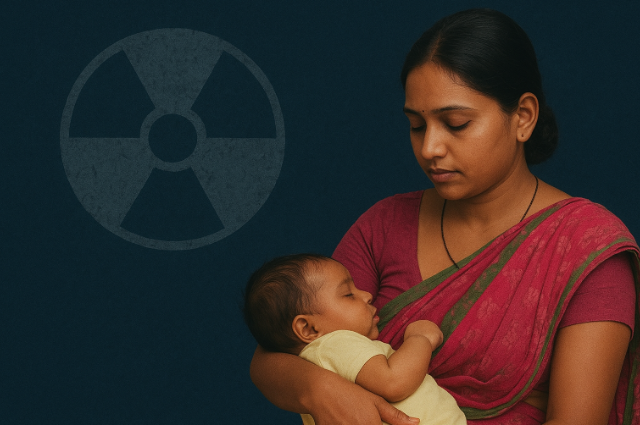
Imagine a mother's milk—the purest sustenance for life—silently carrying a radioactive toxin that threatens the very infants it nourishes. This grim reality emerged from a pioneering study published on November 20, 2025, in Scientific Reports, detecting uranium (U-238) in 100% of breastmilk samples from 40 lactating mothers aged 17-35 across six Bihar districts: Bhojpur, Samastipur, Begusarai, Khagaria, Katihar, and Nalanda. Conducted from October 2021 to July 2024 by teams from Mahavir Cancer Sansthan & Research Centre (Patna), Lovely Professional University, NIPER-Hajipur, and collaborators like AIIMS Delhi, this first breastmilk assessment in Bihar's Gangetic plains builds on prior heavy metal exposures while signaling a national crisis—groundwater uranium contaminates 151 districts across 18 states including Andhra Pradesh, Jharkhand, Punjab, Rajasthan, Uttar Pradesh, and West Bengal. Concentrations spanned 0 to 5.25 µg/L, with Khagaria's average at 4.04 µg/L and Katihar's peak at 5.25 µg/L—universal detection in every sample.
Rigorous Methodology and Maternal Realities
Behind the headlines lies a meticulously designed study spanning October 2021 to July 2024, where 40 lactating mothers aged 17-35 from rural pockets of Bhojpur, Samastipur, Begusarai, Khagaria, Katihar, and Nalanda provided informed consent for breastmilk sampling and in-depth interviews. Researchers captured breastfeeding patterns, infant growth metrics, and residential histories to probe exposure duration, revealing only a weak correlation with long-term residency and stronger ties to recent dietary sources over deep bioaccumulation. Advanced Agilent 7850 LC-ICP-MS analysis at NIPER-Hajipur confirmed uranium (U-238) in every sample, while parallel groundwater tests across Bihar exposed highs like 82 µg/L in Supaul—linking tube-well dependency, phosphate fertilisers, and industrial effluents to this toxic maternal transfer.
Mothers' voices paint a stark picture: in groundwater-scarce Gangetic villages, daily survival hinges on unregulated tube wells amid intensive farming and untreated waste, unwittingly channelling geogenic uranium from alluvial soils into family diets and milk. One participant from Khagaria district, with levels averaging 4.04 µg/L, typified the cycle—decades of crop irrigation and household water use turning nourishment into peril for her exclusively breastfed infant. This human dimension underscores how environmental neglect in Bihar's 11 contaminated districts silently burdens the most vulnerable.
Comparative Safety: Below Water Limits, Yet Risky for Infants
At first glance, reassurance: Bihar breastmilk uranium levels—from 0 to 5.25 µg/L, averaging 2.35 µg/L (Nalanda) to 4.04 µg/L (Khagaria)—lie far below WHO's provisional 30 µg/L drinking water guideline, roughly one-sixth the maximum threshold, with no dedicated international breastmilk standard. Yet danger lurks for the tiniest victims: researchers' adapted hazard quotients (HQ) surpassed 1 for 70% of infants, flagging non-carcinogenic risks amplified by their low body weight (3-5 kg), exclusive breastfeeding reliance, and immature kidneys filtering 10-20% of cardiac output.
Potential harms mirror global patterns—neurological deficits, IQ drops up to 5 points per 10 µg/L chronic exposure, kidney toxicity via tubular reabsorption, and skeletal deformities from phosphate competition—despite zero carcinogenic signals in the study. Chronic low-dose bioaccumulation via maternal diet echoes U.S. Navajo cases and Finnish cohorts, where even sub-30 µg/L water correlated with developmental delays. This disconnect demands infant-specific benchmarks beyond water proxies.
Groundwater Uranium Hotspots:
- Bihar: Groundwater exceeds WHO 30 µg/L in 11 districts; Supaul (82 µg/L max), Nalanda (77 µg/L), Vaishali (66 µg/L), Gopalganj, Siwan, Saran, Patna, Madhepura, Aurangabad, Gaya, Jehanabad, Nawada, Khagaria.
- Punjab: 62.5% samples >30 µg/L (highest nationally, post-monsoon); 53% pre-monsoon; widespread across districts like southwestern blocks.
- Haryana: 15-23.75% samples >30 µg/L; significant in irrigation-heavy blocks.
- Delhi: 13-15.66% samples >30 µg/L; northwestern hotspot.
- Rajasthan: Moderate exceedances; up to 100+ µg/L in Barmer, Jaisalmer; 42% of national contaminated samples from here; 47% salinity overlap.
- Uttar Pradesh: 5-6% samples >30 µg/L; Unnao, Fatehpur; western Gangetic parts.
- Andhra Pradesh: Sporadic >30 µg/L; Anantapur district elevated.
- Telangana: Sporadic exceedances.
- Jharkhand: Elevated in Ranchi, Palamu.
- Karnataka: 6-8% samples >30 µg/L.
- Chhattisgarh: Moderate levels.
- Gujarat: 18% salinity-linked; some uranium exceedances.
Groundwater Roots: Geogenic and Man-Made Amplifiers
Deep beneath Bihar's Gangetic plains lie uranium-rich alluvial soils and granite formations, where geogenic leaching meets human folly—over-pumping tube wells, phosphate fertilisers dissolving the metal into aquifers, and industrial effluents plus untreated sewage accelerating mobilisation. The breastmilk study paralleled groundwater tests revealing exceedances of WHO's 30 µg/L limit in 11 districts: stark highs like 82 µg/L in Supaul, 77 µg/L in Nalanda, and 66 µg/L in Vaishali seep into crops, livestock, and drinking sources, forging a toxic food chain.
This crisis echoes nationally, tainting 151 districts across 18 states from Punjab's 62.5% contaminated samples to Rajasthan's arid belts, yet Bihar's intensive farming and Ganga-adjacent vulnerability amplify the peril. Prior CGWB surveys flagged Saran, Gopalganj, and Madhepura early, with Mahavir Cancer Sansthan's 2020 mapping confirming the northwest-southeast band south of the Ganga toward Jharkhand as hotspots. Remediation lags, turning everyday irrigation into intergenerational poison.
Public Health Roadmap: Breastfeed Safely, Act Decisively
No panic—experts from the study and WHO-aligned bodies unanimously affirm: continue breastfeeding, as its antibodies and nutrients vastly outweigh low uranium risks, with no clinical basis for discontinuation absent other factors. Immediate steps prioritise source control: install reverse osmosis filters for tube wells, diversify diets beyond local crops irrigated by tainted water, and monitor infants via regular developmental screenings for kidney function, neurocognition, and growth milestones.
Systemic overhaul demands statewide biomonitoring of breastmilk and groundwater, Geological Survey of India-led mapping of uranium hotspots, subsidies for remediation tech in Bihar's 11 affected districts, and rigorous enforcement of the 1986 Environment Protection Act against fertiliser overuse and effluents. Public campaigns must educate rural mothers on safe water practices without eroding breastfeeding norms, scaling interventions nationally across 151 contaminated districts. This unfolding crisis exposes decades of environmental complacency, mandating decisive action to break the cycle of maternal sacrifice for future generations.
Conclusion: Safeguarding Tomorrow's Generation
This Bihar breastmilk uranium crisis reveals profound health implications: while immediate dangers remain low, chronic exposure threatens infants with neurological setbacks, diminished IQ, kidney strain, and skeletal anomalies, compounding Bihar's arsenic legacy in a cycle that imperils cognitive futures for millions. Groundwater hotspots across 151 districts nationwide amplify the urgency, turning maternal nourishment into unwitting transmission of geogenic toxins.
Recommended actions demand swift execution: mothers adopt reverse osmosis filtration and varied diets; authorities launch statewide biomonitoring, GSI uranium mapping, and subsidies for remediation in 11 Bihar districts. Enforce the 1986 Environment Protection Act against fertiliser overuse, paired with awareness drives upholding breastfeeding's supremacy. National policy must prioritise infant-safe water nationwide, transforming this wake-up call into enduring safeguards against environmental betrayal.
Disclaimer
This article summarises the Scientific Reports study (November 2025) and verified sources on uranium in Bihar breastmilk. Provided for informational and educational purposes only—not medical, legal, or professional advice. Uranium levels (0-5.25 µg/L) fall below the WHO's 30 µg/L water guideline, indicating low immediate risk, though chronic infant effects merit monitoring. Consult healthcare providers or authorities for personal guidance; publisher assumes no liability for actions taken based on this content. Breastfeeding remains recommended by experts.
References
- https://pubmed.ncbi.nlm.nih.gov/41272130/pubmed.ncbi.nlm.nih
- https://www.ndtv.com/india-news/uranium-found-in-breast-milk-in-several-bihar-districts-says-study-9685552ndtv
- https://indianexpress.com/article/cities/patna/high-uranium-in-groundwater-in-bihar-8074820/indianexpress
- https://www.downtoearth.org.in/water/groundwater-in-10-bihar-districts-contaminated-by-uranium-study-70343downtoearth