
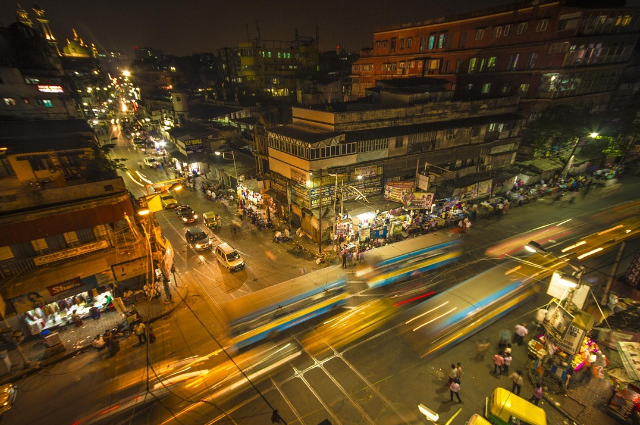
Image by Arghya Mondal from Pixabay
Many people find it hard to believe today, but a little over a century ago, Calcutta mattered more to the British Empire than any Indian city—and more than most cities anywhere in the world. Long before skylines rose in Mumbai or power shifted to Delhi, Calcutta was already deciding the direction of empire, trade, and governance.
In 1911, Calcutta was not merely another colonial city. It was the capital of British India and, in the imperial imagination, second in importance only to London itself. From here, laws were framed, markets were influenced, armies were supplied, and industries were managed. Decisions made in Calcutta echoed across South Asia and far beyond its borders.
Bombay was growing, and Delhi carried symbolic weight, but the real machinery of rule—administration, finance, trade networks, and strategic planning—flowed through Calcutta. For the British, this was not just a city in India. It was India.
Agenda
This is not an exercise in nostalgia, nor an attempt to romanticise a lost past. It is also not a search for political blame or easy villains. Cities are complex organisms, shaped over decades by global forces, local decisions, economic shifts, and human anxieties—and Calcutta is no exception.
This article aims to tell a real story, grounded in historical records, economic data, and lived urban realities. It looks at how Calcutta rose to global prominence, how structural changes and missed transitions caused it to fall behind other Indian metros, and why reducing its present to tired stereotypes does more harm than understanding ever could.
At its core, this is a city‑level case study—facts first, emotion second, judgment last. The intention is not to defend Calcutta uncritically, nor to dismiss its challenges, but to examine them honestly. Because when a city’s past is misunderstood, its present is often misread—and its future unfairly written off.
1911: When Calcutta Was the Empire’s Nerve Centre
Until 1911, Calcutta was the undisputed capital of British India—not merely in name, but in function. This was where the administrative headquarters of the Raj operated, where imperial policy was debated, drafted, and enforced across the subcontinent. From Calcutta, a relatively small colonial bureaucracy governed one of the largest populations the British Empire had ever controlled.
In the imperial hierarchy, Calcutta ranked second only to London itself. It was not treated as a distant outpost, but as a central node of empire. The city housed the highest offices of governance, the most influential commercial institutions, and the command structures that linked military strategy with economic interests. What happened in Calcutta shaped decisions far beyond India’s borders.
Geography amplified this power. Situated along the Hooghly River, Calcutta possessed one of the most strategically valuable ports in Asia. The river connected the city directly to the Bay of Bengal, enabling efficient movement of troops, raw materials, and finished goods. This access made Calcutta indispensable to imperial trade routes and military logistics, reinforcing its role as the empire’s eastern stronghold.
Trade, administration, and strategy converged here. While other cities played supporting roles—Bombay as a rising commercial centre, Delhi as a symbolic seat—Calcutta functioned as the operational heart of British India. For decades, it was the city through which power flowed, was exercised, and was sustained.
The Economic Engine of the East
Calcutta’s importance was not sustained by administration alone. Its true strength lay in its economy—one that connected Indian labour and raw materials to global markets with remarkable efficiency. By the late nineteenth and early twentieth centuries, Calcutta had become one of the most economically productive cities in Asia, and arguably the most important industrial centre in India.
At the heart of this dominance was jute. Calcutta was the jute capital of the world, processing the fibre that powered industries across Europe, North America, and beyond. Jute mills clustered along the Hooghly transformed raw produce from eastern India into sacks, ropes, and textiles that were indispensable to global trade. For decades, Calcutta outperformed traditional jute centres like Dundee in Scotland, supplying the world with packaging for grain, coal, and commodities that fueled industrial economies.
But jute was only one part of a wider commercial ecosystem. Calcutta controlled vast trade networks in textiles, tea, coal, and cash crops, supported by banks, insurance houses, shipping firms, and trading companies headquartered in the city. Its port handled enormous volumes of exports and imports, making it a central artery through which wealth flowed in and out of the subcontinent.
What made this system work was not just capital, but labour. Millions of workers—dockhands, mill labourers, clerks, artisans—sustained Calcutta’s economy through physically demanding and often invisible work. The city’s prosperity rested on its efforts, binding industrial success to human endurance. Calcutta was not merely a place where wealth accumulated; it was a city where global trade was physically produced.
By the early twentieth century, Calcutta was more than an Indian commercial hub. It was a global marketplace—integrated, indispensable, and immensely productive. Its later decline would not come from a lack of capacity, but from shifts in history that would gradually redirect power, capital, and confidence elsewhere.
The Slow Shift—Not a Sudden Collapse
Calcutta did not decline overnight, nor did it lose relevance because of a single decision or moment. The shift was gradual, structural, and deeply tied to changes that went far beyond the city itself. One of the earliest turning points came in 1911, when the British moved the capital of India from Calcutta to Delhi. While the decision was largely political and symbolic, its long-term consequences were administrative and economic.
With the capital’s relocation, Calcutta began to lose its centrality in imperial governance. Key institutions followed the corridors of power northward, and over time, so did influence and investment. Yet the city remained economically active for decades after. Its industries continued to operate, its port remained busy, and its workforce remained indispensable. What changed was not productivity, but priority.
The mid-twentieth century brought further disruptions. Partition in 1947 severed Calcutta from much of its traditional hinterland, particularly regions that supplied raw jute. Borders were redrawn, supply chains fractured, and refugee inflows placed enormous pressure on urban infrastructure. These were shocks not of the city’s making, but ones it had to absorb nonetheless.
What followed was not collapse, but drift. As newer cities aligned themselves with emerging industries and policy focus shifted elsewhere, Calcutta found itself carrying older systems into a changing world. Institutions aged, capital hesitated, and momentum slowed. The city did not stop working, but it was no longer moving at the centre of India’s economic imagination.
Understanding this distinction matters. Calcutta’s story is often told as one of failure, but history suggests something more nuanced: a city shaped by early prominence, later displacement, and long-term adjustment. Its challenges emerged not from weakness, but from the weight of history itself.
Technology, Resistance, and the Missed Turn
By the late 1970s and early 1980s, a new shift was underway—one that would quietly redraw India’s economic map. Computing and information technology were beginning to enter offices, banks, and administrative systems. Contrary to popular memory, Calcutta was not absent from this transition. In fact, several international companies and technology‑oriented firms initially operated from the city, attracted by its educated workforce and institutional depth.
Yet this period also revealed a deep anxiety—one shared by many industrial societies at the time. Computerisation was widely perceived as a direct threat to employment, particularly in clerical and administrative roles. Trade unions, workers’ groups, and employees feared displacement rather than transformation. Protests and resistance were not unique to Calcutta, but in the city’s labour‑intensive ecosystem, they carried particular weight.
The debate was framed narrowly: technology versus jobs. What remained largely outside the conversation was a third possibility—that technology could expand productivity, create new roles, and enable workers to do more rather than less. The idea of large‑scale reskilling or adaptation did not gain sufficient institutional momentum. As uncertainty grew, businesses seeking stability began to look elsewhere.
Gradually, the emerging technology sector shifted to cities that appeared more receptive to this transition. Bangalore, with its defence research institutions, policy support, and willingness to experiment, became the preferred destination. The move was not abrupt, nor was it conspiratorial. It was the result of perception, risk calculation, and timing.
In hindsight, this was not simply a failure of leadership or ideology, but a moment where fear outpaced imagination. Calcutta, a city that had once anchored global trade, hesitated at the threshold of a new economy. The cost of that hesitation would only become clear decades later, as technology reshaped India’s growth story without it at the centre.
“A City of Slums”? Let’s Do the Math
From time to time, Kolkata is reduced to a single phrase: a city of slums. The statement sounds sharp, even factual—but it collapses under basic scrutiny. If numbers are the measure, Kolkata does not have the highest slum population in India. Mumbai does. Delhi ranks higher as well. Kolkata does not even feature among the top three. The data tells a story far less dramatic than the rhetoric.
But rankings miss the deeper point. Slums are not a moral failure of a city; they are an economic outcome of a country. When people leave villages and small towns to work in metros, they do not choose slums because they want to. They choose them because they are what they can afford. This is not a Kolkata problem. It is not a Bengal problem. It is an Indian reality—visible in every major urban centre that depends on informal labour to survive.
Every metro runs on people who clean, build, load, repair, cook, transport, and maintain. Yet our cities have not figured out how to house this workforce with dignity at scale. Slums exist not because cities attract poverty, but because they attract work without providing adequate housing for those who do it.
When a slum becomes a point of public shame, the target is not a city—it is the people who keep it running. Pointing at informal settlements does not expose urban failure as much as it exposes how selectively we choose to see development. To single out Kolkata for what is structurally national is not analysis. It is a simplification.
The real question, then, is not whether Kolkata has slums. It is how honestly we are willing to confront the systems that make slums inevitable across Indian cities—and what it says about whose lives we consider expendable in the story of growth.
Dignity, Labour, and Urban Compassion
Cities reveal their values not in their skylines, but in how they treat the people who build and maintain them. In this sense, Kolkata’s relationship with its working poor offers a telling contrast to the way development is often performed elsewhere. The city has never been free of hardship, but it has historically resisted the impulse to make poverty invisible.
Informal settlements in Kolkata are not hidden behind highways or erased overnight to create an illusion of order. They exist in the open—messy, crowded, and undeniably human. This visibility is not a sign of neglect alone; it is also an acknowledgement that the people who live there are part of the city, not an inconvenience to be removed before dawn.
This is not to suggest that Kolkata lacks municipal enforcement or that illegal encroachments go unchallenged. They do not. Drives are conducted, structures are removed, and regulations are enforced. What distinguishes the city is not the absence of authority, but the manner of its application. Actions are rarely demographically targeted, and displacement is not pursued as spectacle. The emphasis, imperfect as it may be, has leaned toward coexistence rather than erasure.
The labour that sustains Indian cities is often spoken of in abstraction, yet it is deeply personal in practice. These are the hands that clean homes, pull rickshaws, load trucks, stitch garments, repair pipes, and keep markets alive. When a city acknowledges this labour—by allowing space, visibility, and survival—it makes a quiet statement about who belongs.
Calling such a city a failure for carrying its poor openly misunderstands what urban compassion looks like in a developing country. Kolkata’s slums are not evidence of indifference; they are evidence of a city that has chosen, consciously or otherwise, not to pretend that growth can exist without those who make it possible.
Reading Kolkata Fairly
Kolkata is often judged through extremes—either as a fallen empire or as a city frozen in time. Both readings miss the truth. Cities, like people, do not move in straight lines. They inherit advantages, absorb shocks, make choices under constraint, and live with their consequences long after the moment has passed.
To read Kolkata fairly is to accept that early prominence can become a burden. Institutions built for one era do not always adapt easily to another. The same depth of culture, labour consciousness, and civic memory that once sustained the city also made rapid reinvention harder. What appears as stagnation from the outside is often a slower, more cautious negotiation with change.
At the same time, fairness does not mean denial. Kolkata has struggled to generate large-scale private employment, modern infrastructure growth has lagged behind other metros, and opportunities have moved elsewhere. These are real failures that affect real lives. Acknowledging them is necessary—not to condemn the city, but to understand it.
Yet it is equally incomplete to measure a city only by what it produces economically at a given moment. Kolkata continues to generate ideas, art, political thought, and social debate at a density few Indian cities can match. It remains a city deeply aware of itself—its inequalities, its labour, its past, and its contradictions.
The real story, then, is not whether Kolkata declined, but how it changed—and what it chose to carry forward while doing so. To reduce such a city to caricature is not just inaccurate; it is intellectually lazy. Reading Kolkata fairly requires patience, context, and the willingness to see complexity where stereotypes are easier.
Conclusion: The Real Story
The real story of Kolkata is not a story of decay. It is a story of transition—of power shifting away, of fear meeting change, of labour carrying the weight of history, and of missed turns that reshaped a city’s place in the national imagination. It is also a story of endurance: of dignity maintained even when momentum slowed, and of people who continued to build, work, and think despite being written off.
Cities do not fail overnight. They inherit decisions made long before their skylines take shape. They absorb anxieties born of uncertainty, systems designed for older worlds, and shocks they did not choose. Kolkata inherited prominence early—and with it, the burden of adjustment when the world moved differently than expected.
To understand Kolkata only by what it is today is to ignore what it has carried forward: a deep respect for labour, an openness to contradiction, and an unwillingness to erase the uncomfortable parts of urban life for the sake of appearances. These traits may not fit neatly into modern metrics of success, but they remain part of the city’s moral architecture.
Kolkata was once king within India. It is no longer the centre of power or growth. Yet its story is not one of failure—it is one of complexity. And real stories, like real cities, deserve to be read with patience, context, and honesty rather than haste and stereotype.
Disclaimer
This article is based on publicly available historical records, census data, and academic research. It does not intend to support or oppose any political entity and focuses solely on urban, economic, and social analysis through verified sources.
References
- https://www.britannica.com
- https://en.wikipedia.org
- https://mism.org
- https://en.wikipedia.org
- https://www.getbengal.com
- https://www.censusdata.in
- https://www.indiatoday.in
- https://www.theweek.in