
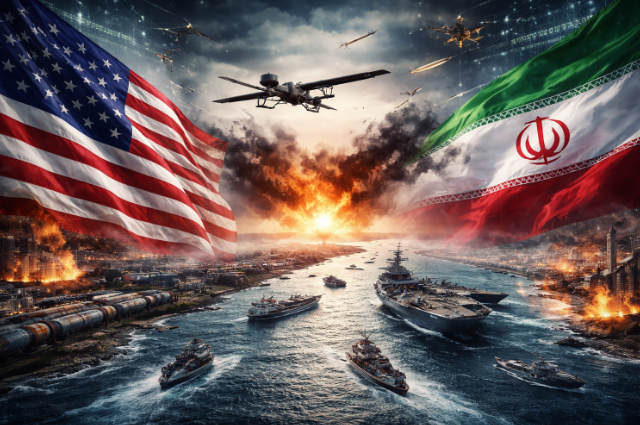
Wars rarely begin with chaos—they begin with calculation. Leaders weigh risks, test boundaries, and probe for weaknesses, often through subtle moves that evade outright declarations of war. But history shows the real danger emerges when those calculations start to fail, pulling conflicts from the shadows of strategy into the harsh light of unintended consequences.
Recent tensions between the United States and Iran exemplify this precarious dance. Proxy skirmishes in Yemen and Syria, cyber operations, and naval standoffs in the Strait of Hormuz have kept the world on edge—not just for what has happened, but for what could happen next. As of early 2026, U.S. sanctions tighten their grip on Iran's economy, while Tehran advances its regional alliances and nuclear capabilities under intense scrutiny. No full-scale war has erupted, yet the pattern feels eerily familiar: a slow boil of "grey zone" confrontations that analysts like those at the Council on Foreign Relations describe as controlled escalation.
This isn't mere posturing. Past conflicts, from the U.S. invasions of Iraq and Afghanistan to Russia's hybrid war in Ukraine, teach a stark lesson—tensions evolve. What starts as targeted strikes can cascade into disruptions of civilian infrastructure, energy flows, and global trade. Today, with the Middle East's oil chokepoints at stake, the stakes feel higher than ever. The question isn't if escalation looms, but how it might leap from military manoeuvres into the daily lives of millions.
Agenda
- Calculation of chaos in U.S.-Iran tensions.
- Decades of nuclear, proxy, and sanctions strife.
- Grey-zone strikes, cyber, and economic pressure.
- Military ops hit civilian infrastructure.
- Gulf states' trade/security web at risk.
- Oil/gas chokepoints drive global shocks.
- Viral claims vs. verified facts shape reality.
- Media, polls, and history fuel domestic unease.
- Chain reactions to systemic war.
- Patterns warn of shared fallout—stay vigilant.
What the Conflict Is About
The relationship between the United States and Iran has been strained for over four decades, rooted in a web of ideological clashes, strategic rivalries, and unresolved grievances. It all traces back to the 1979 Iranian Revolution, which toppled the U.S.-backed Shah and ushered in an Islamic Republic hostile to Western influence. The 1980s saw confrontation during the Iran-Iraq War, with the U.S. tilting toward Saddam Hussein, followed by incidents like the 1988 downing of Iran Air Flight 655.
At the core today remain three flashpoints: Iran's nuclear program, its regional influence, and cascading U.S. economic sanctions paired with military presence. Tehran's uranium enrichment—now at near-weapons-grade levels per IAEA reports as of 2026—has prompted renewed U.S. and Israeli warnings, echoing the 2015 Joint Comprehensive Plan of Action (JCPOA) that collapsed under the Trump administration in 2018. Iran, in turn, expands its "Axis of Resistance" through proxies like Hezbollah in Lebanon, Houthis in Yemen, and militias in Iraq and Syria, challenging U.S. allies such as Israel and Saudi Arabia.
Economic sanctions, intensified since 2018 and layered with measures against Iran's oil exports and banking, have crippled its economy, fueling domestic unrest like the 2022 Mahsa Amini protests. Meanwhile, U.S. forces maintain a footprint in the Gulf—about 40,000 troops across bases in Qatar, Bahrain, and the UAE—bolstered by naval assets patrolling key waterways.
While no officially declared full-scale war exists, the pattern is one of rising military tensions and strategic confrontations: Houthi drone attacks on Saudi oil facilities in 2019, U.S. strikes on Iran-backed militias in 2024, and Iran's April 2024 missile barrage on Israel. These episodes form a volatile status quo, where miscalculation risks broader fallout.
The Nature of Modern Conflict
Unlike the trench warfare of World War I or the blitzkriegs of 1940, today's superpower rivalries rarely ignite into total war. Instead, they simmer in a "grey zone"—a murky realm of actions that inflict damage without crossing red lines into open conflict. The U.S.-Iran standoff embodies this perfectly.
Consider the toolkit: limited strikes, like the U.S. drone killing of Iranian General Qasem Soleimani in 2020, which prompted Iranian missile retaliation on U.S. bases but stopped short of all-out war. Proxy involvement amplifies reach—Tehran's support for Houthi rebels disrupts Red Sea shipping, forcing U.S. and UK airstrikes in 2024-2025 without direct Iran engagement. Cyber operations add stealth: the 2010 Stuxnet virus, widely attributed to U.S.-Israeli collaboration, sabotaged Iran's centrifuges, while Iran-linked hackers targeted U.S. water systems in 2023.
Economic pressure rounds out the arsenal. U.S. sanctions have slashed Iran's oil exports by over 90% since 2018 (per U.S. Energy Information Administration data), starving funding for proxies without firing a shot. These strategies aim to weaken opponents—eroding economies, sowing discord, and signalling resolve—while dodging the global backlash of full-scale invasion.
Analysts at think tanks like RAND and the International Institute for Strategic Studies term this "controlled escalation." It buys time, tests adversary resolve, and maintains plausible deniability. Russia’s Ukraine incursion and China’s South China Sea manoeuvres follow suit. Yet this restraint has limits. Grey zones blur intentions, heighten the risk of miscalculations, and gradually normalise violence. For U.S.-Iran tensions, the question looms: how long before controlled pressure spills into uncontrolled chaos, touching civilian lives?
The Critical Shift: From Military to Civilian Impact
The most pressing question in U.S.-Iran tensions isn't whether escalation simmers—it's how it might evolve beyond the battlefield. History reveals a grim pattern: conflicts that begin with precision strikes often expand to ensnare civilian domains, turning strategic games into humanitarian crises.
Look to the 2003 Iraq War. U.S.-led forces targeted military sites, but operations soon strained Baghdad's power grids, water treatment plants, and hospitals—disrupting life for millions. In Yemen's ongoing proxy war, Saudi-led coalitions (backed implicitly by U.S. arms sales) hit fuel depots and ports, sparking famine and cholera outbreaks affecting 21 million civilians, per UN estimates. Even Ukraine's 2022 invasion saw Russian strikes evolve from airfields to energy infrastructure, blacking out cities and halting rail lines through winter.
For Iran, the vectors are clear. Strait of Hormuz disruptions—where 20% of global oil transits—could spike shipping insurance and fuel civilian economies worldwide. Iranian retaliation might target Gulf desalination plants (vital for UAE and Saudi water) or a cyber-attack on U.S. allies' grids. Even rhetoric signals the shift: Iranian officials have threatened "all options" against bases hosting U.S. troops, while U.S. carriers patrol amid Houthi threats.
This evolution marks a dangerous turning point. When infrastructure buckles—transport grinds to a halt, energy falters, supplies dwindle—geopolitical decisions invade everyday life. Families ration power; hospitals lose refrigeration; trade stalls. No longer abstract, the conflict permeates homes and markets. Analysts warn this "hybrid threshold" erodes norms, as seen in Syria, where barrel bombs levelled markets. In the U.S.-Iran context, crossing it risks not just regional chaos, but a global echo.
Regional Ripple Effects
U.S.-Iran tensions never stay bilateral—they ripple across the Middle East's tight-knit web of alliances, trade, and vulnerabilities. Gulf states, sandwiched between American bases and Iranian reach, bear the brunt, their fates intertwined through energy highways and security pacts.
Saudi Arabia, Iran's Sunni rival, hosts U.S. Patriot missiles and shares a 1,800-km border with unstable Iraq, where Iran-backed militias operate. The 2019 Abqaiq drone attack—claimed by Houthis but tied to Iranian tech—knocked out 5% of global oil supply overnight, per Saudi Aramco. The United Arab Emirates, with its glittering ports handling 15% of world oil trade, relies on desalination for 90% of water; Iranian missile range covers it entirely. Kuwait and Bahrain, both U.S. naval hubs, huddle close—Bahrain's U.S. Fifth Fleet base lies just 200 km from Iran.
These nations connect via the Gulf Cooperation Council (GCC), sharing pipelines like the East-West crude line and security drills. Trade binds tighter: UAE-Iran non-oil commerce hit $25 billion in 2025 despite sanctions, per UAE stats. Any flare-up amplifies shocks—Houthi Red Sea blockades already rerouted 10% of global shipping in 2025, hiking costs.
Israel, 1,000 miles away, factors in via air superiority and Iron Dome, but Iranian proxies encircle it. Jordan and Oman play buffers, mediating quietly. A single Strait closure could idle refineries from Kuwait to Qatar.
This interdependence turns limited clashes regional. As the Brookings Institution reports note, one nation's pain becomes collective—fuel shortages in Riyadh echo in Delhi and Tokyo. Escalation here doesn't confine; it cascades, pulling neutrals into the fray.
Energy: The Hidden Battlefield
Amid U.S.-Iran sabre-rattling, energy emerges as the conflict's quiet fulcrum—less flashy than missiles, but far more disruptive. The Middle East pumps 30% of global oil and 20% of liquefied natural gas (LNG), per International Energy Agency 2026 figures. Control here doesn't just win wars; it strangles economies.
The Strait of Hormuz, a 33-km-wide chokepoint, funnels 21 million barrels daily—more than the U.S. consumes annually. Iran has mined it before (1980s Tanker War) and threatened closure repeatedly; even a one-week blockade could spike Brent crude to $150/barrel, modelling from Rice University's Baker Institute suggests. Houthi attacks already inflated prices 15% in early 2026.
Pipelines amplify risks. Saudi Arabia's Abqaiq facility, hit in 2019, exposed single-point failures—repairs took weeks. Iraq's oil flows south through contested Shiite areas, while UAE ports like Jebel Ali process tankers that Iran could harass. Gas fields off Qatar, the world's top LNG exporter, sit exposed.
Disruptions cascade globally. Europe, weaning off Russian gas, eyes Gulf LNG; India's refineries import 85% from the region; U.S. consumers face pump hikes. The 1973 OPEC embargo quadrupled prices, sparking recession—today's volatility echoes that, with supply chains from semiconductors to food trucking vulnerable.
Iran wields asymmetric leverage: speedboats, drones, mines. The U.S. counters with carriers, but escalation invites mutual pain—Iran's fields cluster near populated coasts. Thus, modern conflict pivots from territory to economic lifelines, where a spark ignites worldwide inflation and shortages. Energy isn't collateral; it's the prize.
Perception vs Reality: The Role of Information
In the digital age, U.S.-Iran tensions fight two battles: one with drones and sanctions, the other across screens and feeds. Information shapes reality faster than missiles fly, amplifying fear and steering policy in ways events alone cannot.
Unverified reports spread like wildfire. A 2025 X (formerly Twitter) thread claiming Iranian cyberattacks on U.S. grids garnered 50 million views before debunking—despite no outages, per CISA. Viral videos of "Houthi swarms" near U.S. carriers, often recycled footage, spike oil futures 5% overnight. Public speculation fills voids: Telegram channels buzz with "imminent strike" rumours, pressuring leaders.
This noise intensifies fear, sways opinion, and forces hands. Israel's April 2024 intercept of 300+ Iranian drones and missiles became a triumph narrative, yet Iranian state media framed it as "warning shots," rallying hardliners. Western outlets like CNN amplify drone footage; Al Jazeera highlights sanctions' civilian toll in Iran—each shapes alliances.
Distinguishing fact from fog proves vital:
- Confirmed developments: IAEA uranium reports; U.S. Central Command strike logs.
- Emerging or unverified narratives: Anonymous "leaks" on nuclear breakthroughs; proxy attribution debates.
Social media accelerates this, with algorithms favouring outrage—studies from MIT show conflict misinformation travels six times faster. Governments counter with briefings, but trust erodes: Gallup polls show U.S. faith in media at 32% in 2026.
For bystanders, the lesson cuts deep. Perception can trigger markets, protests, even preemption, blurring lines between signal and noise. In U.S.-Iran's grey zone, info warriors wield influence rivalling admirals—turning whispers into waves.
Domestic Signals and Public Sentiment
Within the United States, U.S.-Iran tensions pulse through public discourse, sensing escalation via unease before headlines confirm it. Political rhetoric, media amplification, and economic twinges shape a sentiment that often outpaces official lines.
Figures like Donald Trump—whose 2025 campaign rallies invoked "Iran regime change"—stir the pot, echoing his 2020 Soleimani strike. Yet broader sentiment draws from layered influences: relentless 24/7 coverage on Fox and MSNBC frames Iran as existential threat or sanctions victim; gas prices climbing to $4.20/gallon in March 2026 (AAA data) evoke Iraq War sticker shock; historical scars from 9/11 and forever wars linger, with Pew polls showing 60% of Americans opposing new Middle East boots on ground.
Societies detect shifts intuitively. Social listening tools like Brandwatch tracked a 40% spike in "Iran war" Google searches post-Houthi escalations, correlating with congressional hearings. Polls reflect wariness: a 2026 Reuters/Ipsos survey found 55% view Iran as top threat, but only 35% back military action—favouring diplomacy amid inflation fears.
Diverse voices emerge. Veterans' groups like VoteVets decry "another quagmire"; hawkish think tanks like Heritage push deterrence. Economic conditions amplify: Midwest farmers hit by fertiliser costs tied to Gulf volatility voice frustration on TikTok.
This domestic barometer matters. Public pressure can constrain presidents—Biden's 2024 restraint drew "weak" barbs, yet rallied moderates. Uncertainty breeds vigilance, turning opinion into a policy lever. As tensions simmer, America's body politic feels the heat first—through wallets, feeds, and memories—signalling when calculations might falter.
The Real Risk: Escalation Beyond Control
The true peril in U.S.-Iran tensions isn't a lone headline strike—it's the domino chain that follows, spiralling from contained pressure into systemic crisis. History brims with such tipping points, where restraint unravels.
A single catalyst—a Houthi sink of a U.S. destroyer, an Iranian mine in the Strait, or Israeli preemption on Natanz—could ignite wider involvement. Saudi Arabia and the UAE, bound by U.S. defence pacts, might join airstrikes; Turkey or Pakistan could backchannel Tehran, per 2026 Atlantic Council wargames. Proxies activate: Hezbollah barrages northern Israel; Iraqi militias hit U.S. bases.
Economic disruption leaps borders. Hormuz closure models predict a $600 billion global GDP hit in months (World Bank simulations); LNG shortages freeze European factories; Indian stocks plunge on oil shock. Civilian toll mounts: blackouts in Gulf cities, rationing in Tehran, refugee waves straining Jordan.
Thresholds blur fast. Cyber volleys escalate to infrastructure sabotage; "limited" exchanges draw in superpowers—China protecting Gulf investments, Russia arming Iran. Past echoes warn: the 1967 Six-Day War ballooned from skirmishes; the 1991 Gulf War widened post-Iraqi Kuwait invasion.
At this systemic stage, conflict transcends strategy. Norms erode—targeting ports normalises famine risks; viral atrocities fuel outrage cycles. U.S. public support, fragile per Part 8 polls, could flip to hawkishness amid casualties.
Controlled escalation demands perfect calibration, rare in fog-of-war. Misread signals, domestic hawks, or proxy zeal could snap the leash. The risk? A war no one chose, shared by billions far from the front.
A War in Formation
What unfolds between the United States and Iran may not yet qualify as full-scale war—but it carries the DNA of one assembling piece by calculated piece. Grey-zone jabs, energy chokepoints, info storms, and domestic tremors build a structure primed for ignition.
The story transcends two nations. It's about modern conflicts' quiet metamorphosis: from proxy shadows to civilian hearths, regional webs to global ledgers. Iraq's blackouts, Yemen's famines, Ukraine's winters—these aren't anomalies but previews. When military logic yields to chain reactions, no border contains the fallout.
Vigilance demands discernment. Distinguish patterns from panic; verified shifts from viral noise. Policymakers must recalibrate red lines; publics temper reactions. Yet history whispers scepticism—escalations rarely pause for wisdom.
By the time sirens wail in Dubai or pumps spike in Kolkata, the pivot is past. Consequences then bind us all: not just battlefields, but boardrooms, kitchens, and ballot boxes worldwide.
Disclaimer
This analysis draws from publicly available sources (IAEA, U.S. Central Command, IEA, Pew, etc.), historical patterns, and geopolitical assessments as of April 2026. International relations evolve rapidly—consult verified outlets like Reuters, BBC, or official briefings for updates.
The shift looms. Will calculations hold, or will they shatter into shared reality?
Reference Links
- https://www.iaea.org
- https://www.cfr.org
- https://www.eia.gov
- https://www.brookings.edu
- https://www.rand.org
- https://www.pewresearch.org
- https://www.atlanticcouncil.org
- https://www.reuters.com