
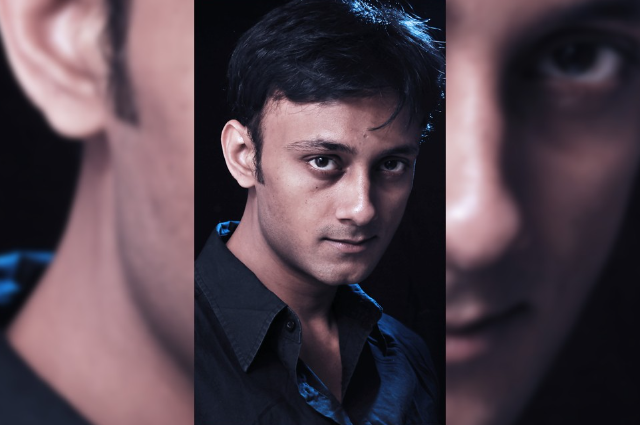
Most people, when they hear a strange noise at night, do one of the following- they either pretend they didn’t hear it, pull the blanket over their head or loudly announce, “It’s definitely the wind,” while internally panicking
But not Gaurav Tiwari. No, he was the kind of person who heard the noise and said:
“Interesting. Let me bring my equipment.” He was one of India’s most well-known paranormal investigators. Through television shows and appearances, field investigations, and the founding of the Indian Paranormal Society (ISP), he helped bring a scientific approach to a topic usually described by dramatic background music and relatives who swear their neighbour’s cousin once saw something.
Early Life: Before the Ghosts Got His Number
Gaurav Tiwari was born in India and grew up like many ordinary kids — going to school, studying, and presumably not yet interviewing invisible houseguests.
From a young age, however, he showed curiosity about unusual phenomena. Unlike most children who fear the dark, he seemed more interested in what might be inside it.
Which is either very brave… or the start of a horror movie. Fortunately, in his case, it became a career.
Later, he pursued formal training in paranormal investigation in the United States. He used to say that he was the only one communicate with ghosts, so he just had the phone number of ghosts.
Professional Training: Ghost Hunting, But Make It Scientific
One thing that made Gaurav stand out was his commitment to professionalism. He didn’t rely on any guesses or weird sounds; in fact, he was very scientific! Instead of believing in any weird paranormal activities, he used -
EMF meters- emf meters are actually pretty scientific and confusing, it is actually used to measure radiation levels from electric, magnetic and radiofrequency fields. And shockingly, EMF meters are actually helpful for detecting ghosts because they have some relation with the electromagnetic environment, and EMF meters can be used to detect fluctuations in the surrounding electromagnetic environment.
Audio recorders- audio recorders are pretty simple, it is just electronic devices used to detect and capture sound waves. So the audio recorders just capture environmental sound that can be dramatic enough to find a ghost.
Temperature sensors- they are just some complicated sensors that capture thermal energy that can be hot or cold- and change it to readable electrical signals, so they are just a complicated form of thermometer. And you won't believe, but ghosts actually make the environment of a place chilling cool, so it can actually detect a ghost in a really indirect way.
His goal was clear: explain unexplained phenomena from normal, explainable events.
This was refreshing in a field where sometimes people blame ghosts for things that are clearly… not ghostly.
The Indian Paranormal Society: Not Your Average Club
Gaurav founded the Indian Paranormal Society (IPS) after he came back to the United States, which quickly became one of the country’s most recognised groups investigating alleged hauntings in India.
Their mission was actually very motivational- they investigated cases really scientifically, they reduced fear and superstition about ghosts, they tried to educate the public and explain that ghosts are not very harmful, and they provided rational explanations when possible.
In many cases, families contacted IPS because they were genuinely frightened. The team would arrive, investigate thoroughly, and often discover completely normal causes.
Television Fame
Gaurav’s popularity grew significantly through television. His shows followed investigations into reportedly haunted locations across India. It became popular because it struck a balance between a spooky atmosphere and being neither too scary nor too funny. Real investigations in which Gaurav explored haunted places using scientific equipment. Calm explanations so viewers can understand paranormal phenomena without getting scared. And occasional moments where viewers definitely checked behind them
What made the show different was Gaurav’s behaviour and attitude in the show. While many paranormal programs rely heavily on jump scares and over-the-top reactions, he remained composed.
Viewers would be clutching their pillows while he casually said:
“Let’s document this.”
His Investigation Style: Calm, Methodical, and Slightly Too Brave
Gaurav’s method followed a structured process.
Step 1: Interview the Witnesses
He first listened carefully to the people reporting paranormal activity. He asked them questions. Questions like When did it start? To know more about the incident, what exactly happens? To see if it is actually due to a ghost or some broken house, who experiences it? Are there environmental changes? Because if there are environmental changes, it could be a ghost.
This step alone often revealed important clues — and occasionally that someone’s cousin might have been exaggerating just a tiny bit.
Step 2: Environmental Checks
Next came the scientific inspection.
He looked for some faulty wiring that could cause dramatic sound, carbon monoxide leaks, animal activity, like a rat in a wall, which can cause sounds that are enough to scare a person, and sound reflections, which are sounds your ears don't hear, but your brain does.
Fun fact: Carbon monoxide poisoning can cause hallucinations and feelings of dread. Which means sometimes the “ghost” is actually… bad ventilation. Not nearly as cinematic, but much safer to fix.
Step 3: Instrument Monitoring
Only after ruling out normal causes would the team use paranormal detection equipment. The tools he used were EMF meters, digital voice recorders, infrared cameras, and motion sensors, and yes — sometimes the equipment picked up unusual readings.
Which is exactly the kind of thing that keeps people watching at 2 a.m. while regretting their life choices.
Famous Cases: When Things Got Interesting
Over the years, Gaurav investigated numerous reportedly haunted locations across India. Common complaints included footsteps when no one was present, objects reportedly moving, strange sounds at night, and feelings of being watched.
In many cases, the explanations were surprisingly ordinary.
Examples of real-world causes Gaurav often found rats in walls, loose pipes, pressure differences, building expansion, and sleep disorders
However — and this is important — Gaurav openly stated that some cases remained unexplained after thorough investigation. And nothing sparks curiosity faster than a calm investigator saying: “We don’t have a complete explanation yet.” Cue the goosebumps.
Why the Public Trusted Him
Gaurav built trust because he did not find everything suspicious.
People appreciated that he debunked many cases and tried to prove that there were no ghosts in some houses, avoided unnecessary drama and did not try to be scary, encouraged rational thinking, treated witnesses respectfully, and stayed calm in tense environments.
In a field full of exaggerated reactions, his grounded, calm and respectful approach stood out. Think of him as the friend who actually reads the instruction manual while everyone else is pressing random buttons.
Understanding Paranormal Experiences (The Science Side)
One of Gaurav’s biggest contributions was educating people about natural explanations behind many spooky experiences. He tried to explain that not everything spooky is due to some ghost.
He always investigated scientifically and tried not to scare anyone. He was always calm in the most tense situations. Gaurav’s goal was pretty clear, educate people about paranormal science, remove unnecessary superstition and help the dead.
Sleep Paralysis: The Ultimate Midnight Panic
Sleep paralysis is a temporary inability to move or speak that occurs when waking up or falling asleep, often accompanied by feelings of fear, chest pressure, or hallucinations. Many people also report sensing a presence in the room.
Symptoms of sleep paralysis are feeling pressure on the chest, which is the first thing to create fear, seeing shadowy figures, which people refer to as ghosts, hearing footsteps, which is not very good after seeing shadowy figures, and all of this in short creates… intense fear.
It feels extremely real, which is why many people think it is supernatural. In reality, it is a well-documented sleep condition.
Infrasound: The Sound You Don’t Hear (But Your Brain Does)
Infrasound, or low-frequency sound, is a type of sound below your hearing abilities. Even if our ears can't hear them, our brains can. So the sound that is heard by our body is sometimes referred to as a ghost.
Infrasound can cause unease as u hear a totally random sound, and unease, of course, creates anxiety, which chills, and most people think it is a sense of presence. Old buildings, large machinery, and even wind patterns can produce infrasound. So sometimes the “creepy feeling” in a place may actually be your brain reacting to vibrations.
The Power of Suggestion
Human psychology is incredibly powerful (you won't believe it, but it is). If someone enters a place believing it is haunted, their brain becomes hyper-alert. They may notice normal sounds more intensely, misinterpret shadows, and feel heightened fear responses. So our brain tries to scare us even when there is nothing present nearby.y
Gaurav often explains this psychological component in his explanations.
The Shock of His Passing
In 2016, news of Gaurav Tiwari’s sudden death deeply shocked his followers and the paranormal community in India.
Authorities conducted an official investigation. Because of his profession, there were many public assumptions and many rumours, but people emphasised focusing on evidence rather than supernatural assumptions.
It is important — and respectful — to remember that his work consistently promoted rational thinking over fear.
His Real Legacy: Less Fear, More Curiosity
When people think of paranormal investigators, they often imagine dramatic ghost hunters running through dark hallways.
Gaurav’s real contribution was different. He helped by normalising scientific investigation of unusual claims, which means he reduced fear of ghosts with the help of science, he reduced unnecessary and irrelevant panic, he encouraged evidence-based thinking to prove that every spooky sound is not supernatural, he supported families experiencing unexplained dramatic events, and he brought professionalism to the field of paranormal investigation in India.
In many ways, he wasn’t trying to prove ghosts existed. He was trying to help people think clearly in scary situations. Which might be even more valuable and respectful.
Final Thoughts: The Man Who Didn’t Panic
Let’s be honest. If most of us hear footsteps in an empty house, our plan is simple: freeze first, then listen again, and if the sound comes back — panic. After that, we quietly decide it is time to live somewhere else and never speak of this again.
But Gaurav Tiwari was different.
When he heard strange sounds or entered a place people called haunted, his plan was calm and clear. First, he would document the case carefully. Then he would measure the place using his tools and meters. After that, he would study what was happening step by step. And most importantly… he would stay calm.
That calm attitude made him stand out. While many people get scared easily, he believed fear should never come before facts. He often said that many so-called paranormal events have normal explanations. Because of this mindset, he helped many families who were worried about strange things happening in their homes.
Tiwari was not someone who rushed to say, “It’s a ghost.” Instead, he looked for simple answers first — loose wires, animal sounds, air pressure, or human mistakes. Only after checking everything would he give his opinion. This careful method earned him respect across India’s paranormal investigation community.
What made him special was not just his work, but his courage mixed with patience. Walking into dark, silent buildings is not easy. Many people cannot even step into a dark room without feeling nervous. Yet he chose to enter abandoned houses, old buildings, and places others avoided. He did this not to scare people, but to remove fear with knowledge.
Of course, people still have different beliefs. Some feel every mystery has a clear scientific answer. Others enjoy the thrill of spooky stories and the unknown. Tiwari stood somewhere in the middle — open-minded, but careful. He never encouraged blind fear, and he never dismissed people’s worries either.
His calm, quiet way of working left a strong mark. Even today, many young investigators in India look up to his style — patient, logical, and brave.
In the end, whether you fully believe in the paranormal or not, one thing is certain: Gaurav Tiwari walked into the dark so others would not have to be afraid of it. And sometimes, that kind of calm courage is more powerful than any ghost story.
Gaurav Tiwari always used to say in his interviews, ‘knowledge cancels fear,’ and I think that's why he was always calm.