
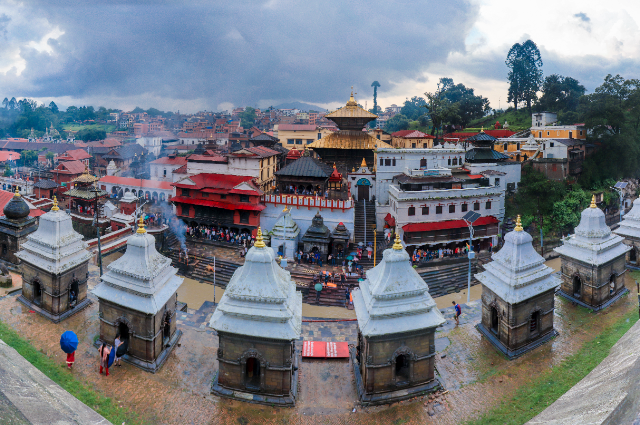
If temples had Instagram followers, Pashupatinath Temple would be sitting at the top with a verified blue tick, millions of fans, and monkeys photobombing every picture. Located in Kathmandu, Nepal, this temple is not just a place of worship—it’s a full-on experience. Think of it as a mix of spirituality, chaos, philosophy, and a little bit of “Wait… what just happened?”
Let’s start with the basics. Pashupatinath Temple is dedicated to Lord Shiva, one of the most powerful gods in Hinduism. He is often called the “God of Destruction,” but don’t panic—he’s not out here breaking things for fun. Shiva destroys evil, ego, and negativity. Basically, he’s like the ultimate cleaner of bad vibes. If negativity were dust, Shiva would be the world’s strongest vacuum cleaner.
Inside the temple, Shiva is worshipped in the form of a sacred Shiva Lingam. Devotees travel from far and wide—some for peace, some for blessings, and some probably just to see if the monkeys are as famous as people say (spoiler: they are).
Now imagine this: a holy temple standing peacefully beside the Bagmati River. Birds flying, bells ringing, incense in the air… sounds calm, right? But then you notice something unexpected—the riverbank is also used for cremation rituals. Yes, real ones. It might feel surprising at first, maybe even a little uncomfortable. But slowly, you begin to understand the deeper meaning. This place doesn’t hide life’s biggest truth—death is a part of life. It’s not scary here; it’s honest. Deep thoughts hit you… and then a monkey runs past holding someone’s biscuit packet. Balance restored.
Ah yes, the monkeys. The unofficial rulers of Pashupatinath. These guys are not just animals—they are full-time entertainers, part-time thieves, and complete professionals at snack detection. If you have food, they know. If you think they don’t know, they definitely know. They jump across roofs, hang from trees, and stare at you like they’re judging your life choices.
Some monkeys sit quietly like enlightened sages, as if they’ve unlocked the secrets of the universe. Others? Absolute chaos. One moment they look peaceful, the next moment they’ve stolen someone’s chips and are running like Olympic athletes. Honestly, if monkeys had a sports team, they’d win gold every year.
Now, let’s talk about the temple structure itself. The main temple is built in a beautiful pagoda style, with a golden roof that shines like it’s been polished by the sun itself. The doors are made of silver, detailed and elegant, making the whole place look royal. It’s the kind of architecture that makes you pause and say, “Okay wow, this is actually amazing.”
But here’s the twist—only Hindus are allowed inside the main temple. If you’re not Hindu, don’t worry. You can still explore the outer complex, enjoy the view from across the river, and watch everything happening. Think of it like watching a live spiritual documentary… with monkeys as the main cast.
But there is much more. At the heart of Pashupatinath Temple lies a truly unique and powerful symbol—the five-faced Shivling, also known as the Pancha Mukha Lingam. Unlike ordinary Shivlings, this one represents five different aspects of Lord Shiva. Four of these faces are clearly visible, each facing a different direction. The eastern face, Tatpurusha, represents meditation and spiritual discipline. The southern face, Aghora, symbolises the destruction of evil and negativity. The western face, Sadyojata, stands for creation and new beginnings, while the northern face, Vamadeva, represents preservation, beauty, and balance in the universe.
But what makes this Shivling even more fascinating is the fifth face—known as Ishana. This face is not visible like the others. It is believed to face upward, representing the cosmic, formless, and infinite nature of Shiva. It reminds devotees that not everything divine can be seen with the eyes; some things must be understood through faith and inner realisation. In a way, this hidden face adds a layer of mystery and depth, making the Shivling not just an object of worship but a symbol of the universe itself.
The rituals inside the main sanctum of Pashupatinath Temple are performed by a very exclusive group of priests known as Bhattas. Traditionally, there are four main priests, and each one is responsible for worshipping one face of the Shivling. These priests are not from Nepal but are specially brought from South India, mainly from Karnataka. This tradition has been followed for centuries because these priests are highly trained in Vedic rituals and are expected to maintain strict discipline and purity.
Their duties include performing the daily Abhishekam, which is the ritual bathing of the Shivling, chanting sacred mantras, and conducting various religious ceremonies throughout the day. Assisting them are other temple helpers called Bhandaris, who manage the temple’s operations. However, an important rule is that only the Bhattas are allowed to touch the Shivling. This strict system ensures that the sanctity and traditional practices of the temple are preserved without any change over time.
The backstory of Pashupatinath Temple is deeply rooted in both mythology and history, making it even more special. According to legend, Lord Shiva once took the form of a deer and wandered into the forests of Kathmandu to live peacefully, away from the responsibilities of the divine world. However, the other gods eventually found him and tried to bring him back. During the struggle, one of Shiva’s antlers broke and fell to the ground. That sacred spot later became the place where the Shivling appeared, marking the origin of the temple. This is why Shiva here is worshipped as “Pashupati,” which means the Lord of all living beings, especially animals.
Historically, the temple is believed to be more than a thousand years old, with origins dating back to around the 5th century. Over time, it was rebuilt and developed into the magnificent structure seen today, designed in the traditional Nepali pagoda style. With its golden roof, intricately carved silver doors, and sacred location beside the Bagmati River, the temple stands as a powerful blend of spirituality, culture, and history. Together, the legend, the unique Shivling, and the strict rituals create an atmosphere that is not just religious, but deeply meaningful and unforgettable.
One of the most fascinating parts of Pashupatinath Temple is the presence of sadhus. These are holy men who have given up normal life—no jobs, no social media, no worrying about WiFi passwords. They wear colourful clothes, often cover themselves in ash, and carry a mysterious, almost magical aura.
Some sadhus look like they stepped out of a fantasy movie. Others look like they’ve been meditating for so long that time itself forgot about them. Many are friendly and will happily pose for photos, but remember—this is their lifestyle, not a photoshoot studio. A small tip is always appreciated. After all, even spiritual life needs a little support.
As you walk around, you’ll notice something funny—everyone experiences the temple differently. One person is deeply focused, eyes closed, praying with full devotion. Another is taking selfies from every possible angle like they’re on a travel vlog. Someone else is just standing there, confused but curious, trying to understand what’s going on.
And then there’s always that one person who is just there for the “vibe.” Not praying, not taking photos—just existing. Honestly, that might be the most peaceful way to experience the place.
Now imagine visiting during Maha Shivaratri, one of the biggest festivals dedicated to Lord Shiva. The temple becomes a sea of people—thousands and thousands gathered together. There’s chanting, music, lights, and an energy that you can almost feel in your bones.
“Om Namah Shivaya” echoes everywhere. It’s like a giant spiritual concert, except instead of guitars and drums, you have bells, chants, and pure devotion. Even the monkeys seem extra excited during this time, probably thinking, “More humans = more snacks. This is our festival now.”
Let’s be honest about one thing—the smell. Temples usually smell like incense, flowers, and peace. Here, you get all of that… plus the smoke from cremation rituals and the natural scent of the river. It’s a mix you won’t find in any perfume store. At first, it might make you go, “Umm… okay.” But after a while, it becomes part of the experience.
And then comes the evening aarti—the most magical part of the day. Priests perform rituals with fire lamps, moving them in perfect rhythm. The sound of bells fills the air, chants echo softly, and the river reflects the golden light of the flames. It’s calm, beautiful, and almost hypnotic.
Even the monkeys seem to pause for a moment, as if they, too, are respecting the vibe. (Or maybe they’re just planning their next snack attack. Hard to say.)
What makes Pashupatinath truly special is not just its beauty or its rituals—it’s the feeling it gives you. It’s a place where life and death exist side by side. Where chaos and peace somehow make sense together. Where you can laugh at a monkey one second and think deeply about life the next.
It teaches you something important without actually trying to teach you. That life doesn’t have to be perfect to be meaningful. That even in chaos, there is beauty. And sometimes, the best thing you can do is just sit, observe, and maybe protect your snacks.
In the end, Pashupatinath Temple is not just a place you visit—it’s a place you experience. It’s spiritual, it’s lively, it’s a little confusing, sometimes funny, and always unforgettable.
So if you ever go there, remember three important things: Respect the place. Keep an open mind. And most importantly… hold onto your food.
Because the monkeys are always watching.