
India’s typical rainfall range is normally noted to be around 861.3 mm. However, up until September, the country’s rainfall has told a different story. India has received around 757 mm of rainfall, leaving the country with a deficit of 12.1%, which is below its normal average. This data is presented in the Monsoon Online Report produced by the Indian Institute of Tropical Meteorology.
Alongside this, the IMD forecast that the 2026 monsoon would be at 90% of the Long Period Average, which already indicated a below-normal season. Its forecast also expected below-normal rainfall across areas in the northwest, central, and southern parts of India.
This establishes a different climate point, one where a national deficit does not mean that every Indian farmer is experiencing the same levels of rainfall.
In 2026, India did not have an umbrella experience of its monsoon season. Rather, it witnessed several different versions based on varied regions.
The Clearest Example: Bihar Could Be Both Dry and Flooded
Bihar creates a particularly well-defined contradiction, as its rainfall levels between June 1 and September 8 showed that the state received around 601 mm of rainfall, which was 27% below its normal range.
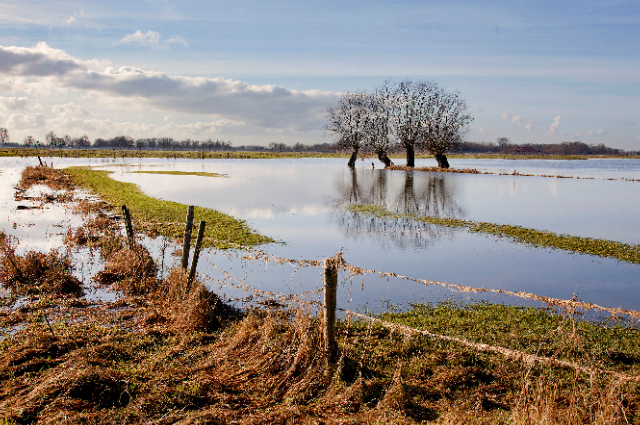
Yet by September, the state suddenly experienced serious flooding as river water levels rose sharply. The Ganga crossed its previous high flood levels at Patna and Bhagalpur.
These statistics demonstrate why a cumulative understanding of rainfall levels can sometimes be misleading. Flooding depends on heavy rainfall in upstream regions, short but intense bursts of rainfall, river flows, and basin geography.
So rather than simply looking at how much rainfall a state receives over four months, the question becomes broader. It asks whether a region that has little rainfall overall can still have too much water at a given moment.
Maharashtra’s Problem: Rainfall Exists, But Not When and Where Farmers Need It
Maharashtra recorded an overall rainfall deficit of around 18%, and the state government even declared drought in 265 tehsils in September.
Some regions received sufficient or even intense rainfall, whereas others experienced prolonged dry spells and moisture stress. In tehsils where rain-fed agriculture is practised, this becomes an important problem because farmers cannot simply compensate for a long dry spell with irrigation.
The result is that two farmers residing in the same state can experience completely different versions of the monsoon season.
Uttar Pradesh Shows How a State-Level Surplus Can Still Hide Drought-Like Conditions
In Uttar Pradesh, rainfall was noted to be 8% above normal by September 27. Yet 19 of its 75 districts were still recording scanty or insufficient rainfall.
At the same time, excessive rainfall in some districts created concerns about flooding, waterlogging, and damage to standing Kharif crops.
Uttar Pradesh, hence, provides another contradiction, one that demonstrates how surplus rainfall does not automatically mean that it provides adequate conditions for agricultural use or harvest.
Rain falling in the wrong location, at the wrong time, and with either scanty or excessive intensity can almost be as disruptive as a deficit.
It Is Not Only Rainfall: Dry Spells Are an Important Part of the Story
The Mahalanobis National Crop Forecast Centre conducted an assessment in September 2026 and found two- to three-week dry spells in parts of Gujarat, Maharashtra, Andhra Pradesh, Karnataka, Rajasthan, Tamil Nadu, Haryana, and Punjab. These dry spells were noted to have taken place between July 1 and September 19.
These statistics matter because they showcase how agricultural growth depends not only on seasonal rainfall but also on soil moisture, which is particularly important at different stages of crop growth.
Therefore, the question shifts from “Did it rain?” to “Did the rain arrive when the farmers, the crops, and the water systems truly needed it and could benefit from it?”
The Monsoon Is Not One Number
The 2026 monsoon season has created a unique scenario, posing multiple contradictions. It challenges the idea that a nation can understand its rainfall only through a national percentage.
However, states such as Bihar, Maharashtra, and Uttar Pradesh have proved the limitations of this approach. Bihar received below-normal rainfall but simultaneously experienced severe flooding. Maharashtra’s overall deficit translated into drought declarations across hundreds of tehsils. Uttar Pradesh recorded an overall surplus, yet several districts remained within a rainfall deficit. The real story, therefore, is about distribution.
Weather risks and climate change are increasingly important factors, as extreme conditions can occur close together and have reverberating consequences: too little water for too long, followed by too much water too quickly. Neither of these scenarios is ideal for agricultural practices.
A blanket statement demanding natural and neutral monsoons might not be the fix for these issues. However, localised and regulated rainfall is the need of the hour.
The monsoon may arrive as one national season, but its consequences are not forced under one umbrella. Rather, they are scattered, with varying intensities depending on localities and regions.
References:
- India Meteorological Department — Statewise Rainfall Information
- Indian Institute of Tropical Meteorology — Monsoon Online
- PIB — Parliament Question on Southwest Monsoon 2026
- Indian Express — Bihar floods despite poor rains
- Indian Express — Maharashtra's rainfall variation and drought declaration
- Down To Earth — Drought monitor and prolonged dry spells