
At the 2026 Glasgow Commonwealth Games, India ranked fourth. This ranking came from tremendous success across multiple sporting categories. India received 39 medals: 13 gold, 17 silver, and 9 bronze. At the Games, Australia came in first and topped the table with 171 medals, followed by England, which received 110 medals.
Below these two, Canada came third with 62 medals. India and Scotland share the same number of medals; however, India was ranked fourth because it won more gold medals. While 39 medals is significantly lower than India's 61 at Birmingham 2022, comparing these totals feels somewhat unfair because it is misleading, as Glasgow had a drastically reduced programme. Birmingham featured 19 sports, whereas Glasgow's programme had only 10 sporting categories.
This made many viewers question whether India's performance needed improvement, or whether the sporting landscape was simply different. We must also consider that India's 124-member contingent participated in these Games and competed across the available programme. Despite the results, the campaign produced several historic firsts alongside the medal haul.
A Smaller Games, A Smaller Medal Pool
When India first competed in the Birmingham Games, it won far more medals, so comparing 61 medals and 39 feels somewhat unfair. This is because the sports that traditionally supplied India with gold medals were absent from the Glasgow Games. Major omissions included badminton, table tennis, wrestling, and hockey. India's strong sports were absent, and this is directly reflected in its medal count.
Looking at the 2022 Games, Birmingham showed how significant these sports are. In wrestling, India won 12 medals. In table tennis, India bagged seven medals; in badminton and hockey, India won six and two medals, respectively. Together, these statistics add up to a cumulative total of 27 medals at the Birmingham Games. This comparison can be useful, as it shows that table tennis, wrestling, and badminton alone accounted for 25 of India's 61 medals.
Therefore, this haul of 39 medals should not automatically signal a decline in India's performance. It should show that the team entered Glasgow without some of its most reliable and successful sports. Because India lacked its medal-producing disciplines, the meaning of its fourth rank changed. India wasn't simply defending its Birmingham position; it was also trying to remain competitive and not complacent in a completely different landscape and medal-opportunity structure.
When Boxing Took Over the Scoreboard
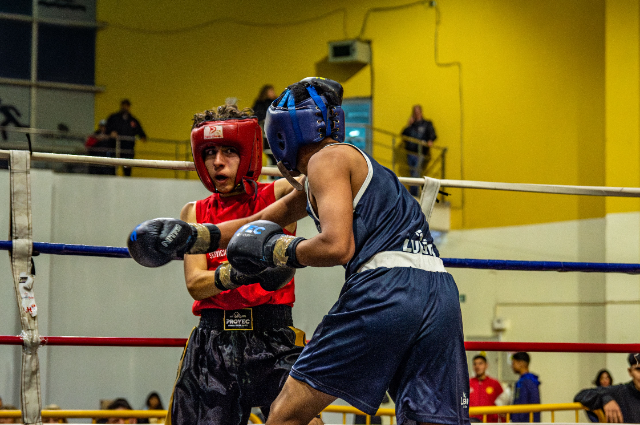
So, in this way, the numbers show mixed audience perceptions. One can gain a clear understanding of India's strength. Boxing became India's biggest gold-medal provider. During the Commonwealth Games, Indian boxers bagged ten medals. They received seven gold medals and three silver medals. These gold medals represent India's best boxing performance.
At the Commonwealth Games, boxing was a highlight of India's overall performance and strategy. On the final day, India won 16 medals in the penultimate competition. This surge pushed India into fourth place, and boxing delivered seven gold medals during that decisive stretch. Alongside this, India also won medals in para-athletics, athletics, and judo.
Some of the most prominent boxing names were Jasmine, Manoria, Priti Poghat, Sakshi Chaudhary, Arohati Chaudhary, Anush, Manhal, Sachin, Silwalch, Tan Piya, and Thaiva. These names show that multiple athletes were on the podium. It was a collective boxing performance that brought credit to India.
An analytical point of this study would be that boxing did not win any Olympic medals. It became India's strongest source of gold. A clear narrative shows that the determination and perseverance of individual athletes can lead to a rising score for the country.
Beyond Boxing: India’s Firsts Begin to Matter
If we take a step back from the gold and the medals, we can gain insight into individual athletes. Mirabai Chanu, for instance, won a gold in the women's 49 kg weightlifting category. She completed a third consecutive Commonwealth Games title. Her victory also marked India's first gold at the Glasgow 2026 Games.
We can also take note of Asmita Bada, who became India's first gold medallist in judo at the Commonwealth Games. She was followed by Harsh Singh, who also brought India medals in wrestling beyond traditional disciplines.
Tejaswin Shankar also won India's first decathlon medal. These people aren't just random citizens. They are India's finest players and sporting personalities. And they show an interesting measure of India's Glasgow performance: it is not just about how many medals were won, but also which new athletes are represented and in the spotlight. These are athletes who worked tremendously hard for years and finally got the chance to appear on the podium.
Fourth Place, But What Does It Mean for 2030?
Despite all the challenges and setbacks India's sporting exploits faced, the country still performed. Even though India bagged 39 medals, it had the seventh-highest total, with a much smaller pool of participants.
This is because, in Glasgow, some teams particularly refused to play. The medal table offers no simple implications. From a negative perspective, 39 medals compared with the 61 India brought home from Birmingham represent a substantial numerical fall. But with a more nuanced perspective, we can see that India maintained its pace, despite losing several sports that had previously brought medals.
Yes, while the competition was intense and the available sports were limited, India still established its strengths and found its place in judo, boxing, athletics, and para-sports. This isn't a loss for India. It is simply the beginning of a new chapter, something that can grow even further.
India is now preparing to host the 2030 Games. At Glasgow's closing ceremony, the Commonwealth Games flag was handed over as India prepares for the next stage of its journey. This portrays Glasgow as a useful benchmark for India. India now has four years to determine whether all of this will expand and become sustained, whether it can continue on its forward journey, growing in size rather than progressing as a one-off phenomenal success.
The Medal Count Doesn’t Capture the Entire Story
If we keep a precise tally, India's performance can be reduced to numbers: India won 61 medals in Birmingham and 39 in Glasgow. That comparison does matter. However, this analysis removes the emotional equation and the tangible sporting picture.
Glasgow removed many of India's traditional medal-winning sports. Instead of giving in, India decided to build something new. India's sporting champions turned to boxing and para-sports, and they won gold and medals across the board.
India's Glasgow campaign is less about maintaining momentum and more about learning to adapt, letting go of the old machinery, and changing with the times.
References:
- https://olympic.ind.in/cwg-2026/
- https://www.pib.gov.in/PressReleasePage.aspx?PRID=2293849
- https://www.indiatoday.in
- https://www.business-standard.com
- https://www.indiatoday.in