
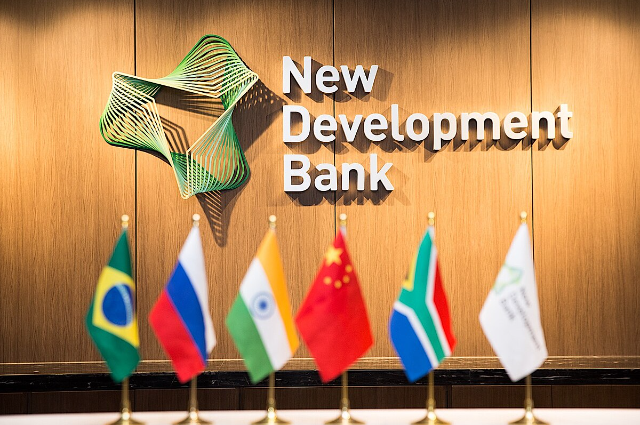
BRICS has undergone a notable transformation. What originally started as a group involving Brazil, Russia, India, China and South Africa has now expanded to 11 full members, including countries such as Iran, Saudi Arabia, Ethiopia, Egypt and the UAE. This bloc now represents around half of the world's population and has a substantial share of global economic output. UNCTAD estimates that BRICS members accounted for 26.9% of the world's GDP in 2024. This number gives BRICS considerable economic weight, but does economic size actually contribute to institutional power?
India Tried to Move BRICS from Declarations to Mechanisms
The BRICS summit, hosted in Delhi from September 12 to 13, was held under the theme Building for Resilience, Innovation, Cooperation and Sustainability. The main focus of the summit was on strengthening cooperation, and this expanded across various fields such as technology, AI, economic and financial affairs, food security, energy and digital infrastructure.
PM Narendra Modi also encouraged BRICS to move commitments from files to real-life impact. A strong analysis of the situation presents how BRICS has spent years issuing declarations. However, the question now is whether those declarations can actually transform into functioning institutions and proper systems.
Here, the summit does not act as an endpoint; rather, it presents a test of action and implementation.
Local Currencies: Reducing Dependence on the Dollar
One of the key discussions that took place at the Delhi summit was around local currencies. The Delhi Declaration supports greater use of local currencies by members in cases of investment and trade settlements. The BRICS payment task force is also examining the interoperability between payment and messaging systems.
However, this does not mean that BRICS has created a common currency. It simply showcases how practical the objective of this community of countries can be. The key idea is to make cross-border transactions easier, reduce transaction costs, and give members more options when it comes to international settlements.
It could also reduce disruptions and a country's vulnerability when it comes to existing financial channels. Through the diversification of their monetary systems, the BRICS discussions are now focusing on making cross-border payments faster, lower-cost, more accessible and safer.
India's Opportunity and Its Balancing Act
India is now placed in a distinctive position inside BRICS. Since India is one of the founding members and has strong ties with Russia, its stance simultaneously involves its economic and strategic relations with the United States and other Western countries.
Here, India is presented with an interesting set of strengths and powerful alternatives. India's emphasis has been on Global South representation, and the country aims to create reforms within existing institutions rather than simply replacing the current situation with another dominant system.
After Delhi, Modi also argued that the Global South needs to move from being a rule-taker to becoming a rule-shaper.
AI and Technology Could Become the Next Economic Frontier
BRICS is increasingly discussing technology, not simply as an area of innovation, but also as an issue of economic governance. The Delhi summit included cooperation around artificial intelligence, technology, digital infrastructure and critical minerals.
Modi also specifically warned about the weaponisation of technology and critical minerals. This is a crucial matter because developing countries and economies are becoming increasingly dependent on digital public infrastructure, data and critical minerals.
One can therefore argue that BRICS's future economic relevance may depend on the technological ties it develops and its position in traditional trade.
The Biggest Problem: BRICS Is Not One Big Economic Bloc
BRICS members may have very different views on political systems, currencies, economic structures, trade priorities and even geopolitical interests. The Delhi summit itself showcased this complexity, as attention was focused on how Iran, Saudi Arabia and the UAE were sitting within the same expanded grouping despite competing regional interests.
Agreement is therefore easier than implementing a common system.
A local-currency payment network requires trust between central banks, compatible monetary infrastructures, currency convertibility and proper coordination. Similarly, technological cooperation requires proper agreements over data, cybersecurity and intellectual property. Both of these require proper standards and ethics to be maintained.
So BRICS is not an inevitable replacement for Western-led institutions. It instead poses a more interesting question: can it become a parallel layer of cooperation alongside the already existing global system?
From Economic Weight to Economic Power
BRICS has enormous demographic and economic weight because of its participating nations. The Delhi summit showcased that members are discussing actual mechanisms rather than simply forming political declarations and painting castles in the air.
Local-currency settlements, AI, cross-border payments and digital infrastructure are key components that were discussed during the summit. This showcases how there is both economic weight and collective monetary power, but how these things do not necessarily represent the same thing.
The success of BRICS does not just depend on these frameworks, but also on the usability of the systems.
India therefore has an important role to play. It needs to push for Global South representation and encourage the practical use of such innovations and strategies. India's job is to preserve its strategic autonomy while also not reducing BRICS to an anti-Western alliance.
The real test here is not how many countries BRICS can include at its round-table conferences, but whether those countries can actually build a system that works when they leave the conference room.
References:
- Press Information Bureau — BRICS Summit outcomes and economic cooperation
- UNCTAD — Two Decades of Intra-BRICS Trade: Trends, Patterns and Policies
- Prime Minister's Office — Rio de Janeiro BRICS Declaration
- Associated Press — BRICS 2026 summit report
- Moneycontrol — Delhi summit outcomes and BRICS payment systems