
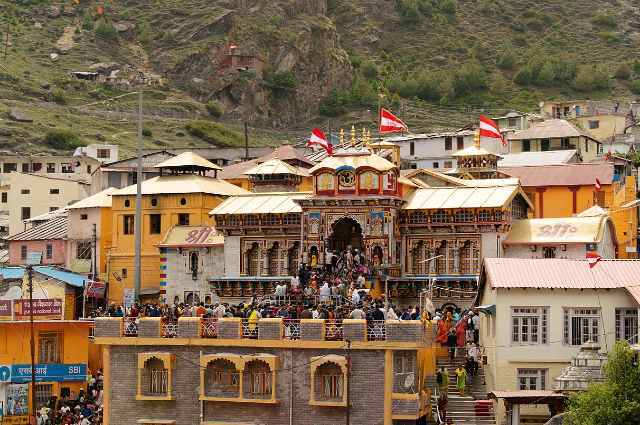
A cultural festival, a simple gesture to showcase Uttarakhand's folk traditions and honour its history, raised difficult questions about the line between cultural expression and religious sanctity.
The Badrinath Temple is famously known for its spiritual reflection. It is deeply associated with prayer and pilgrimage. As a result, performances featuring dancing and amplified music sparked debate over what types of public celebrations are appropriate in and around a major shrine.
The Devbhoomi Cultural Festival of 2026 was held from September 19th to 20th at the Tourist Arrival Plaza in Badrinath. The Indian Army organised this celebration under Operation Sadbhavana, in collaboration with local authorities. Even the Uttarakhand Tourism Department aided in the preparation.
The festival was presented to showcase the rich history of Uttarakhand's folk culture, highlight its local products, give a chance to its artisans to showcase handicrafts and traditional food, and provide a glimpse of the broader village traditions. However, the controversy was triggered when videos of Uttarakhand singer Priyanka Meher performing with music circulated online. The footage also included people dancing near the stage, and the response extended across social media platforms. Notifications started popping as priests, religious figures, and political leaders chimed in on the debate.
The controversy does not simply discuss whether music belongs in a temple. It highlights the practice through which cultural programmes can celebrate local traditions and preserve culture without compromising the religious significance of a sacred site.
Why Badrinath Is More Than a Tourist Destination
Tourists frequent Uttarakhand not only for the scenic Himalayan destination, but also for Badrinath. The temple is associated with one of the four principal Char Dham pilgrimages and is dedicated to Lord Vishnu. It is deeply rooted in spiritual significance and witnesses a large footfall as people travel from across the country in religious observance.
Uttarakhand's Information and Public Relations Department reports that 16,54,236 pilgrims had visited Badrinath by August 21st, 2026. If we look at the total footfall of all the Char Dham destinations, 48,04,897 pilgrims visited the place of worship in the first 125 days of the year. These aren't just statistics. They highlight the scale of the pilgrimage, making decisions about hosting public events significant.
Religious sites not only provide spiritual connection, but they also accommodate worshippers, look after residents, plan tourism activities, and follow the demands of managing large crowds in a sensitive mountainous region.
For devotees who think of Badrinath and picture a quiet place of worship, the presence of concert-style music near the shrine can feel inconsistent with the environment they expect. However, the cultural significance of the broader region must also be considered.
Understanding the controversy therefore requires looking at both the religious objections and the reasons organisers might want to bring local culture into a prominent public space.
The Objections: Where Does Religious Sanctity Begin and End?
The strongest opposition came from members of religious communities and organisations. Priests and authorities argued that the issue was not the existence of music, but the location, the volume, and the vivacity of the performances.
The Char Dham Teerth Purohit Mahapanchayat argued that the activities around the shrine should respect its religious traditions. They objected to the program, saying that loud noises are disruptive and this activity feels unacceptable.
The objection underlines concerns of the perturbed public who believe that a pilgrimage site should not transform into an entertainment venue. For critics, the counterpoint is that preserving religious decorum should involve respecting the expectations of devotees.
Who approved her event? The question of accountability.
With the aid of social media, the controversy expanded and the news spread. The issue now went beyond performances, and questions over organisations and authorities rose.
An issue was noted by the commanding officer of the Garhwal Scouts in the Chamoli district, as they were seeking clarification about permissions for the festival.
The district administration said that its role was largely limited to facilitating stalls and providing other arrangements. They also mentioned that the army had organised a cultural program and selected the performances.
However, The Times of India reported that an army officer maintained thorough communication and assured that the festival had only been organised in coordination with the district administration. They noted that all necessary permissions had been obtained beforehand. This statement differed from the administration's public account of its role.
This disagreement highlights a governance question. It exposes how, when several institutions participate in an event, especially one that is related to a sensitive issue and is established near a major religious site, who should ultimately be responsible for assessing its suitability? Who should be the one gathering all the permissions, making sure that things are above board, and responding to public concerns?
It is certain that governmental authorities need to be transparent about approvals and procedures. They must consult with local religious representatives, and future programs must avoid any similar disputes, regardless of whether future programs are organised by tourism authorities, the army, or other agencies.
Preserving Both Heritage and Sanctity
The Badrinath debate, hence, argues that cultural expression and religious devotion must not compete, but it does demonstrate how the location, format, vivacity, and volume of an event can matter.
A practical path guides authorities to maintain constant communication with local communities and religious leaders, and establish clear rules for any public performances.
This distinguishes between how cultural programs can respect a site's traditions and entertain events by avoiding conflict. The challenge here is not to simply choose between faith and culture, but to ensure that both can be celebrated, not at the expense of one another.
References:
- The Indian Express — Murli Manohar Joshi slams ‘DJ event’ at Badrinath. What is ‘appropriate’ at the shrine?
- The Times of India — Seers, priests slam DJ music at event outside Badri shrine
- The Times of India — Badrinath music event sparks Army-admin row
- The Indian Express — Is a conch made of bone? As Badrinath row simmers, this question has turned political
- India Today — Singer's performance with loud music at Badrinath Dham sparks debate online