
Indian temples routinely receive thousands of people. And for years, devotees would stand in line, form queues, and wait endlessly regardless of the terrain or temperature. Those who wanted faster access were required to obtain special tickets or VIP passes. However, any form of aid in touring the temple required money. Those who could afford the special offers got the chance to enter without a hassle. Left behind were dedicated devotees who simply couldn’t arrange the money and means for purchasing tickets.
At religious places, money has often been associated with quicker access to rituals and darshans. Devotees had to pay to proceed, as it was the only way to beat the never-ending queues and avoid hours spent standing in line.
However, an alternative option is making its way. At Omkareshwar Jyotirlinga in Madhya Pradesh, financial benefits aren’t the only method of skipping the wait. This temple is asking its devotees for something far more valuable: a donation that transcends monetary measures and can save lives.
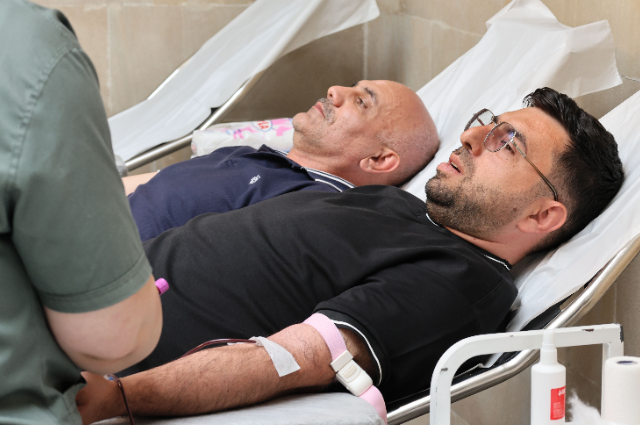
The blood donation process doesn’t take long. Picture this: earlier devotees travelled from far and wide only to stand for two to three hours before paying their respects. Now, they can engage in the donation process for 20 minutes and receive VIP passes for the entire temple tour.
Since the scheme was launched, the initiative has collected around 500 units of blood, while also helping address shortages in Khandwa and its neighbouring districts. This scheme is interesting, as it raises the question of how religious devotion can actually become a vehicle for public awareness and health.
Redefining the Meaning of ‘VIP’
Devotees across India are familiar with the traditional ideas of darshans. Those who regularly take tours, embark on pilgrimages, and have desires to pay their respects to deities understand that there are different queues at every temple. One, for those who do not have much financial support but still like to pay their respects. Those who stand in line for a couple of hours and go on the regular tours. The second line, however, is for those who usually have greater financial benefits, a higher social status, and an influential background. This guarantees them some convenience and a faster entry line.
However, this initiative, launched at the Omkareshwar Jyotirlinga in Madhya Pradesh, is reshaping how the term "VIP" is viewed. Here, privilege is earned through a donation and a contribution rather than a direct payment. The temple now rewards voluntary service rather than wealth. It views donating as a pass to visit the temple and receive extra bonuses along the way.
Many times, devotees are subjected to long queues that often take three to four hours. Now, with the option of donating blood, devotees can skip the long lines and get access- premium access- in just about 20 minutes. This raises a transactional tale, one that is rooted within privilege and social responsibility. The initiative started by this temple represents how religious spaces can become more than what they offer. Sure, they are places of worship, but they can also be spaces of public well-being and community welfare.
Faith as a Force for Public Good
In Indian culture, the tradition of dana,n or charitable giving, holds great prominence. Many believe that giving selflessly not only brings peace to oneself but also to those around them. This act of charity has also been considered to be a very important aspect of religious practice.
Blood donation is one such stream of conscious practice with a more modern extension. The scheme is not just to help the devotees but also to help the community that the temple serves. The numbers are large. Nearly 150 units of blood are collected every single week. Since the footfall is so high, it is easy for the temple to supply blood to neighbouring districts such as Dhar, Bharghanpur, Betul, Barwani, and Harda. Even when it comes to rare blood groups such as AB negative and O negative, the temple has already collected bags. This means that even those with rare conditions who require blood immediately will not have to wait long in hospitals. Their aid will be quick and seamless, all thanks to the efforts of the temple and the good-heartedness and charitable donations of the devotees.
The outcomes of this initiative aren't just written on paper. They are factual and directly reflect how support in hospitals and emergency medical care can be provided through public initiatives. The state government is also considering extending this model. It has been noted that the outcomes have been extremely positive, and we would like to implement such measures in other temples, such as Mahakaleshwar. This initiative shows how places of faith can solve civic problems when the community comes together.
Should Public Service Come with Incentives
The immense success and coverage of the blood donation drive at the Omkareshwar Jyotirlinga Temple have led to questions about the ethics of this practice. Many people have raised their concerns about how people would actually donate blood without the promise of VIP access. Or does the motivation matter if the lives are ultimately saved? Both of these perspectives have valid arguments.
Supporters have stated that, because of this scheme, more blood has reached hospitals, meaning that patients desperately in need of care have been provided with the resources they need. Waiting times and long lines have been reduced outside temples, and the benefits of the scheme are for both parties involved.
However, critics also argue that blood donations should remain voluntary, that people must be given the option, and that they should have the power to choose, rather than being driven by incentives. They also believe that acts of charity should be something personal. They should emerge from altruism rather than from the hope of any rewards.
However, public policy in India has often succeeded by encouraging social behaviour. This scheme goes to show that any step taken for the public good, whether through a religious place, an educational institution, or a political stance, can actually resonate with people's preconceptions and provide socially beneficial incentives.
The real measure should be the outcomes rather than the intentions. The value of the program has only grown because of how it motivates people to act in a certain way. Not only has this blood donation campaign aided many hospitals, but it has also helped raise awareness of the illnesses people experience and the need to donate blood regularly.
Charity has been a constant practice in Indian culture. Many devotees often leave behind coconuts, flowers, or even monetary offerings for the temples they visit.
Omkareshwar, however, asks for something that cannot be bought from stores or vendors. It asks for a chance to help save someone's life. Regardless of how people view charity or public service, this initiative stands as a reminder that devotion is perhaps the most meaningful act when it extends beyond prayer and becomes something tangible that can be contributed towards others' well-being.
In a country where news of blood shortages often appears on television and in newspaper headlines, this temple has taken into account the challenges of healthcare, ensuring that 20 minutes of giving can ultimately become one of the most valuable offerings a devotee can make.
References:
- The Times of India. (2026, April 23). Omkareshwar pilgrims get VIP darshan for donating blood.https://timesofindia.indiatimes.com
- The Times of India. (2026, June 14). VIP darshan in exchange for blood donation a big hit at Omkareshwar temple.https://timesofindia.indiatimes.com
- The Economic Times. (2026, June 16). Just donate blood and get VIP into famous temple. The result is blood bank surplus at local hospitals.https://economictimes.indiatimes.com
- Shri Omkareshwar Jyotirlinga Temple Trust. Latest News – Blood Donation and VIP Darshan Initiative.https://shriomkareshwar.org/LatestNews.aspx
- Deccan Chronicle. (2026, June 14). MP mulls offering VIP darshan in important temples to devotees for voluntary blood donation.https://www.deccanchronicle.com