
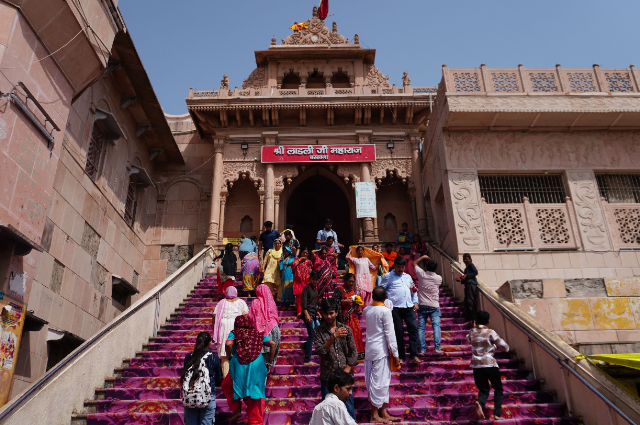
India’s religious atmosphere is acclaimed as one of the most diverse across the globe. Many sacred institutions, such as cherished temples, witness a bustling footfall of 1.4 billion domestic tourists. A majority of Indians are largely dedicated towards the hymns of the gods. They believe that charity and donations truly impact society.
Whether it be through a ten-rupee note in the donation box, money transferred online, or the submission of savings, jewellery, or gold, the act of donating is carried out religiously. People often contribute their financial assets without expecting anything in return.
Here lies a contrast between selfless folks who donate to charity for the good of others and for the betterment of their beloved temples, and the large religious institutions that routinely handle massive amounts of money. This money is worth thousands of crores. It is obtained through public generosity, yet how it’s managed is uncertain. Such practices by valued and well-respected institutions raise questions about the transparency, accountability, and ownership regarding their inner workings.
Similar parallels can be drawn in consideration of the recent controversy surrounding the Ram Mandir. Certain aspects of the institution's financial management have come to light. Debates about donations, irregularities in financial matters, and untraced records have surfaced in response to public demands for investigation.
This raises the question of whether faith and financial accountability can remain interwoven.
When Faith Has a Trust Fund
Temples today have transformed from being the sole spaces of religious devotion. Now, every place of worship has an economic agenda. Such institutions don’t just offer guidance and solace; they also provide payment methods. A revenue stream is attached to the blessing that is offered. There is a vast array of transactions that happen between a devotee and their chosen establishment.
While direct donations seem to be the most visible stream of income, there is a plethora of payments that might go unrecorded. Devotees often make significant contributions through cash, donations of gold or expensive jewellery, and even through online payments. One such example includes Tirupati, a widely famous establishment known for its wealth, accumulated through sizeable donations of gold and cash.
Temples also receive major revenue from pilgrim tours. In India, dedicated devotees often embark on annual religious tours, or yatras, that cover multiple popular destinations. This leads to a sudden increase in revenue, as millions of visitors generate income through accommodation, entry passes, transportation services, and tailored services. The Ram Mandir in Ayodhya fits this scenario perfectly, as it's well-known for the hustle and bustle of pilgrims who travel from across the country to pay their respects.
Alongside this, commercial activities such as souvenir sales, cultural events, and motivational talks also bring hefty revenue. Many times, temples collaborate with neighbouring businesses and pilgrimage centres to create a larger economic hub.
There is nothing inherently wrong with temples receiving donations. In fact, social exchange and barter are how many religious institutions survive and prosper in India. The issue arises when religious trusts assume responsibility for the hundreds of crores of rupees and capital they have acquired. Public trust starts to fade when transparency and proper governance of crucial financial matters aren’t disclosed or carried out with utmost diligence. This is where the issue escalates.
The Ram Mandir Donation Debate
The temple walls, once filled with prosperity and peace, are now at the centre of a controversy. This began with allegations of theft from certain trust funds. A report by India Today highlights an oversight in the management system. It records the complaints raised by the public in relation to the administration’s accountability.
The leaders and committee members of the Aam Aadmi Party (AAP) have alleged that approximately ₹200 crore in donations received by the temple is unaccounted for. The party also criticised the officials for such unethical practices and demanded the prosecution of those allegedly responsible.
An article from the Times of India notes that Manoj Jha, an MP from the Rashtria Janata Dal (RJD), has demanded a disclosure of the donation and transaction records. He has also made a statement, calling for immediate transparency from the institution’s authorities.
This has sparked a public debate about the claimed honest-to-goodness use of devotees' donations. Many are questioning the internal functioning of such religious establishments and the reliability of their management systems.
As a response, the trust has denied any wrongdoing. The officials have stated that proper conduct has been maintained and that the structural guidelines are being followed. A Special Investigation Team (SIT) has been initiated by the UP government to probe into the allegations.
Recurring Remarks and Growing Public Grievances
A controversy still haunting the authorities of the Ram Mandir concerns the 2021 land purchase. Reports have stated that a land once bought for ₹2 Crore was sold to the Ram Mandir Trust for around ₹18.5 Crore. This transaction was conducted within a very short period, hence raising questions.
Opposition authorities questioned this exchange, demanding clarification on the sudden price increase. In response to their demand, the Trust stated that there were no signs of wrongdoing. They mentioned that the price of land during their purchase reflected the prevailing conditions of market value.
The Wire also conducted research regarding other allegations about construction and development contracts and land deals. They aimed to record any significant financial decisions that were tied to the institution. However, the Trust denied many allegations, and over time, they were left disputed.
Even though the allegations may be unproven, the public trust, loyalty, and support the establishment once had have been reduced. Repeated controversies directly undermine the public's sense of reciprocity, leading to growing grievances and doubts amongst devotees. Many still seek clarification and demand transparency to rebuild their trust.
The Question of Opacity Versus Transparency
People desire the truth. A shareholder can access corporate disclosures without any restrictions. A taxpayer can demand documentation and accountability from public institutions. Then why are the mechanisms of access and transparency different for ordinary devotees?
When a citizen has the right to information, to access what is public knowledge, then devotees deserve the same. They are allowed to access annual reports and audits, and desperately require financial transparency, as it is a crucial pillar of their unwavering trust.
The debates about the Ram Mandir revolve around this very issue. When a trusted establishment provides opaque responses regarding financial matters, it loses the confidence of its collective. This controversy shows exactly that. Trust and accountability are what build public faith.
The Road Towards Regaining Trust
There is a tremendous amount of trust involved in donating money. Devotees aren’t just engaging in a financial exchange; they are blindly relying on and trusting an institution to do good with their hard-earned capital.
Since the matter is highly sensitive in nature, any controversy or misleading narrative can taint the public’s view of a religious establishment. Trust vanishes quickly, and scrutiny becomes inevitable. The debate around the Ram Mandir extends beyond the issue of theft.
It is solidified by the growing expectations of public trust, institutional responsibility, and open, honest communication. Faith may not require proof, but accountability does. It requires repeated action; it demands authenticity. The challenge here lies in making the two coexist.
Refrences
- The Hindu. (2026). Govt failed to prosecute those behind theft of ₹200 crore from Ram temple: AAP. Retrieved from: https://www.thehindu.com
- The Wire. (2026). Ayodhya’s Ram Temple and Six Past Charges of Alleged Corruption. Retrieved from: https://m.thewire.in
- The Times of India. (2026). Ram Mandir donations under scrutiny: RJD MP sends legal notice amid irregularity allegations. Retrieved from: https://timesofindia.indiatimes.com
- India Today. (2026). Ayodhya Ram Temple donation theft row: Weak oversight and accountability concerns raise questions. Retrieved from: https://www.indiatoday.in
- Shri Ram Janmabhoomi Teerth Kshetra Trust. Official information and public statements regarding temple administration and donations.
- National Testing Agency and Government of India reports on religious tourism, pilgrimage infrastructure, and public trust governance (where applicable).
- Ministry of Tourism, Government of India. Data and reports relating to religious tourism and pilgrimage travel in India.