
Upon seeing a crime broadcast boldly on television, one would assume that the investigation would be conducted by the proper authorities. Police would gather forensic evidence, take witness statements, and build their case. However, this story begins with a testimony, an allegation by a sanitation worker against acts of violence.
In Dharmasthala, Karnataka, a former sanitation worker alleged that between 1995 and 2014, he was forced into conducting an inhumane practice. Despite being a part of a religious community, he was forced to bury and dispose of the bodies of women and girls whom he believed had been murdered. He also stated that many of those women and children showed signs of sexual assault. These claims prompted the Karnataka government to establish a Special Investigation Team (SIT) to investigate the case. The allegations remain under investigation and have been strongly denied by those accused.
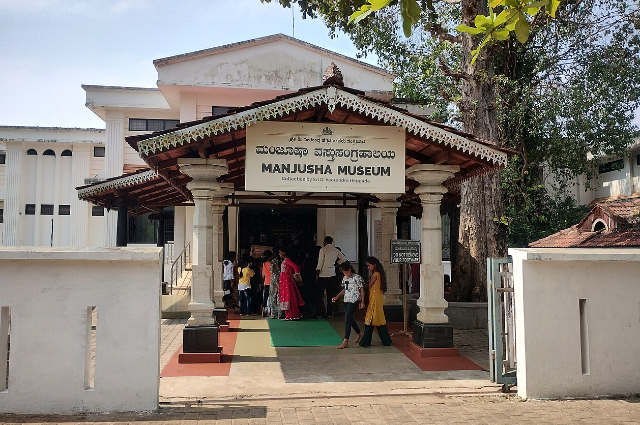
Dharmasthala is one of Karnataka's well-known pilgrimage centres. Thousands of devotees and pilgrims pay their respects daily, trusting the institution and believing in its benevolence. This place of worship is known for its philanthropy and religious service and is nationally accredited for its devotion to providing free meals, access to healthcare, charity, and education for children.
However, Dharmasthala's long-standing reputation is now being called into question by allegations that undermine the public's trust in a highly valued organisation. This vagueness on the institution’s part is prompting people to reevaluate the institution's trustworthiness and accountability.
Coming Clean: The Impact of a Sanitation Worker’s Testimonial
Many don't truly understand the importance of whistleblowers.
History always has a way of repeating itself. In cases like this, it shows that major institutional scandals often emerge from the dedicated work of senior officials, not from individuals in the lowest positions. However, within many organisational hierarchies, as attempts to cover up the spilt milk fail, whistleblowers are coming clean and giving testimony.
This happens for a myriad of reasons. Those in lower positions at high-functioning, accredited institutions often witness daily operations. They remain invisible, hence unrestricted. They rarely have any institutional protection and have access to a variety of tasks performed by the company. This gives them leverage, a chance to come face-to-face with the wrongdoings.
The former sanitation worker who made his remarks about this case said he had initially remained silent for years. Not just because he wasn't truly sure of what was happening yet, but because he feared that he would receive retaliation and his act of speaking out could endanger his life.
According to his account, he eventually decided to discuss this matter with the authorities because he could no longer go about his daily life with the weight of what he had witnessed. It was as if an albatross was hung around his neck, guiding his conscience. As he says, "I can no longer bear the burden of memories.” This daunting realisation made him face the uncertainty and take the required action.
Confronting the Past: Obstacles to Investigating an Old Case
Given our country's growing population and rapidly rising crime rates, cases take time. When the justice system is tirelessly working through thousands of pending cases at the moment, how does it incorporate investigative details from events that happened years ago?
Old cases are difficult to solve because, as time passes, they take with them the essence of the issue. Evidence starts to vanish, witnesses relocate, forgetting the minute details, and the crime scene changes. Geographical alteration is a significant factor, hindering the resolution of an old crime. Even forensic evidence deteriorates. This is why, when old cases are brought to light, the authorities view them as a persistent challenge.
As stated by the anonymous sanitation worker, his allegations of the acts of violence he noted spanned over 19 years, from 1995 to 2014. The Karnataka government escalated this matter by issuing an SIT. After its issuance, investigators started examining 13 locations linked to these allegations.
Dharmasthala is being closely monitored, and earlier records of the ongoing situation are being studied. They have spent months conducting excavations, recovering bodies that were wrongfully buried, and conducting forensic examinations. Updates on this case involve the DNA collected from these excavations. It has been compared with 17 missing-person cases reported during the investigation period. The conclusions must ultimately depend on how the forensic and legal processes respond to this evidence after the speculation has ended.
Institutional Trust is Powerful, So is the Silence
Religious institutions occupy a unique place in Indian society. They are more than spiritual centres or retreats for pilgrims. Oftentimes, people associate such sacred spaces with education, wisdom, healthcare, cultural identity, and, most importantly, community welfare. For these reasons, people offer their unwavering support. And trust. They devote enormous amounts of time and effort, expecting nothing in return. They believe that their trust is respected.
But when trust becomes translucent, it creates another challenge. When allegations arise, people often hesitate to question the institutions that they deeply respect. The society, upon hearing news of criminal allegations against such respected institutions, begins to discuss the damage to religious sentiments, the fear of authority, and the community pressure associated with these cases. People also share a reluctance to depart from their faith in long-standing institutions.
In this case, it is not just about whether an institution deserves trust. It goes beyond and asks about accountability, functionality, and the measures an organisation must take to regain its trust and loyalty.
After the special investigation team conducted their exhumation, people were sceptical about what was found. The truth has always been a hard pill to swallow, and this case showcases how even allegations can break the bond between people and a place that they think provides honest spiritual connection, well-being and advice.
The most intriguing part of the Dharmasthala controversy is not simply the allegations but the person who decided to raise concerns around them.
A sanitation worker, an ordinary person working a daily-wage job with little to no institutional authority. Yet, he becomes the individual who highlights accounts of wrongdoing, alerts the Karnataka government to an alleged crime, and calls for investigations.
Despite the results, this case highlights a broader democratic principle, one that discusses how institutions deprive the public of authority and legitimacy. They deviate from their path of public faith. But it also shows how acceptance can restore trust once lost.
References:
- BBC News (the article you found on Dharmasthala and institutional context).
- The Indian Express – Dharmasthala secret burials case and SIT updates.
- India Today – Initial report on the whistleblower's allegations.
- Al Jazeera – Context on Dharmasthala, the whistleblower's account, and the town's significance.
- The New Indian Express – DNA matching, excavation, and SIT developments.