
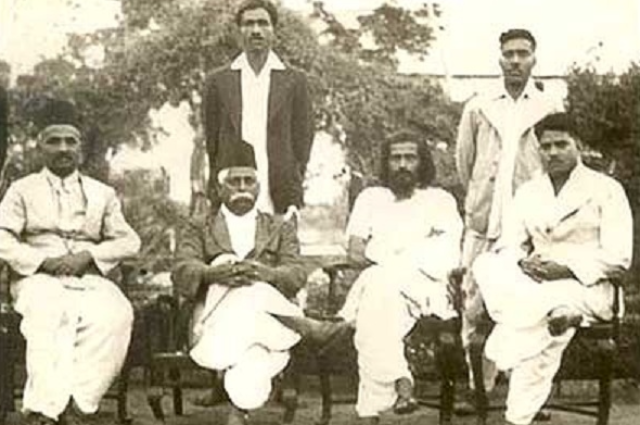
Founded in Nagpur in 1925, the Rashtriya Swayamsevak Sangh has developed into a large, socially and politically influential organisation in India. As the RSS completes a century, opinions on its legacy remain polarised on issues of nationalism and cultural identity and its relationship with public accountability.
The RSS traces its origins to 27 September 1925 and the founding of the organisation by Keshav Baliram Hedgewar in Nagpur. A hundred years later, the RSS is present in almost every part of India, and is associated with several leading social and political movements of the time. The centenary of the RSS provides an opportunity to study the evolution of the organisation, as well as that of India since its inception.
For many, the RSS personifies discipline and pride in Indian culture. For many others, the celebration of the hundred years by the RSS raises concerns about the organisation’s commitment to Hindu nationalism and its impact on religious minorities.
Understanding the RSS requires an understanding of how the organisation has been able to mainstream its messages while simultaneously polarising society on issues of Indian nationalism.
From Nagpur to a Nationwide Network
The RSS conceptualises Hindu society along the lines of organising local social units known as Shakhas. Each Shakha is meant to provide opportunities for discipline and character-building and instil a sense of communal responsibility. The RSS sees the growth of the organisation as essential for the moral regeneration of Indian society.
The RSS is headed by a Sarsanghchalak, currently Mohan Bhagwat, who succeeded K.S. Sudarshan in 2009. Over the years, RSS has developed links with a wider grouping, known as the Sangh Parivar. It includes the Bharatiya Janata Party (BJP), Vishwa Hindu Parishad (VHP), Bharatiya Hindu Mahasabha and the Akhil Bharatiya Vidyarthi Parishad (ABVP).
The RSS has an impressive reach and numbers. In 2025, the organisation claimed to have 83,129 shakhas every day across 51,740 locations. By 2026, these figures increased to 88,949 shakhas and 55,683 locations. As per RSS data itself, its network has become larger and more local. The RSS reports of 2025 and 2026 capture this data.
Its staying power is based on local organisation, participation and a network that goes beyond the realm of electoral politics.
Bans, Political Setbacks and Historical Questions
Since the period after India's independence, the RSS has had three successive bans. The first ban was ordered in February 1948, following Mahatma Gandhi's assassination on 30 January 1948. The second ban, from 1977 to 1978, was imposed by the Congress party government following political setbacks suffered by the BJP and RSS, after the Emergency. The third ban was from 1992 to 1993, following the demolition of Babri Masjid by RSS/VHP activists and the subsequent communal riots in the country. The bans were lifted after the conditions imposed by the RSS/BJP were met.
The second ban was instituted during the Emergency declared by Indira Gandhi in 1975. It was lifted in March 1977 after the Emergency. The RSS was banned once again in December 1992 following the demolition of the Babri Masjid. The ban was lifted in June 1993, when a tribunal found insufficient reasons to continue it. The Indian Express has stories about these incidents.
The role of the RSS in the independence movement and the organisation’s ties with the assassination of Mahatma Gandhi have been subjects of historical research. There are political arguments for and against the RSS.
Godse was found guilty of the assassination, but determining the extent of the organisational ties and responsibility requires an analysis of historical data. Likewise, the role of the RSS during the independence movement has also been studied by historians and has varied interpretations.
Service, Cultural Identity and Criticism
The RSS believes that its work centres on the concepts of character, cultural and national integration and social service. The service activities of the organisation include work in education and health, as well as disaster management and community services. The RSS has projects aimed at social work, literacy and health in both urban and rural areas. It has also implemented projects aimed at empowering SC/ST communities.
Due to its ties to the growth of the Hindu nationalist movement in the country, the focus remains on the ideology of Hindutva and its interpretations. Hindutva as an ideology is intertwined with the critical analysis of Indian cultural identity and nationalism. Critics of Hindutva and the RSS argue that the legacy of India’s cultural pluralism will be compromised if Hinduism forms the basis of India’s national identity.
Questions about caste, gender roles and how minority communities fit into the RSS’s idea of identity have also drawn attention. Supporters say the RSS promotes cohesion and shared responsibility. Critics ask if these ideals truly tackle existing inequality and religious diversity.
This disagreement shows a debate about what it means to be Indian. Some people see the RSS as a guide for belonging and social organisation. Others worry that the RSS affects the link between identity, citizenship and a secular democracy.
The Accountability Debate
The debate over the RSS’s influence is now tied to calls for transparency. In June 2026, Karnataka minister Priyank Kharge wrote to Bhagwat asking the RSS to register and share information about its legal status, leaders, funding and spending. Kharge said that an organisation with such a public presence must show transparency and uphold constitutional accountability.
Bhagwat dismissed the request as driven and said the RSS runs openly. When asked about registration, Bhagwat said, "Hindu Dharma is not registered." He also noted that the RSS has been public for a hundred years and that its written constitution was already given to the government. The Indian Express covered the exchange.
The dispute shows two competing positions. One position demands formal disclosure from an influential organisation. The other position, held by RSS leadership, argues that the existing organisational framework does not need the registration that Kharge is seeking. The demand itself does not prove illegality or financial wrongdoing. The legal questions must be judged separately from the disagreement. I think this point is very clear.
Nevertheless, the debate raises a question. How should organisations with public influence show accountability? I feel that this question deserves discussion.
A Century Beyond the Headlines
A hundred years after its founding, the RSS holds a place in India’s political and social landscape. Its growth shows an organisational presence, an extensive network and an ideology that has shaped public debates about national identity. I believe this history is important.
The legacy of the RSS cannot be understood through only one story of achievement or criticism. The service activities, historical controversies, political connections and ideological positions of the RSS each deserve examination. I am convinced that each of these aspects matters.
As the RSS moves beyond its centenary, the central question is not how the RSS survived for a hundred years. It is also how the influence of the RSS will shape India’s future. In a democracy that is defined by diversity and competing ideas of national belonging, the challenge for the RSS will be to navigate the demands of cultural identity, public trust and accountability. I think this challenge is crucial.
References:
- The Indian Express — The Brotherhood That Shaped Hindu Nationalism: As RSS Turns 100, a Look at Its Journey to Becoming a Dominant Force in Indian Polity
- The Indian Express — Short History of the Bans Imposed on RSS Since 1947
- Rashtriya Swayamsevak Sangh — RSS’s Sah Sarkaryavah Mukunda CR’s Press Briefing: Organisational Expansion and Shakha Statistics
- Rashtriya Swayamsevak Sangh — The Response from Society to the Centenary-Year Programmes of the RSS
- The Indian Express — Priyank Kharge Urges RSS to Register; Bhagwat Says Sangh Has Nothing to Hide
- Hindustan Times — ‘Hindu Dharma Not Registered’: RSS Chief Mohan Bhagwat on Priyank Kharge’s Open Letter