
Long before concert halls, orchestras, or written music existed, someone carved an instrument from the wing bone of a bird and used it to make sound. The musician’s name is lost to time. The instrument itself has remained for tens of thousands of years. It gives us a powerful look into the creative lives of early humans.
The Hohle Fels flute, found in a cave in Germany, is one of the oldest musical instruments ever discovered. It dates back more than 35,000 years, long before the rise of cities or farming. This discovery challenges the idea that complex artistic expression only began after humans started living in settled communities. Instead, it shows that music was already part of life during the Ice Age, when people lived in harsh conditions, hunted for food, gathered plants and relied on strong social bonds.
This find was announced in 2009 by a team of archaeologists led by Nicholas Conard from the University of Tübingen. Their findings were published in the journal Nature. The paper described bone and ivory flutes from the area, proving that people in the Upper Palaeolithic period had a developed musical tradition. These instruments provide physical proof of a kind of human behaviour that often leaves no trace in the archaeological record.
A Discovery Hidden in a German Cave
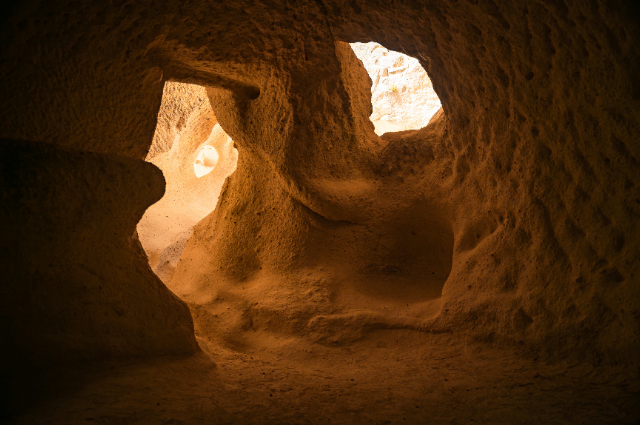
The flute was uncovered during digging at Hohle Fels Cave. The cave sits in the Swabian Jura region of Baden-Württemberg, 20 kilometres west of the city of Ulm. It’s a site for understanding early human life. Inside the cave, researchers found tools, animal bones, small figurines and other items linked to the culture. These findings help paint a picture of how early humans lived, worked and created.
In 2008, the instrument was discovered as researchers found 12 pieces of an almost complete flute within an archaeological layer dating back to early modern humans in Europe. These pieces were fairly close together, covering an area of about 10cm by 20cm.
The flute was about 21.8cm long after being put back together, with a diameter of about 8mm. It has 5 holes that can be used with fingers and a V-shaped mouthpiece that has been very carefully made so air can be blown into it.
This was identified as coming from the radius (forearm bone) of a griffon vulture (Gyps fulvus). Griffon vultures have large wings, meaning they have long hollow bones.
What makes this flute so special is that it is very old, but it also shows that it was made on purpose. There are holes and a mouthpiece showing that the bone was specifically altered. This means there must have been knowledge of how this instrument could be made to create different sounds.
How Old Is The World's Oldest Flute?
The Hohle Fels flute is often said to be almost 40,000 years old. However, through research, we now know that these flutes are over 35,000 calendar years old. The radiocarbon dates show that the archaeological layers are between about 31,000 and 40,000 years before present.
Radiocarbon dating is not always accurate; therefore, calibration of the dates using other dating methods can help create a more accurate estimate.
Other bone and ivory instruments were found during excavations at nearby sites such as Vogelherd and Geißenklösterle. These bone fragments were found to represent multiple instruments, including some mammoth ivory flutes. These would require more advanced manufacturing techniques compared to the bird bone used for the Hohle Fels flute.
It was concluded by Conard and colleagues in their 2009 paper published in Nature that there was a musical tradition amongst early modern humans in Germany. These finds demonstrate how ‘a well-established musical tradition existed’ over 35,000 years ago.
What Did Ice Age Music Sound Like?
One of the most interesting aspects of the flute is what music would have sounded like. As it is very delicate, a replica was created so that researchers could investigate the acoustics of the instrument.
With the holes in the flute, the pitch could be altered depending on which holes were covered. We cannot know for certain what kind of melodies would have been played, but this instrument shows that people had the knowledge to create musical instruments.
Music may have had many uses in communities, for example, being used to accompany gatherings, for ritual, entertainment or for effective communication. However, we cannot tell exactly how it was used based on this instrument.
The fact that this was found near other important items such as the famous Venus of Hohle Fels, a small female figurine carved from mammoth ivory, makes for an interesting insight into a community that had musical instruments and figurines. These items were found in the same general archaeological context.
As a whole, it shows that early humans were producing items that weren’t just for basic survival. They also had creative and artistic attributes of emotional expression.
The Debate Over an Even Older Flute
Despite the significance of the Hohle Fels flute, there is another controversial discovery linked to the oldest musical instrument in the world.
In 1995, a fossilised bone was found at Divje Babe in Slovenia. This was a thigh bone from a juvenile cave bear with holes in it. It was found in a layer associated with Neanderthals and has been suggested to be a flute. This would be 50-60 thousand years old. If the holes were man-made by Neanderthals, then this would greatly increase how far back we have archaeological evidence for musical instruments.
There is an argument around this item, however. Some argue that the holes may have been created by carnivore teeth rather than man-made. Others have argued that it is possible the bone was modified. There have been studies into the shape of the holes, markings and processes that could have occurred; however, there is still debate.
Whilst the Divje Babe item is a possible musical instrument, the Hohle Fels flute has more widely accepted evidence for it being man-made. This is often referred to as one of the oldest confirmed instances of prehistoric musical instruments.
Music Before Written History
Whilst the Hohle Fels flute does not give us any information about the individual who made it, or those who listened to it, we can tell that musical creativity was happening tens of thousands of years before written records.
Conard and colleagues suggest that music may have increased social bonding and communication in early modern humans. This could have helped communities to bond through shared culture and adapt to new environments. Some have interpreted this to show the differences in society between modern humans and Neanderthals. However, this is still a hypothesis that music helped one population compete over the other.
Even thousands of generations later, this item creates a link between the past and present. Long before music could be recorded, shared or streamed, someone had found a way to create it. The Hohle Fels flute helps us realise that music is not a modern creation but a tradition with deep roots in our history.
References:
- Nature —New Flutes Document the Earliest Musical Tradition in Southwestern Germany
- University of Tübingen — Hohle Fels
- ScienceDaily — Palaeolithic Bone Flute Discovered: Earliest Musical Tradition Documented in Southwestern Germany
- Archaeometry — Did Neanderthals Play Music? X-Ray Computed Micro-Tomography of the Divje Babe ‘Flute’
- L'Anthropologie — The Mousterian Musical Instrument from the Divje Babe I Cave (Slovenia): Arguments on the Material Evidence for Neanderthal Musical Behaviour