
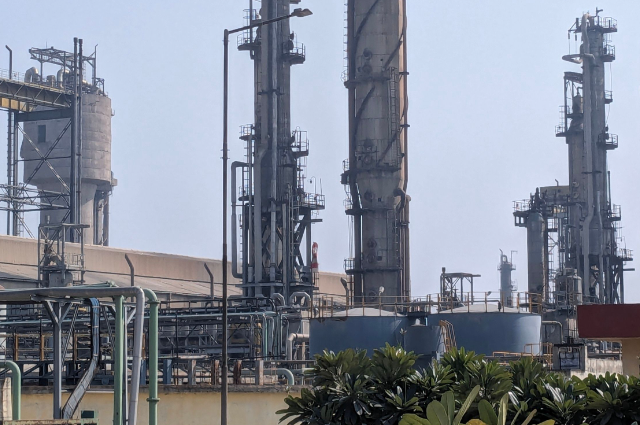
A barrel of crude oil represents every nation's necessities. However, for India, it transforms from a commodity into an instrument of diplomacy, aiding in its foreign policy. According to the Ministry of Petroleum and Natural Gas, India imports more than 85 per cent of its crude oil requirements. This means that the reliability, source and price of India's oil supply have consequences that go beyond the energy market, creating a two-way tie for India's diplomacy.
The ministry also emphasises the necessity of securing uninterrupted crude supplies while taking into consideration the geographical diversification of suppliers and India's position as a major energy consumer.
On September 18, 2026, U.S. President Donald Trump signed the Lindsey O. Graham Sanctioning Russia and Iran Act of 2026. This act provides Washington with the ability to impose economic pressure on Russia, while providing the U.S. President with the power to impose tariffs on countries that continue purchasing sanctions and maintain significant economic relations with Russia.
Certain reports have highlighted that the legislation could allow tariffs of up to 100 per cent on countries purchasing significant quantities of Russian oil. Due to this, India is placed in a difficult position: one where it certainly relies on Russia for its oil, but also one where continuing those purchases can create friction with Washington, another key player.
Why Does Russia Become So Important to India's Oil Basket?
Before Russia invaded Ukraine in 2022, Russian crude oil represented less than 2 per cent of India's imports. However, Western sanctions disrupted Russia's traditional oil markets after the invasion. A sudden increase in India’s oil imports was noted due to discounted prices.
For Indian refiners, Russian oil markets became commercially attractive, leading to India’s import growth. Before 2020, Russian oil transactions were less than 2 per cent. However, after June 2024, imports rose to more than 40 per cent.
This creates a crucial contradiction, one that showcases how the relationship that strengthens India's energy security can also weaken its diplomatic ties as Washington turns oil into leverage.
Because of the pressure imposed by the United States, Russian oil has transformed from a transaction between Russian producers and Indian refiners and consumers into a crucial component of India's diplomacy and trade relations.
This situation has also created a dilemma for New Delhi. Cutting Russian purchases could increase energy costs. However, continuing those purchases could also expose India's wider trade relationship with the U.S. to pressure.
The U.S. is an important market for Indian exports. Therefore, India must effectively balance two economic relationships: one with Russia, where it depends on energy, defence, and strategic cooperation; and another with the United States, where the relationship is built around trade, technology, strategic cooperation, and investment.
The Foreign Policy Idea Behind the Oil Strategy
There is a larger foreign policy connection that forms an allegory above all of this. We must consider strategic autonomy because India's objective is not necessarily to choose Russia over the U.S. or vice versa, but to retain enough room to make decisions based on India's own interests and not simply its diplomatic relationships.
India's foreign policy has drastically changed from following a traditional non-alignment path towards having greater strategic autonomy and transforming into a multi-alignment network.
The oil market now demonstrates this in practice through buying from Russia, maintaining relations with Gulf producers, continuously strengthening ties with the United States, and expanding alternative sources.
India's own Ministry of Petroleum and Natural Gas has described its energy diplomacy around geographical diversification and widening oil and gas sourcing.
The key idea of this framework is that strategic autonomy does not automatically mean refusing dependence on other countries. Instead, it means maintaining enough alternatives so that a single country cannot dictate India's choices.
When Geopolitics Reaches the Indian Economy
While the story of oil as a diplomatic weapon does involve trade relations and powerful governments, it all ultimately boils down to ordinary consumers.
Crude oil isn't just about trade relations. Its prices also influence transportation, daily logistics, manufacturing, India's current account, and inflation. While Russian oil does not directly determine petrol prices, it does have an impact on domestic fuel prices.
Instead, India's ability to obtain crude oil at competitive prices affects its broader economic environment. Therefore, a diplomatic decision taken miles away in Moscow or Washington can actually have ramifications for businesses and consumers in India.
The Barrel Is No Longer Just a Barrel
To many, a barrel of crude oil looks like a commodity. However, for India, it carries much more than just oil. It is filled to the brim with diplomacy, trade, strategic autonomy, and security.
While Russia remains an important energy partner, the U.S. also imposes certain considerations. India's relationship with the U.S. is built on economic and strategic partnership. Middle Eastern producers, meanwhile, also become an essential part of India's energy security, manufacturing, and wider economic interests.
Therefore, for India, the challenge isn't simply to choose one side. It is to maintain enough alternatives while keeping good relationships, ensuring that its foreign policy choices are not dictated by others' energy needs.
For India, the key move might just be to have autonomy when it comes to strategic relations, so that the country doesn't increasingly depend on choosing where to stand, but on ensuring that no single country can decide for India.
References:
- Russian oil imports and India's changing crude-supply mix.- Reuters
- U.S. sanctions legislation and its implications for India. - Reuters
- India's energy diplomacy and diversification. - Ministry of Petroleum & Natural Gas
- India's transition from non-alignment to multi-alignment. - CIDOB
- India at a Crossroads: Examining Comprehensive National Power and the Road to 2047. - The Diplomat