
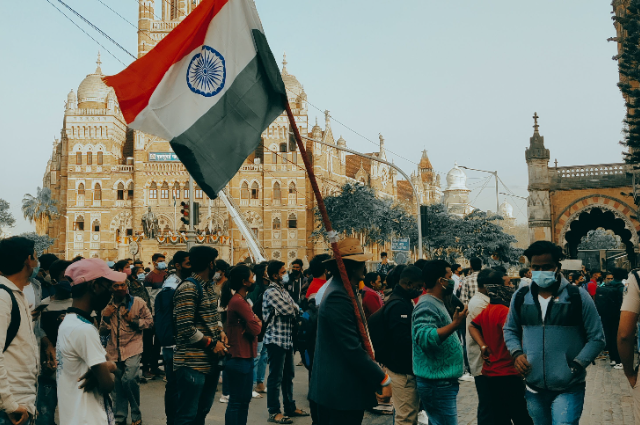
The SIR has sparked political accusations and protests about voter rights. This dispute raises a fundamental democratic question: how can India maintain error-free electoral rolls without excluding eligible citizens?
The streets of Delhi and Mumbai are bustling with the echoing voices of protestors demanding the resignation of Chief Election Commissioner Gyanesh Kumar. Opposition parties and citizens say the Special Intensive Revision of electoral rolls could overlook eligible voters.
Critics are questioning the system, raising concerns over whether the process is fair and just and not influenced by political factors. The Election Commission and the Bharatiya Janata Party have denied allegations that the process might have an impact on electoral results.
At a protest in Mumbai, opposition leader Raj Thackeray said, "It is the people of this country who should decide who is in power and who is in opposition, not the Election Commission." His words captured the protestors' sentiments of worry and concern.
A central issue raised is that the process of electoral roll revisions is not an ordinary task. Rather, one that requires transparency and administrative oversight. It is a crucial component, deciding who can take part in a democracy.
To understand why this argument has become contentious, it is important to look at what's happening at the centre of this issue.
What Is the SIR? Why Is It Being Conducted?
The Special Intensive Revision involves the detailed checking and review of electoral rolls. This includes making sure the voter details are accurate, and the list remains updated.
The Election Commission says this task removes duplicate and ineligible entries and deceased voters. The key concept of this exercise is to ensure that qualified voters remain on the rolls.
The Commission states that it uses the Constitution and the Representation of the People Act, 1950 as the rules for making and changing the list of voters.
The process includes checking the names, publishing a draft list, letting people verify the information and voicing concerns if they think their name is missing or is incorrect. After alterations and corrections, the final list is published. Voters can check the draft roll and seek corrections or inclusion if their names are missing.
Even though changing the list of voters is a part of the system, the argument is about the process, its accurate implementation and transparency with the voters. Citizens are also concerned about the possibility of errors and the proper placement and accessibility of safeguards to protect their rights and interests.
Why Are Protestors Questioning the Revision?
According to an investigation published by The Indian Express in September, more than 13 crore names had been taken off the list in 30 states and Union Territories. Protestors have alleged that this exercise could eliminate eligible voters and ultimately work in a way that aids the ruling party. These claims have been denied by the Election Commission and the BJP. The reported deletions, however, should not be interpreted as evidence that every person removed was eligible to vote.
Critics also say that people who have migrated, do not have records or have trouble with the system might not receive adequate help or opportunities for challenging the omissions.
A mistake in the list in Maharashtra shows the necessity of accuracy in such affairs. The Indian Express reported that 270,313 people had been listed as being between 101 and 150 years old since their birth year was marked as 1900. The error was corrected on October 6, following repeated requests by the state election authorities.
Although this incident does not establish wrongful disenfranchisement, it highlights the importance of reliable data charts, efficient oversight and timely corrections.
The Election Commission’s Response and the Internal Dispute
The Election Commission states that accurate lists are required to maintain fairness and integrity in the electoral process.
The authorities have mentioned that ineligible candidates must be removed from the lists. Reuters reported that the Commission had ordered officials to register eligible voters who had inadvertently been omitted from the lists.
However, the argument has also shown that there are disagreements inside the Commission itself. An article by The Indian Express reported that Election Commissioners Sukhbir Singh Sandhu and Vivek Joshi had disagreements over various decisions concerning the SIR and electoral-roll management.
The Commission said these disagreements were part of the process and that all the decisions were agreed upon and received a unanimous stance.
These competing accounts raise questions about the Commission's working. It raises queries such as internal oversight, the handling of voter data and how decisions are communicated.
However, disagreement over procedures does not, by itself, establish that eligible voters were deliberately excluded. The issue requires scrutiny of the evidence, the rules followed and the safeguards available to affected citizens.
The Legal Questions and the Right to be Heard
The argument has also prompted legal challenges concerning the Commission's decision-making procedures and changes connected to Form 6, which is used to apply for voter registration.
The legal questions are not just about how many names were removed. They are about whether the decisions were allowed, if the rules were followed and if people who should be on the list have a way to raise their voice over these mistakes.
The difference between what's said and what is proven is important. Court proceedings and requests for official responses do not, by themselves, prove that the allegations are true. They provide a mechanism through which the relevant decisions and procedures can be examined.
Who Gets to Vote?
More than the courts, the commissions, and the political critics, it is the ordinary people who are affected most.
The controversy hence raises questions about public confidence in the electoral system and the responsibility of institutions that determine who can participate in elections.
Accurate lists need to remove invalid entries. But the process must also protect eligible citizens from being susceptible to administrative mistakes. Clear explanations for deletions, accessible appeals, transparent procedures and timely corrections are essential to maintaining that balance.
The discussion about the SIR therefore shows how important it is to have institutional guidelines, accuracy and public scrutiny in a functioning democracy. The integrity of an electoral roll is measured not only by the names it removes, but also by whether every eligible voter has a fair opportunity to remain on it.
References:
- Reuters — Protests Intensify in India Over Demands for Election Chief to Quit
- NPR / Associated Press — What to Know About Nationwide Protests in India Over Voter List Changes
- India Today — EC Says Nationwide SIR Order Had Unanimous Approval of All Three Commissioners
- The Times of India — SC Seeks EC Response on Changes During SIR: Why Has Form 6 Become a Flashpoint?
- The Indian Express — 2.7 Lakh Voters Aged Over 100 in Maharashtra SIR Roll, ECI Took a Month to Fix
- Chief Electoral Officer, Delhi — Frequently Asked Questions on Special Intensive Revision (SIR) 2026