
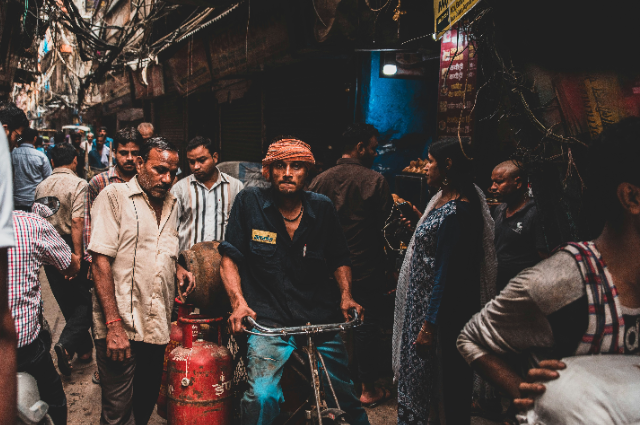
In recent weeks, conversations across many Indian households have begun with the same concern, “Will our LPG cylinder arrive on time?” For years, the system had been relatively predictable. If a household ran out of LPG, a simple phone call to the IVRS system or a quick booking through a mobile application usually ensured delivery within two or three days. That reliability had become an expectation. However, the situation has recently changed, and many consumers are confused about what exactly is happening.
The most widely discussed issue is the new waiting period between cylinder bookings. Reports circulating among the public suggest that deliveries could take up to 45 days. While this claim is partially accurate, it does not apply to everyone equally. In rural areas, the interval between two bookings has been increased to 45 days, while in towns and cities it has been extended to 25 days. The change was introduced by authorities as a measure to control panic bookings and stabilise supply.
Despite this clarification, many people remain alarmed. Across several parts of India, large crowds have reportedly gathered outside gas agencies. Heated arguments between customers and distributors have become increasingly common. The immediate reason appears to be fear; consumers worry that if they do not book early, they may face a long delay when their cylinder eventually runs out.
To understand why these anxieties have escalated, it is important to examine the broader LPG supply situation in India. The country relies heavily on imports to meet domestic demand. Although India produces some LPG locally, only around 40 per cent of its total requirement is met through domestic production. The remaining 60 percent must be imported from other countries.
This import dependency becomes critical when global supply routes are disrupted. A significant portion of India’s LPG imports passes through one of the world’s most strategic maritime routes, the Strait of Hormuz. Approximately 90 percent of India’s imported LPG travels through this narrow waterway, making it a vital energy corridor. In simple terms, this means that more than half of the LPG used in India ultimately depends on shipments that pass through this region.
Any instability in this route can therefore have serious consequences. With tensions escalating in West Asia, particularly involving Iran, the United States, and Israel, shipping routes have become increasingly uncertain. If transport through the Strait of Hormuz is slowed or blocked, India’s supply chain immediately feels the pressure.
The challenge becomes even more serious when considered alongside rising domestic demand. Over the past decade, government initiatives such as the Ujjwala Yojana, which expanded LPG access to millions of households, have dramatically increased consumption. As a result, India now has over 33 crore domestic LPG connections, and demand has surged by more than 120 per cent in the last ten years.
This combination of rapidly rising demand and potentially disrupted supply has created a significant gap. With demand at its peak and supply under pressure, even small disruptions can trigger large public reactions. What many citizens are experiencing today is not just a logistical delay but a reflection of a much larger global energy challenge.
The situation on the ground is already beginning to reveal the consequences of this imbalance. Restaurants, roadside eateries, student hostels, and small businesses are among the first sectors to feel the impact. Their struggles provide a glimpse into how deeply energy shortages can affect everyday life.
Understanding these early signs is essential, because they reveal that the issue is not merely about a delayed gas cylinder. It is about how global geopolitics, supply chains, and domestic demand intersect to shape daily life for millions of people.
Restaurants, Students, and Small Businesses Under Pressure
While discussions about energy supply often happen in government offices or economic forums, the real impact of a shortage is most visible at the street level. In India’s current LPG uncertainty, it is not just households that are concerned. Restaurants, roadside food stalls, student messes, and small businesses are among the first to feel the pressure. Their daily operations depend heavily on a consistent supply of cooking gas, and even a slight disruption can quickly turn into a serious problem.
Across several major cities, small food establishments have already begun adjusting their operations. Many roadside vendors and local eateries rely entirely on commercial LPG cylinders to prepare food. Unlike households that may manage with one cylinder for weeks, these businesses consume multiple cylinders every few days. When supplies become uncertain or prices increase sharply, their entire business model is threatened.
Reports from large educational hubs illustrate this challenge clearly. In Jawaharlal Nehru University in New Delhi, for instance, some campus canteens have reportedly simplified their menus drastically. Instead of offering a full range of snacks and meals, certain vendors have limited their operations to basic items such as tea. The reason is straightforward: without reliable LPG supplies, preparing large quantities of food becomes impossible.
A similar situation has emerged in the canteens of Delhi School of Economics. Some food items that were once popular among students have disappeared from menus because the fixed pricing structure does not allow vendors to absorb the sudden increase in cooking fuel costs. When gas becomes expensive or scarce, maintaining affordable food prices becomes unsustainable.
The pressure is even more severe in cities with large student populations. In Pune, many students depend on small private messes for their daily meals. These establishments usually operate on tight budgets, charging students monthly fees that barely cover operational costs. When LPG prices rise or supply becomes uncertain, mess owners face a difficult choice, increase fees or reduce food availability. In several cases, students have reportedly begun sharing meals or relying on fewer daily servings simply because the kitchens cannot afford regular gas refills.
Meanwhile, the situation is unfolding differently in India’s technology hubs. In Bengaluru, where thousands of auto-rickshaw drivers use LPG-powered vehicles, the issue extends beyond cooking gas. Drivers have reported a sudden increase in LPG fuel prices within a short period. Even a small rise per litre can significantly reduce daily earnings because fuel costs form a large portion of their operating expenses.
In Mumbai, the challenge appears in another form. Many households with a single LPG connection have begun visiting gas agencies directly, sometimes waiting for hours in long queues to inquire about delivery status. In several instances, cylinders that were booked weeks earlier have not yet arrived, fueling rumours of a nationwide shortage.
Whenever scarcity begins to affect daily life, another problem often follows, the emergence of black markets. Commercial LPG cylinders that once cost around ₹1,600 have reportedly been sold in some cities for dramatically higher prices. In certain locations, rates have climbed as high as ₹4,500 to ₹5,000, with no guarantee that the cylinder will actually be available.
Faced with such uncertainty, some restaurants have turned back to older cooking methods. In parts of states such as Rajasthan, Punjab, and Maharashtra, hotels have started using coal or firewood stoves again. Ironically, this shift has also driven up the price of these traditional fuels.
These developments highlight a key lesson, when energy supply becomes unstable, the ripple effects travel far beyond the energy sector itself. They quickly reach students’ dining tables, small businesses’ kitchens, and the livelihoods of workers who depend on daily fuel access.
Government Response and the Andhra Pradesh Strategy to Stabilise LPG Supply
As anxiety about LPG availability spread across the country, state governments and central authorities began responding with a combination of policy adjustments, data transparency, and supply management measures. While the fears of a severe shortage triggered panic among many consumers, officials insist that the situation is being closely monitored and controlled.
One of the states where the public reaction was particularly visible is Andhra Pradesh. In cities like Vijayawada, large numbers of residents reportedly visited gas agencies directly to inquire about deliveries. Some distributors observed an unusual surge in bookings. According to one distributor’s estimate, an agency that normally receives around 250 bookings per day suddenly started receiving nearly 380 to 400 requests daily.
This sudden increase was not necessarily due to an immediate shortage but rather panic booking. Many households, worried by rumours circulating on social media and messaging platforms, began booking cylinders earlier than necessary. As a result, the demand within the booking system increased dramatically, creating the impression of an even larger shortage.
Another factor contributing to confusion was the IVRS booking system. In several cases, when consumers attempted to book cylinders through automated phone services, the system appeared to be unavailable or temporarily down. For many customers, this technical issue reinforced the fear that gas supplies had already run out. Consequently, people started visiting gas agencies in person to confirm their bookings.
To calm the situation, the government clarified the policy changes regarding booking intervals. The new rule simply increased the minimum gap between two bookings to 45 days in rural areas and 25 days in urban regions. The objective of this policy was to discourage unnecessary early bookings and ensure that cylinders are distributed more fairly among households.
Authorities in Andhra Pradesh also released official data to reassure the public. According to state officials, LPG stocks remained stable. At one point during the week, the state reportedly had over 17,000 metric tonnes of LPG available, a quantity considered sufficient to support the needs of approximately 1.61 crore domestic connections.
The government further assured citizens that normal delivery timelines would continue. In most cases, officials stated that cylinders booked through the proper system would be delivered within about two to three days, provided there were no unusual logistical disruptions.
In addition to managing household demand, authorities also began adjusting how LPG is distributed across different sectors. One of the key strategies involves temporarily reducing the supply allocated to certain industries so that domestic consumers receive priority access.
For instance, gas allocations to industrial sectors have been partially reduced. Fertiliser plants are reportedly receiving around 70 per cent of their usual supply, while refineries have experienced even larger reductions. The gas saved through these adjustments is redirected toward domestic consumers to ensure that households do not face immediate shortages.
Officials have also clarified that other gas-based fuels, such as PNG (piped natural gas) and CNG used in vehicles, will not face similar cuts. Maintaining a stable fuel supply for transportation and city gas networks is considered essential to prevent additional economic disruption.
These measures illustrate how governments attempt to balance competing priorities during an energy supply crisis. Domestic cooking needs, industrial operations, and transportation fuel requirements all rely on the same energy ecosystem. Any decision to divert supply toward one sector inevitably affects another.
However, despite these efforts, the situation has raised deeper questions about India’s long-term energy security. Temporary policy adjustments may calm public fears, but they do not solve the structural vulnerabilities in the country’s energy supply chain.
War in West Asia and Its Ripple Effects on Global Energy Markets
While the LPG shortage concerns many Indian households, the roots of the issue extend far beyond domestic supply chains. At the centre of the crisis lies a complex geopolitical conflict unfolding in West Asia. Tensions involving Iran, Israel, and the United States have escalated in recent months, turning the region into one of the world’s most volatile geopolitical flashpoints.
The consequences of such conflicts rarely remain confined to the battlefield. In today’s interconnected world, military confrontations often disrupt global trade routes, energy supplies, and financial markets. One of the most critical strategic locations affected by the current tensions is the Strait of Hormuz, a narrow maritime corridor through which a large portion of the world’s oil and liquefied petroleum gas shipments pass.
For energy-importing nations like India, the stability of this route is vital. Any threat to shipping in this region can trigger immediate ripple effects across global energy markets. When tensions escalate, insurance costs for tankers increase, shipping schedules are disrupted, and suppliers become cautious about sending cargo through potentially dangerous waters. Even the perception of risk can lead to reduced shipments and rising prices.
Amid these developments, global political leaders have begun addressing the crisis. Narendra Modi, India’s Prime Minister, spoke publicly about the issue during a major policy event in New Delhi. He acknowledged that the conflict in West Asia had contributed to global energy instability but urged citizens not to panic. According to his remarks, the government is actively engaging with international partners to ensure that supply chains remain functional.
Diplomatic efforts have intensified as India attempts to balance its strategic relationships. Over a short period, Prime Minister Modi reportedly held discussions with leaders from several countries involved in or affected by the crisis. These conversations focused on stabilising energy supply routes, ensuring the safety of civilians, and preventing further escalation of the conflict.
At the same time, global political rhetoric has become increasingly aggressive. Former U.S. president Donald Trump, known for his outspoken statements on foreign policy, issued strong warnings toward the Iranian leadership on social media. His remarks reflected the confrontational tone that has characterised much of the political discourse surrounding the conflict.
Meanwhile, Benjamin Netanyahu, the Prime Minister of Israel, addressed the media in a speech emphasising his country’s military readiness. He argued that Israel had successfully disrupted several strategic initiatives linked to Iran’s nuclear and missile programs. According to his claims, intelligence operations and military strikes had prevented key facilities from being moved into underground bunkers that could have made them harder to target.
These statements reveal the intensity of the geopolitical rivalry currently unfolding in the region. For many observers, the conflict is not only about immediate military objectives but also about long-term strategic influence across West Asia.
However, wars do not affect only governments and military forces. They also place immense pressure on civilian populations and global economies. Drone strikes, missile interceptions, and air raids reported across the region have already demonstrated how quickly conflicts can spread beyond national borders.
Countries across the Gulf, including Saudi Arabia, Bahrain, and the United Arab Emirates, have reportedly intercepted drones and missiles as the conflict escalated. Each such incident increases uncertainty in global energy markets, which in turn affects prices and supply availability worldwide.
For India, which imports a large share of its energy resources, these developments highlight a difficult reality: domestic stability often depends on events happening thousands of kilometres away.
The crisis, therefore, raises an important question about the country’s long-term strategy. Can India reduce its dependence on external energy sources, or will it continue to remain vulnerable to geopolitical shocks?
Why Energy Independence Matters for India
As the LPG concerns unfolding across India demonstrate, global conflicts can have surprisingly direct consequences for ordinary citizens. A war taking place thousands of kilometres away can influence the price of cooking gas, disrupt supply chains, and trigger uncertainty in daily life. The current energy tension linked to developments in West Asia is therefore more than just a temporary crisis; it is a reminder of the structural vulnerabilities in the global energy system.
For a country like India, which has rapidly grown into one of the world’s largest economies, energy security has become a crucial strategic issue. India is often described as one of the fastest-growing major economies and is frequently ranked among the world’s largest military and economic powers. Yet despite these achievements, the country remains heavily dependent on foreign sources for critical energy resources such as oil, gas, and fertilisers.
The current situation highlights the risks of that dependence. When conflicts erupt in regions that control key energy routes, supply disruptions can quickly cascade across international markets. In the case of LPG, much of India’s imported supply passes through the Strait of Hormuz, a narrow but extremely important shipping route in West Asia. Any instability in this corridor can influence global energy availability and prices almost immediately.
Major global powers have already taken steps to reduce such vulnerabilities. The United States and Russia possess significant domestic energy resources, which gives them a degree of independence from external supply disruptions. China, on the other hand, has pursued a different strategy by securing long-term energy contracts and constructing extensive pipeline networks to stabilise imports from neighbouring regions.
India, by comparison, is still navigating this challenge. Although domestic production exists, it is not sufficient to meet the rapidly growing demand created by a population of over a billion people and an expanding industrial economy. As a result, the country must rely on international suppliers for a large portion of its energy needs.
The Idea of self-reliance, often discussed under initiatives such as Atmanirbhar Bharat, reflects an effort to address this vulnerability. The vision behind the policy is to strengthen domestic manufacturing, encourage technological innovation, and reduce dependence on imports in key sectors. However, achieving true energy independence is a complex and long-term task. It requires investment in domestic exploration, expansion of renewable energy sources, improved infrastructure, and stronger coordination between government institutions and private industry.
The current geopolitical climate also demonstrates that diplomacy alone cannot guarantee stability. In an increasingly competitive world order, countries often prioritise their own strategic interests. Conflicts such as the ongoing tensions involving Iran and Israel illustrate how rapidly global situations can escalate and disrupt international systems.
Iran itself has reportedly presented several conditions for de-escalating the conflict, including recognition of its national rights, compensation for damages caused by military strikes, and guarantees against future attacks. Whether these demands will be accepted remains uncertain, but many analysts believe the conflict may continue for some time.
If that happens, global markets could experience further instability. For India, this means the government will need to continue balancing diplomatic engagement with practical steps to protect domestic energy supplies. This may include diversifying import partners, expanding strategic reserves, and accelerating investment in alternative energy sources such as solar, wind, and green hydrogen.
Ultimately, the deeper lesson of the crisis is clear. Energy is not merely a commodity; it is a strategic resource that shapes national security, economic stability, and the everyday lives of citizens. The LPG shortages that many households worry about today are therefore part of a much larger global story.
As the world becomes increasingly interconnected, nations must prepare for uncertainties that originate far beyond their borders. For India, the path forward will likely involve strengthening both energy resilience and strategic autonomy, ensuring that future global disruptions do not translate into domestic hardship for millions of families.
The recent concerns surrounding LPG supply in India reveal a deeper structural reality about the modern global economy: energy security is inseparable from geopolitics. What appears to be a simple issue of delayed gas cylinder delivery is, in truth, a reflection of how global conflicts influence everyday life. When tensions rise in regions like West Asia, especially around strategic corridors such as the Strait of Hormuz, countries that rely heavily on imported energy immediately feel the consequences.
India’s situation illustrates this vulnerability clearly. Despite being one of the world’s fastest-growing economies, India still depends significantly on foreign energy supplies. When international supply chains become unstable, domestic systems from household kitchens to small businesses begin to experience the ripple effects.
In my view, the real lesson from this crisis is not simply about managing a temporary shortage but about rethinking long-term national priorities. Policies promoting energy diversification, renewable resources, and strategic reserves should no longer be treated as optional development goals; they are essential elements of national security.
The LPG anxiety seen among ordinary citizens today reflects a broader challenge facing many developing economies. Until countries reduce their dependence on volatile global supply routes, external conflicts will continue to shape internal stability. In the end, true resilience comes not from reacting to crises but from preparing for them long before they occur.