
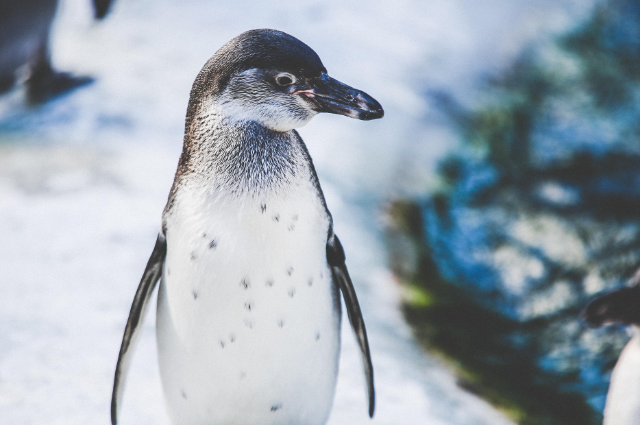
In recent days, a short wildlife clip has circulated widely across social media platforms, a lone penguin separating from its colony and walking inland across the vast Antarctic landscape. The video is often accompanied by dramatic captions, ‘He chose his own path,’ ‘The bravest penguin,’ or ‘The one who walked alone.’ At first glance, the imagery is striking. A group of emperor penguins stands clustered near the coastline, their natural habitat linked directly to the ocean. Then one penguin turns away and begins moving in the opposite direction, toward the empty and frozen interior.
Origin of Video
The clip originates from the 2007 documentary 'Encounters at the End of the World,’ directed by German filmmaker Werner Herzog. The film explores life in Antarctica, combining scientific observation with philosophical narration. In one brief sequence, researchers observe a penguin walking away from its colony and heading inland, far from its primary food source. Online, this moment has been reframed as a metaphor for individuality and courage. However, scientific interpretation suggests a far less heroic explanation.
Emperor penguins rely heavily on collective behaviour for survival. Their proximity to the ocean is not accidental; it is essential. The sea provides food, and the colony structure offers protection against extreme cold and predators. Walking inland, away from the ocean, significantly reduces survival chances. Wildlife experts have noted that such behaviour can indicate disorientation, illness, or neurological impairment. In extreme environments like Antarctica, even minor health issues can disrupt navigational instincts. The penguin’s movement, therefore, is unlikely to represent a conscious act of rebellion. Instead, it may reflect a biological malfunction. The contrast between these two interpretations, heroic symbolism versus scientific probability forms the foundation of the debate surrounding the clip.
Why did viewers choose inspiration over explanation? The answer lies not only in the image itself but in how modern media functions. Short, emotionally charged videos travel quickly. Context is often removed. A brief moment becomes a narrative canvas onto which audiences project meaning. The penguin walking Inland is visually powerful because it appears to defy the group. Humans naturally respond to stories of nonconformity. Yet in nature, deviation does not automatically signify bravery. Sometimes it signals vulnerability.
Understanding this distinction is essential. The viral penguin clip reminds us that while imagery can inspire reflection, responsible interpretation requires context. Before transforming wildlife behaviour into motivational philosophy, it is necessary to ask a simple question: Are we observing courage or misunderstanding biology?
Science, Survival, and the Reality of Emperor Penguin Behaviour
To understand why the viral penguin clip captured global attention, it is necessary to examine the biological context. Emperor penguins are not solitary wanderers by nature. They are among the most socially coordinated bird species in the world. Native to Antarctica, emperor penguins survive in one of the harshest climates on Earth. Their breeding colonies form along the coastline, strategically positioned near access to the ocean for their primary food source. Fish, squid, and krill sustain them, and every stage of their life cycle depends on proximity to open water.
Collective behaviour is not optional for these birds, it is a survival mechanism. During the brutal Antarctic winter, emperor penguins huddle tightly together in large groups to conserve heat. Temperatures can drop below 40°C, and wind speeds can become extreme. By rotating positions within the huddle, individuals share exposure to the cold. This coordinated movement increases survival rates dramatically. In this ecological framework, direction matters. When a penguin separates from its colony and walks inland away from the ocean, it is moving away from food, shelter, and reproductive coordination. The Inland Antarctic landscape offers no nutritional resources and little chance of re-joining a colony once distance increases.
The footage featured in Encounters at the End of the World shows precisely such a scenario. The moment is visually striking, but from a biological perspective, it is concerning. Experts have suggested that disorientation, illness, parasitic infection, or neurological disruption could explain the behaviour. In extreme ecosystems, even minor impairments can significantly alter navigational instincts. It is important to note that animals do not conceptualise individualism in the human sense. Their behaviour is guided by evolutionary programming, environmental cues, and physiological conditions. When these systems function properly, the colony remains intact. When they malfunction, deviation occurs. The romantic narrative that later developed online, portraying the penguin as courageous or visionary, does not align with the established understanding of emperor penguin ecology. This does not diminish the emotional impact of the image. Rather, it reframes it.
In human societies, walking away from the crowd may symbolise independence or conviction. In emperor penguin colonies, separation usually signals risk. The distinction highlights a broader issue in media consumption, the tendency to interpret animal behaviour through a human psychological lens. Anthropomorphism, attributing human traits or intentions to animals, is a common cognitive habit. It makes nature feel relatable. However, it can also distort factual interpretation. The Inland-walking penguin is not necessarily making a choice. It may be experiencing impairment. Recognising this possibility does not remove the clip’s symbolic resonance. It simply grounds it in biological reality. And that grounding is essential if we are to understand the event responsibly rather than merely emotionally.
From Wildlife Footage to Cultural Symbol
If biology explains the penguin’s movement, culture explains its transformation. The short clip from Encounters at the End of the World, directed by Werner Herzog, was originally part of a broader exploration of life in Antarctica. Herzog’s documentary style blends observation with philosophical reflection, often inviting viewers to contemplate the indifference and unpredictability of nature. Yet when the penguin scene resurfaced online years later, it detached from its original context. Stripped of narration and scientific framing, the footage became open to reinterpretation.
On social media platforms, the lone penguin quickly evolved into a symbol. Users described it as brave, independent, misunderstood, or rebellious. Motivational captions reframed the moment as a lesson in courage, ‘Don’t be afraid to walk alone.’ Others saw it as a metaphor for breaking societal norms or pursuing a personal vision despite opposition. The shift was subtle but significant. What began as observational wildlife documentation became a cultural narrative about individuality.
This transformation reflects a broader digital-era pattern. In an environment where content spreads rapidly and attention spans are short, emotionally powerful imagery tends to overshadow contextual detail. A 15-second clip must communicate something immediately. Viewers fill gaps with meaning drawn from their own experiences. The penguin’s solitary movement resembles a familiar human archetype, the individual who separates from the group in pursuit of something greater. Literature, cinema, and motivational culture have long celebrated this figure. The narrative is appealing because it affirms autonomy and resilience. However, this appeal often simplifies complexity.
In reality, not every act of separation is visionary. In ecological systems and in human societies, collective structures frequently exist for survival and stability. The assumption that deviation automatically signals strength can be misleading. The viral penguin clip demonstrates how easily audiences project human emotions onto animal behaviour. Anthropomorphism makes the scene relatable, but it also alters interpretation. The penguin is no longer an animal potentially experiencing disorientation; it becomes a character in a human drama. This phenomenon reveals something important about contemporary media consumption. Digital audiences do not passively observe; they participate in meaning-making. Comments, captions, and edits reshape original material into shared narratives. The symbolic version of the penguin began circulating more widely than the scientific explanation. In this process, fact did not disappear. It was simply overshadowed by feeling. Understanding this cultural shift is essential. The penguin did not change; the framing did. The footage remained the same, but the lens through which it was viewed evolved. And that evolution tells us as much about modern society as it does about wildlife in Antarctica.
The Myth of the Lone Figure
The viral penguin did more than spark debate about wildlife behaviour; it revived one of society’s most persistent narratives, the myth of the lone figure who walks away from the crowd and succeeds because of it. Across history and popular culture, individuality is often portrayed as heroic. The person who rejects conformity is celebrated as visionary. Films, biographies, and motivational speeches frequently reinforce the idea that greatness requires isolation. When viewers encountered the penguin walking inland, many instinctively placed it within this familiar framework. The image appeared symbolic, one figure separating from the collective, moving toward uncertainty. It resembled a cinematic moment, the beginning of a journey defined by conviction. But mythology and reality do not always align.
In ecological systems, collective behaviour develops for functional reasons. Emperor penguins rely on colony structure to regulate body temperature, reproduce successfully, and access food. Proximity to the ocean is strategic, not accidental. Movement away from these systems increases vulnerability. The contrast between romantic narrative and biological probability exposes a broader human tendency. We are drawn to stories of defiance because they affirm autonomy. In modern societies, where individuals often feel constrained by expectations of academic, professional, or social norms, the idea of walking alone feels empowering. Yet empowerment depends on context. Strategic independence that is choosing a different path after careful evaluation, can indeed produce innovation. Many breakthroughs in science, art, and leadership emerged from questioning established norms. However, isolation without direction can lead to risk rather than progress.
The viral penguin became inspirational because viewers interpreted separation as intentional. Intention implies control. Control implies strength. But if the behaviour was caused by disorientation or illness, the symbolism shifts dramatically. This distinction is critical. Society frequently compresses complex realities into simplified lessons. ‘Follow your own path' is easier to circulate than a nuanced discussion about environmental adaptation and neurological function. The former motivates, the latter complicates. However, complexity matters.
The myth of the lone figure persists because it is emotionally satisfying. It reassures individuals that standing apart guarantees meaning. But history suggests that sustainable success is rarely solitary. Collaboration, support systems, and shared knowledge often underpin visible achievements. In this sense, the penguin functions as a mirror. Some see rebellion. Others see tragedy. Science sees probable dysfunction. Recognising all three interpretations does not diminish the power of the image. Instead, it encourages a more disciplined response, one that separates emotional resonance from empirical explanation. Isolation can symbolise courage. It can also signal vulnerability. Understanding which is which requires context, not assumption.
Meaning, Media, and the Responsibility of Interpretation
By the end of its viral journey, the penguin walking inland had become more than a moment from a documentary. It had become a metaphor of shared, debated, and reshaped across digital platforms. Yet the most significant lesson may not lie in the penguin’s direction, but in our interpretation. The original footage from Encounters at the End of the World, directed by Werner Herzog, was observational in nature. Herzog’s filmmaking style often highlights the tension between human meaning-making and the indifferent realities of the natural world. The penguin scene was not framed as heroic or inspirational; it was presented as unusual and potentially troubling. The viral narrative, however, moved in a different direction.
As the clip circulated online, captions and commentary assigned intention to the animal. The penguin was described as brave, determined, or visionary. The image was repurposed into motivational content encouraging viewers to pursue independent paths regardless of opposition. This transformation illustrates the power and risk of modern media ecosystems. Digital platforms prioritise engagement. Emotionally charged interpretations spread faster than technical explanations. A symbolic story travels further than a scientific footnote. Over time, repetition can feel like fact. The penguin did not change. The framing did. This phenomenon highlights a broader responsibility in contemporary information culture, the need to distinguish between observation and projection. Visual content can be compelling without being complete. A brief clip rarely contains its own full context. Interpreting responsibly requires two parallel approaches. First, there must be a commitment to factual grounding, consulting expert perspectives and understanding biological realities. Second, there should be awareness of personal projection, recognising how individual experiences influence interpretation.
Neither science nor symbolism needs to invalidate the other. Humans naturally search for meaning, and metaphor has long shaped culture, literature, and philosophy. The problem arises only when metaphor replaces evidence rather than coexisting with it. The penguin walking inland serves as a case study in this tension. It reminds us that powerful imagery can inspire reflection, but reflection should not override reality. In an era defined by rapid information exchange, the ability to pause, verify, and contextualise is increasingly essential. Not every solitary figure is a hero. Not every deviation is intentional. And not every viral narrative reflects the full truth of the event it portrays. Ultimately, the penguin’s walk teaches a quiet but important lesson: meaning is something we create, but understanding requires discipline.
The Penguin Didn’t Choose to Be a Hero; Rather, We Chose It for Him.
When I first watched the viral clip of the lone penguin walking away from its colony, I understood why people were moved. The image is cinematic, a vast white landscape, a tight cluster of emperor penguins near the sea, and one small figure turning deliberately toward the empty interior of Antarctica. It feels symbolic. It feels brave. But feeling is not the same as fact. The footage comes from the documentary Encounters at the End of the World, directed by Werner Herzog. In context, the scene is unsettling rather than triumphant. Researchers suggest that such behaviour in emperor penguins may indicate disorientation or illness. Walking inland, away from the ocean, means walking away from food and survival.
Yet the internet chose a different story. Within days, the penguin became a motivational icon. Captions framed it as courageous, independent, and determined to follow its own path. “Be the penguin who walks alone,” some posts declared. The animal was transformed into a metaphor for individuality in a world that pressures conformity. I find this transformation revealing, not because it tells us something about penguins, but because it tells us something about ourselves. We are living in a time when standing apart feels powerful. Many people feel constrained by expectations, institutions, or social norms. The image of a solitary figure rejecting the group resonates deeply. It offers a narrative of agency in a world that often feels overwhelming.
But there is a danger in romanticising every act of separation. In nature, collective behaviour exists for a reason. Emperor penguins cluster together to conserve heat and survive extreme conditions. Deviation is not automatically bravery; sometimes it is vulnerability. By projecting our human struggles onto an animal possibly experiencing distress, we risk misunderstanding both biology and ourselves.
This does not mean the image cannot inspire reflection. Art has always drawn meaning from ambiguity. However, inspiration should not come at the cost of accuracy. The penguin did not choose to symbolise rebellion. We assigned that meaning. And in doing so, we revealed our own longing for stories of independence and defiance. Perhaps the real lesson is this: before we turn moments into metaphors, we should pause long enough to ask what they truly represent. Sometimes a solitary walk is not a heroic journey. Sometimes it is simply a reminder that not every story belongs to us.