
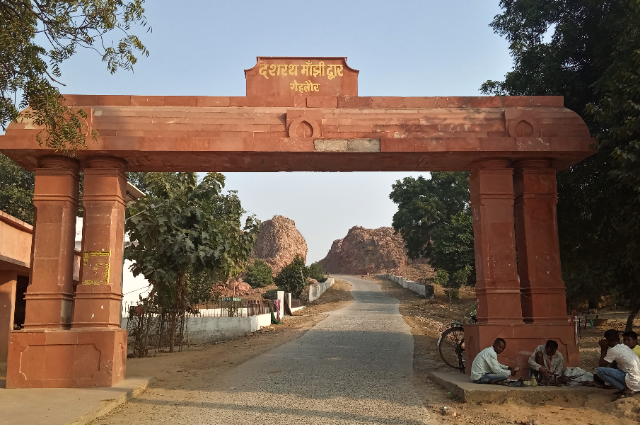
In a world that celebrates instant results and overnight success, the story of Dashrath Manjhi stands as a powerful reminder that true change often demands patience, sacrifice, and unwavering determination. Known across India as the "Mountain Man," Dashrath Manjhi achieved what many considered impossible. Armed with nothing more than a hammer and a chisel, he carved a road through a mountain over a period of twenty-two years. His achievement was not driven by fame, money, or recognition. It was driven by love, loss, and a deep desire to improve the lives of his people.
Dashrath Manjhi was born in Gehlaur, a small village in Bihar's Gaya district. During the 1960s, the village remained isolated from nearby towns because a massive rocky hill stood in its path. Essential services such as hospitals, schools, and markets were located on the other side of the mountain. Villagers often had to travel long distances around the hill to access even the most basic facilities. What could have been a short journey became a difficult and exhausting trek.
Life in Gehlaur was marked by poverty and hardship. Most residents worked as labourers and farmers, earning barely enough to survive. Development had largely bypassed the village. Roads were poor, healthcare facilities were distant, and opportunities were limited. For many, these challenges had become a part of everyday life. Few imagined that the mountain separating them from progress could ever be overcome.
Everything changed because of a tragic incident involving Manjhi's wife, Falguni Devi. According to widely documented accounts, she was bringing food to her husband while he worked in the fields. While crossing the rocky terrain, she slipped and suffered serious injuries. Medical assistance was far away, and reaching a hospital required a long journey around the mountain. The delay proved devastating. Her death deeply affected Dashrath Manjhi and left an emotional wound that would shape the rest of his life.
Many people experience tragedy. Few transform it into a mission. Manjhi decided that no other family should suffer because of the mountain that isolated their village. He resolved to carve a path through the hill itself. The idea seemed absurd. He had no engineering knowledge, no financial support, no machinery, and no government assistance. Most importantly, he was only one man.
When he announced his plan, villagers laughed at him. Some believed grief had affected his judgment. Others viewed the task as impossible. How could a poor labourer break through a mountain with simple hand tools? Yet Manjhi remained determined. He sold his goat to buy a hammer and chisel and began working on the mountain.
His daily routine reflected extraordinary discipline. During the day, he worked to earn a living. During the remaining hours, he chipped away at the mountain. The work was physically exhausting and often dangerous. The scorching summer heat, monsoon rains, and harsh winters did not stop him. Day after day, year after year, he continued.
The mountain did not yield easily. Every inch of progress required countless strikes of the hammer. There were moments of injury, fatigue, and disappointment. Many people would have abandoned the effort after a few months. Others might have lasted a year or two. Manjhi continued for more than two decades.
As the years passed, public opinion slowly changed. The same people who once mocked him began to notice the visible transformation of the mountain. What had seemed impossible was gradually becoming reality. A narrow passage began to emerge. The road grew wider and longer. His persistence challenged the assumptions of everyone around him.
Finally, after twenty-two years of relentless effort, Dashrath Manjhi accomplished his goal. He carved a path approximately 110 meters long, 9 meters wide, and over 7 meters deep through solid rock. The road dramatically reduced the distance between Gehlaur and nearby facilities. A journey that once required travelling around the mountain became significantly shorter and easier.
The impact of his work extended far beyond physical infrastructure. The road improved access to healthcare, education, and markets. It connected people to opportunities that had previously been difficult to reach. Most importantly, it demonstrated that meaningful change does not always begin with institutions or large investments. Sometimes it begins with one individual refusing to accept an unjust reality.
The story of Dashrath Manjhi also reveals important lessons about leadership. Modern society often associates leadership with authority, wealth, or position. Manjhi possessed none of these. He did not hold political office. He did not command resources. Yet he inspired people through action. His leadership emerged from commitment rather than status. By dedicating himself to a cause greater than his own interests, he became a symbol of courage and perseverance.
His journey carries a deeper symbolic meaning as well. The mountain represented more than a physical barrier. It symbolised every obstacle that appears too large to overcome. Poverty, inequality, lack of opportunity, and social neglect often seem like mountains in the lives of ordinary people. Manjhi's story reminds us that even the greatest barriers can be reduced one step at a time through consistent effort.
There is also a valuable lesson about the relationship between citizens and development. Governments play a crucial role in building infrastructure and providing services. However, Manjhi's story highlights the consequences when remote communities are left behind. The fact that one man felt compelled to spend twenty-two years carving a road reflects the challenges faced by many marginalised regions. His achievement should inspire admiration, but it should also encourage reflection on the importance of inclusive development.
Recognition came late in Dashrath Manjhi's life. As news of his accomplishment spread, journalists, officials, and social organisations began acknowledging his contribution. He became a national figure and a source of inspiration across India. His life story was later adapted into books, documentaries, and films, ensuring that future generations would learn about his remarkable determination.
Yet perhaps the most remarkable aspect of his story is its simplicity. Dashrath Manjhi did not seek fame. He did not begin his journey with dreams of becoming a national hero. He acted because he witnessed suffering and wanted to prevent it from happening again. His motivation was deeply human. It emerged from love, compassion, and responsibility toward his community.
Today, when discussions about success often focus on wealth, influence, or public recognition, the life of Dashrath Manjhi offers a different perspective. True greatness is not always measured by what a person gains. Sometimes it is measured by what a person gives. Through twenty-two years of sacrifice, he gave his village a road, hope, and a powerful lesson in perseverance.
The legacy of the Mountain Man continues to inspire millions because it proves that determination can achieve what appears impossible. His story teaches us that extraordinary change does not always require extraordinary resources. It requires extraordinary commitment. One man, armed only with a hammer, a chisel, and an unbreakable will, succeeded where many would not even dare to begin.
Dashrath Manjhi did not merely carve a road through a mountain. He carved his name into history and showed the world the limitless strength of the human spirit.