
From the 2025 Pahalgam massacre to the November 2026 Kulgam ambush, recurring violence and daily checkpoint humiliations test the central promise behind August 5, 2019.
The afternoon air in Kulgam was crisp and ordinary on Wednesday, November 11, 2026, until the sharp, unmistakable crack of automatic gunfire shattered the routine. Roughly a kilometre off the Jammu-Srinagar National Highway, militants armed with AK-47s opened fire on a Central Reserve Police Force (CRPF) checkpoint, injuring three personnel before melting away into the marshy terrain and dense orchard cover. The timing was particularly pointed: the ambush unfolded on the very day Jammu and Kashmir’s Lieutenant Governor, Manoj Sinha, was in the district for an official event. Within hours, the familiar machinery of Kashmir’s security apparatus roared to life: armoured vehicles rolled out across Srinagar and South Kashmir, additional nakas (checkpoints) sprang up at major junctions, and commuters across the Valley braced for intensified frisking and gridlock.
For anyone living outside Jammu and Kashmir, the Kulgam attack might register as just another ticker headline in a decades-old conflict. For those of us who call the Valley home, however, it felt like a painful, recurring echo—one that forces an uncomfortable question into the spotlight. More than seven years have passed since August 5, 2019, when the Government of India abrogated Article 370, revoked Jammu and Kashmir’s special constitutional status, and bifurcated the historic state into two Union Territories. The central promise sold to the nation—and to Kashmiris—was unambiguous: dismantling Article 370 was the master
key that would finally sever the roots of separatism, integrate the region fully with the rest of India, and eradicate the menace of terrorism that has bled the Valley since 1990.
“If Article 370 was supposed to end militancy and bring normalcy, why does life on the ground feel more securitised, more suspicious, and just as fragile as ever?”
The Weight of History: From 1990 to August 2019
To understand why the current reality feels so jarring, it helps to remember the long shadow under which an entire generation of Kashmiris has grown up. Since the eruption of armed insurgency in 1989–1990, violence has not been an abstract political debate in Kashmir; it has been the background noise of daily existence. Families in the Valley have buried tens of thousands of loved ones—civilians caught in crossfires, local police officers, soldiers, and young men swept into the vortex of militancy. Over three decades, the Valley endured curfews, crackdowns, cordon-and-search operations, and cycles of street protests that left deep psychological and economic scars.
For years, the prevailing political narrative in New Delhi held that Article 370 was the primary psychological and constitutional barrier preventing Jammu and Kashmir’s full emotional and administrative integration with the Indian Union. Critics of the provision argued that autonomy bred alienation, allowed separatist ecosystems to thrive under the radar, and prevented central laws and investments from transforming the region. When Parliament pushed through the constitutional changes in August 2019—accompanied by an unprecedented lockdown, the detention of mainstream political leaders, and a months-long communications blackout—the justification rested heavily on security. The message was clear: once the constitutional wall came down, cross-border terrorism would lose its local oxygen, peace would take root, and the heavy security footprint would naturally recede.
Seven years later, the reality on the ground tells a far more complicated, and troubling, story. Constitutional integration on paper has not translated into human security on the streets.
The Illusion of 'Naya Kashmir': A Chronology of Unrelenting Violence
Official statistics often point to a decline in local militant recruitment and a drop in traditional street protests and stone-pelting since 2019. While those metrics are frequently cited in policy circles as proof of success, they obscure a stark truth: militancy in Jammu and Kashmir did not disappear after August 2019; it mutated.
Rather than fading away, armed groups adapted to the new security grid, shifting toward decentralised 'hybrid' militancy, targeted killings, urban hit-and-run attacks, and devastating strikes in areas previously considered relatively insulated. Looking back over the past seven years, the timeline of bloodshed challenges the claim that revoking Article 370 solved the security puzzle:
The Rise of Targeted Killings (2021–2023): Between 2021 and 2023, the Valley witnessed a chilling wave of targeted assassinations. Off-duty local policemen, panchayat members, migrant workers, and members of minority communities—such as prominent Kashmiri Pandit pharmacist Makhan Lal Bindroo—were gunned down in broad daylight in urban centres like Srinagar. The emergence of shadow outfits like The Resistance Front (TRF) demonstrated that militants could operate in close quarters with small arms, striking fear into ordinary citizens even amid heavy troop deployments.
The Shift to the Jammu Division (2023–2024): As security pressure intensified in the Kashmir Valley, militancy expanded southward across the Pir Panjal range into the Rajouri, Poonch, Reasi, and Doda districts of the Jammu division—regions that had been largely free of insurgency for nearly two decades. Deadlier ambushes on military convoys and attacks on pilgrims, including the tragic June 2024 attack on a bus carrying pilgrims in Reasi, proved that the threat had widened geographically rather than shrunk.
The 2025 Pahalgam Massacre: If there was any lingering illusion that militancy had been reduced to a minor nuisance, it was shattered on April 22, 2025, in the Baisaran Valley of Pahalgam. In one of the deadliest attacks on civilians in years, terrorists targeted tourists in a premier holiday destination, killing 26 people—25 tourists and a local Kashmiri pony operator who died trying to protect visitors—and injuring 17 others. The Pahalgam massacre was not merely a security failure; it was a direct blow to Kashmir’s economic lifeline—tourism—and pushed India and Pakistan to the brink of open military conflict in May 2025, complete with cross-border strikes and drone warfare.
The 2026 Kulgam Attack: In November 2026, the daylight firing on a CRPF naka in Kulgam serves as a sobering reminder that even high-profile security arrangements around VIP visits cannot deter determined attackers.
If the primary goal of abrogating Article 370 was to insulate Jammu and Kashmir from terror, the trajectory from Srinagar’s targeted killings to Pahalgam’s bloodstained meadows and Kulgam’s highway ambush forces an honest reckoning. Changing constitutional articles did not seal the borders, stop the flow of sophisticated weaponry, or eliminate the root causes of conflict.
The Daily Cost for Ordinary Citizens: Humiliation by Notebook and Barricade
While policy analysts debate geopolitical strategy in television studios hundreds of miles away, the residents of Kashmir pay the daily, unspoken price of this unresolved conflict. For an ordinary Kashmiri trying to earn a living, go to college, or take an elderly parent to the hospital, the failure to end militancy manifests not just in headline-grabbing attacks, but in a relentless, grinding erosion of dignity.
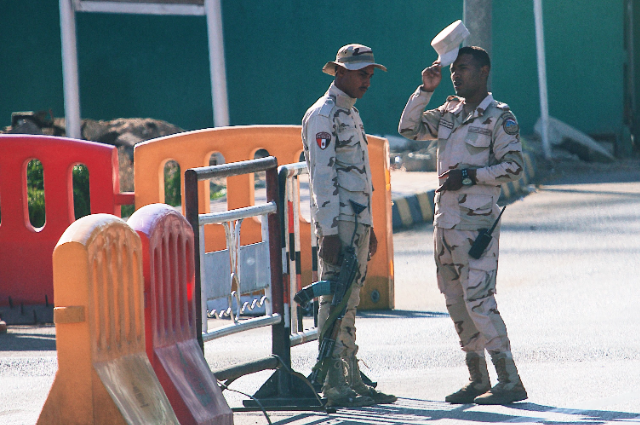
Consider the simple act of commuting to work in Srinagar or travelling between districts. Every morning, during peak office hours, major arteries across the Valley are choked by concertina wire, steel barricades, and armoured bunkers. These checkpoints are not static; they appear unpredictably at bottlenecks, turning a twenty-minute drive into an exhausting ninety-minute ordeal. Ambulances wail helplessly behind rows of idling cars; students miss morning lectures; daily-wage workers lose precious hours of income; and office-goers arrive at their desks already drained by frustration and anxiety.
At checkpoint after checkpoint, ordinary citizens—teachers, doctors, bank employees, shopkeepers, and journalists—are routinely waved down by security personnel or local police. What follows is a ritual that feels entirely devoid of intelligence-driven purpose: being asked to step out of vehicles, open bags, hand over mobile phones, and dictate personal details—name, parentage, residential address, phone number, destination, and vehicle registration—to be handwritten into a physical notebook.
“In an era of advanced surveillance, digital databases, and high-tech intelligence gathering, what security purpose is served by scribbling a commuter’s name into a paper register at three different checkpoints along the same ten-kilometre stretch of road?”
To the citizen standing on the roadside in the biting winter chill or scorching summer sun, this exercise does not feel like a precision counter-terrorism measure. It feels like collective suspicion. It sends an unmistakable, unspoken message to every Kashmiri: You are guilty until proven innocent; your time has no value; your movement is a privilege granted at the discretion of a baton.
The Paradox of Over-Securitization: Does Blanket Checking Actually Work?
Security agencies operate under immense pressure. When an attack like Kulgam or Pahalgam happens, officers on the ground face immediate demands from higher command to 'dominate the area' and show visible deterrence. Setting up more nakas, deploying more personnel, and intensifying random frisking are the fastest, most visible ways to demonstrate action.
Yet, seven years of post-370 policing reveal a profound strategic paradox: blanket harassment of the general public rarely stops determined militants, while it steadily alienates the very population whose trust is essential for real security.
Militants carrying out targeted strikes or highway ambushes rarely drive leisurely through predictable morning rush-hour traffic jams with weapons on the passenger seat. As investigations into attacks from Pahalgam to Kulgam repeatedly show, operatives rely on clandestine networks, forested routes, marshy terrain, and small pockets of overground support. Stopping thousands of exhausted office workers to inspect their lunchboxes and write their fathers' names in a register does nothing to dismantle cross-border infiltration or encrypted communication networks. Instead, indiscriminate checking achieves the exact opposite of integration:
- It Deepens Emotional Alienation: You cannot integrate a people emotionally into a nation while treating their daily commute like a prison roll call. When young professionals who have no connection to violence are humiliated in front of their families or colleagues at routine checkpoints, resentment festers silently.
- It Erodes Public Cooperation: Counter-insurgency experts around the world agree that human intelligence—tips and cooperation from local citizens—is the single most effective tool against terrorism. When local police and security forces treat ordinary residents with suspicion and brusqueness, the bridge of trust collapses. People fall silent, focusing only on surviving the day without drawing attention to themselves.
- It Stifles Economic Normalcy: Normalcy cannot coexist with permanent emergency measures. Businesses suffer when transport is delayed by arbitrary roadblocks; local morale sinks when public spaces feel like fortified zones; and the narrative of 'peace and development' rings hollow when every street corner reminds residents that they live under a microscope.
Was It Worth It? Assessing the Balance Sheet After Seven Years
When we weigh the grand promises of August 2019 against the lived reality of November 2026, the balance sheet looks starkly lopsided. On one side of the ledger, the state achieved constitutional uniformity. Central laws apply directly, administrative control rests firmly with New Delhi, and tourism numbers saw periods of strong revival before the Pahalgam tragedy underscored how fragile that boom truly is. Even the restoration of an elected assembly and local governance has remained shadowed by friction over authority and the unfulfilled promise of full statehood.
On the other side of the ledger lies the human cost borne by Jammu and Kashmir’s residents:
Terrorism has not been eradicated: From the targeted killings of 2021–2023 to the horror of Pahalgam in 2025 and the Kulgam attack in 2026, violence continues to claim lives and disrupt peace.
Everyday freedom has shrunk: The pervasive presence of barricades, arbitrary detentions under stringent laws, surveillance, and daily checkpoint humiliations have turned basic mobility into an ordeal.
Trust remains fractured: Rather than healing the historic divide between Srinagar and New Delhi, the heavy-handed security approach has left many Kashmiris feeling voiceless in decisions that govern their own streets, jobs, and dignity.
If constitutional surgery was meant to cure the disease, the patient is still suffering—and the side effects of the treatment have become nearly as debilitating as the illness itself.
Moving Beyond Barricades: What Real Integration Demands
The lesson of the past seven years—and indeed, the past thirty-six years—is that Kashmir cannot be solved solely through constitutional decrees or endless concertina wire. Peace is not the mere absence of street protests, nor is normalcy achieved by forcing a million commuters through a gauntlet of notebooks and barricades every morning. True integration requires a fundamental shift in how the state views and treats the ordinary citizen of Jammu and Kashmir:
Intelligence-Led Policing Over Mass Harassment: Security forces must replace blanket, disruptive roadblocks and archaic manual logbooks with targeted, intelligence-driven operations. Protecting citizens should not require paralysing their cities during rush hour.
Accountability and Respect at Checkpoints: Personnel deployed on public roads must be trained and held accountable to treat commuters with basic courtesy and dignity. A citizen heading to work is a stakeholder in peace, not a suspect by default.
Genuine Political Empowerment: Administrative integration without genuine democratic agency leaves a vacuum. Restoring full statehood and empowering elected representatives who are directly accountable to the people of Jammu and Kashmir is essential to rebuilding trust.
Addressing Root Alienation: Lasting peace grows when young Kashmiris feel secure in their livelihoods, respected in their homeland, and heard in their grievances—not when they are reminded at every traffic intersection that they live under suspicion.
Yesterday’s gunfire in Kulgam should be a wake-up call, not an excuse to tighten the screws further on ordinary lives. Seven years after Article 370 became history, Kashmiris are still waiting for the peace they were promised—and for the simple, basic right to walk down their own streets with their heads held high.