
"Padi padi mari toh bechari kehlaungi, naachte hue mari toh misaal ban jaaungi."
(If I die while simply lying around, I will be called a helpless woman. But if I die while dancing, I will become an inspiration.)
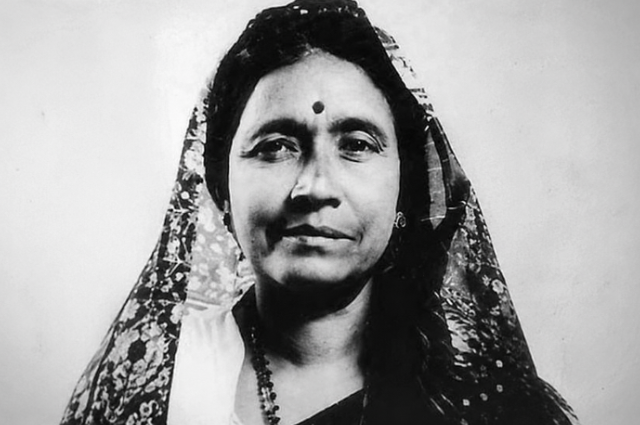
Beneath this evocative frame lies an introduction to Eetha, an upcoming biographical drama chronicling the life of the legendary Marathi Tamasha and Lavani performer, Vithabai Narayangaonkar. Starring Shraddha Kapoor in the titular role and helmed by director Laxman Utekar, the film captures Vithabai’s remarkable rise to fame while exploring the immense hardships, sacrifices, and deep structural challenges she faced away from the spotlight.
At the centre of her legacy is a real-life event so shocking and fiercely dedicated that it challenges the boundaries of human endurance: a heavily pregnant woman giving birth backstage mid-performance, cutting her own umbilical cord with a stone, and immediately stepping back under the stage lights to honour her craft and her audience. This deep dive explores the socio-cultural tapestry of Maharashtra’s traditional theatre, the life of Vithabai, the anatomy of her historic backstage sacrifice, and how the upcoming film Eetha seeks to translate this monumental legacy for a modern global audience.
The Anatomy of Tamasha and Lavani: The Artistic Soil
To understand the magnitude of Vithabai’s life, one must first comprehend the ground from which she grew. The folk arts of Tamasha and Lavani are not merely entertainment; they are the socio-cultural lifeline of rural Maharashtra.
The Evolution of Tamasha
Originating in the late 16th and early 17th centuries, the word Tamasha is derived from Persian, translating roughly to "fun", "spectacle", or "entertainment". Over the decades, it evolved into a highly complex, composite folk theatre form that integrated music, dance, poetry, slapstick comedy, and socio-political satire. Historically, Tamasha troupes travelled across the rural heartland of India, performing in open-air village squares (jathras) during major religious festivals or agricultural celebrations.
A classic Tamasha performance operates on a distinct structural narrative:
- The Gana: An opening invocation song dedicated to Lord Ganesha, seeking blessings for a successful performance and removing obstacles.
- The Gavlan: A theatrical segment depicting the playful, devotional, and often witty exchanges between Lord Krishna, his gopis, and the comic character Mavshi (traditionally played by a cross-dressing male actor).
- The Vag Natya: The main narrative drama or play, which frequently addresses local political corruption, historical legends, moral dilemmas, or socio-economic inequality through sharp, improvised dialogue.
The Power of Lavani
Woven tightly into the fabric of Tamasha is Lavani, a traditional dance form distinguished by its powerful, rhythmic footwork, expressive hand gestures, and lyrical poetry. The word originates from Lavanya, meaning beauty or grace. Lavani is traditionally performed by women wearing a nine-yard Maharashtrian saree (Nauvari), heavy brass anklets (ghungroos), and intricate traditional jewellery.
The lyrical themes of Lavani span a wide emotional and social spectrum:
- Sringari Lavani: Focused heavily on love, sensuality, longing, and romantic dialogue.
- Bhedik Lavani: Rooted in spiritual philosophy, mysticism, and competitive intellectual debates between different musical lineages.
For centuries, these art forms were maintained by specific nomadic or marginalised communities, particularly the Mang and Mahar castes. Performers occupied a deeply paradoxical position in Indian society: they were highly celebrated on stage for their skill and vitality, yet marginalised off stage due to rigid caste hierarchies and deep-seated patriarchal stigmas associated with public female performance. It was into this complex, demanding, and vibrant artistic crucible that Vithabai was born.
The Birth and Lineage of Vithabai: A Nomadic Destiny
Vithabai Bhau Mang Narayangaonkar was born on July 1, 1935, in the historic pilgrimage town of Pandharpur, located in Maharashtra’s Solapur district. Her family belonged to the Mang community, a group historically subjected to severe social and economic vulnerabilities.
[Narayan Khude] (Grandfather - Founded the Travelling Troupe)
│
▼
[Bhau Bapu Narayangaonkar] (Father - Expanded the Folk Legacy)
│
▼
[Vithabai Narayangaonkar] (The "Tamasha Samradni")
The Inherited Stage
Performance was embedded in Vithabai’s genetic blueprint. Her grandfather, Narayan Khude, had established a travelling Tamasha troupe to sustain the family. This artistic responsibility was passed down to her father, Bhau Bapu Narayangaonkar, and her uncles. From her infancy, the rhythmic sound of the dholki and the clanging of cymbals formed the backdrop of her daily life.
Growing up within a nomadic folk troupe meant that the traditional metrics of childhood were entirely rewritten:
- The Open-Air Classroom: Formal schooling and academic learning were out of reach due to the constant migration from village to village. Vithabai learned to read the human condition by watching audiences from the wings.
- Vocal and Physical Rigour: Without formal classical training, she developed a powerful, carrying vocal delivery designed to cut through open spaces without electronic amplification.
- Versatility: By the age of ten, she had mastered the intricate footwork of Lavani, the sharp comedic timing required for the Vag Natya, and the dense philosophical verses of Bhedik songs.
The Discovered Prodigy
The turning point in her early professional life came during a performance witnessed by the legendary Marathi playwright, social reformer, and cultural icon, Mama Varerkar. Deeply struck by her raw emotional range, vocal control, and commanding stage presence, Varerkar recognised her potential to transcend the regional folk circuit.
He provided her family's troupe with critical institutional visibility and encouraged Vithabai to hone her natural storytelling abilities. With this support, the troupe evolved from a localised village act into a highly sought-after cultural institution across Maharashtra. Vithabai became the crown jewel of the company, eventually earning the revered title of “Tamasha Samradni” (The Empress of Tamasha) from her admirers.
The Ultimate Proof of Devotion: Backstage Childbirth
While Vithabai’s career was defined by hundreds of acclaimed performances, a singular, historic event during the peak of her touring years permanently defined her legacy as a symbol of resilience.
The Unforgiving Reality of the Road
During this period, travelling Tamasha troupes operated on razor-thin economic margins. Booking cancellations or missed dates could result in immediate financial hardship for the entire company of musicians, stagehands, and actors. Consequently, personal physical crises—including advanced pregnancy—were often secondary to contractual and community obligations.
Vithabai was in the final stage of her pregnancy, yet she continued to travel and perform alongside her troupe. On a night that has since become legendary in Marathi cultural history, the troupe was performing before a packed, enthusiastic audience in a rural outpost.
Labor Under the Spotlights
As the performance progressed, Vithabai began experiencing active, intense labour contractions while on stage. Because Tamasha demands high-velocity physical movement, rapid spins, and vocal stamina, performing in this state required immense control. To avoid disrupting the flow of the show or causing panic, she completed her scheduled segment, masking her physical pain behind the expressive mudras (hand gestures) and smiles dictated by her performance.
When the contractions intensified to a critical point, she calmly exited the main stage area into the makeshift wings backstage—a space separated from the public only by a thin cloth curtain.
[On-Stage Performance] ──> [Masking Sharp Contractions] ──> [Backstage Exit]
│
▼
[On-Stage Return] <── [Severing Umbilical Cord with a Stone] <── [Solitary Delivery]
The Backstage Delivery
Lacking access to professional medical care, sterile surgical equipment, or clean facilities, Vithabai faced labour alone in the dark wings of the stage. Amid the sounds of accompanying instruments echoing from the stage, she gave birth to her child.
The historical accounts of what followed highlight her astonishing resilience:
- The Severed Cord: Needing an immediate way to separate herself from the newborn, she searched the dirt floor backstage, found a sharp stone, and used it to cut the umbilical cord.
- The Cleanse and Reset: She quickly cleaned herself, wrapped the infant in a spare piece of cloth, and secured the baby safely in a basket in the wings.
- The Immediate Return: Driven by a deep commitment to her art form and her fellow performers, she readjusted her heavy Nauvari saree, checked her makeup, and walked back onto the stage to continue her performance.
The Response of the Audience
When her fellow artists and the audience realised what had occurred just feet away behind the curtain, the venue fell into stunned disbelief. Witnessing her return to the stage while visibly bleeding and exhausted, the rural audience collectively refused to let her dance further.
In a powerful display of mutual respect, the crowd halted the show, insisting that the Empress of Tamasha immediately stop and rest. This historic moment directly inspired the social media commentary challenging traditional notions of physical endurance and gender vulnerability.
The Societal Realities of Traditional Folk Performers
While the backstage delivery is often celebrated as an inspiring feat, it also highlights the systemic structural challenges faced by traditional folk artists in mid-20th-century India.
| Socio-Economic Parameter | Historical Reality for Folk Artists |
| Financial Security | Erratic, seasonal income highly dependent on monsoon patterns, festival cycles, and local patrons |
| Social Status | Highly marginalised off stage due to systemic caste hierarchies and moral stigma surrounding public performance. |
| Institutional Support | Minimal access to modern healthcare, formal banking, or state-sponsored pension programs during active career years. |
| Labor Protections | Complete absence of regulated working hours, maternal leave benefits, or formal safety nets |
Choosing Heritage Over Mainstream Cinema
As Vithabai’s reputation grew across Western India, mainstream cinema commercial entities sought to capitalise on her fame. She received lucrative offers to transition into Bollywood and the Marathi film industry, which would have provided financial stability and a more comfortable life.
However, Vithabai deliberately turned down these opportunities. She believed that her identity was tied to the interactive, live energy of Tamasha and its rural audiences. By remaining dedicated to her travelling troupe, she helped preserve traditional folk theatre during an era when cinema was rapidly overshadowing indigenous oral art forms.
Her lifetime of dedication earned her significant national recognition, including prestigious accolades from the President of India in 1957 and 1990. The Government of Maharashtra later institutionalised her legacy by establishing the annual Vithabai Narayangaonkar Lifetime Achievement Award, honouring artists who dedicate their lives to preserving the state's folk traditions.
Twilight of the Empress: The Tragedy of Disregard
Despite her national awards and the vast revenue her performances generated for the regional folk economy, Vithabai's final years were marked by severe adversity.
Financial and Physical Decline
The unstable economics of running a large folk troupe, combined with family responsibilities and systemic neglect of ageing folk artists, eventually depleted her resources. In her later years, she suffered a debilitating paralytic stroke that permanently ended her ability to perform on stage.
Without a reliable source of income or institutional pension support, she fell into deep poverty. Vithabai passed away on January 15, 2002, in a state hospital. Tragically, her family struggled to pay her final medical expenses and transport her body back to her ancestral home. It was only through the emergency financial contributions of cultural activists, local admirers, and folk art organisations that her final rites were respectfully completed.
Eetha: The Cinematic Resurrection
The dramatic depth of Vithabai's life is now transitioning to global cinema with Eetha, directed by Laxman Utekar and produced by Dinesh Vijan’s Maddock Films. The biographical drama represents a major stylistic evolution for lead actress Shraddha Kapoor.
Key Production Elements
The film is structured as a large-scale musical biopic tracking Vithabai's journey between 1940 and 1990. To capture the authentic texture of her life, director Laxman Utekar rejected stylised studio backlots, opting instead for extensive on-location filming across the cultural geography of Maharashtra—including Solapur, Satara, Nashik, Bhor, and Aundhewadi.
Analysing the Teaser, Visuals, and Cultural Impact
The official teaser for Eetha has generated significant discussion across social media platforms, primarily for its intense, uncompromising depiction of Vithabai’s backstage delivery.
The Narrative Structure of the Teaser
The teaser begins by establishing the high stakes of a live folk performance. An impatient, roaring crowd is shown disrupting an opening act, aggressively demanding that the main performer take the stage. The camera then cuts backstage to reveal a starkly contrasting scene: Vithabai (played by Shraddha Kapoor), heavily pregnant and in the throes of intense, agonising labour contractions.
When off-screen voices plead with her to abandon the performance to save her own life, her character delivers the defining dialogue of the film:
"Padi padi mari toh bechari kehlaungi, naachte hue mari toh misaal ban jaaungi."
(If I die while simply lying around, I will be called a helpless woman. But if I die while dancing, I will become an inspiration.)
The visual sequences depict her delivering her baby in the dark wings, cutting the umbilical cord with a stone, and immediately stepping out onto the stage into blinding light as the crowd cheers. The teaser concludes with a powerful, rhythmic voiceover that encapsulates her indomitable spirit:
"Paan mein paan chakhna ho toh meetha, aur toofan ko nachte dekhna ho toh... Eetha!"
[Impatient Crowd Demands Main Performance]
│
▼
[Backstage: Intense Labour Pains & Contractions]
│
▼
[Solitary Delivery & Umbilical Cord Cut with Stone]
│
▼
[Defiant Dialogue: "Misaal Ban Jaaungi"]
│
▼
[Step Out Under Stage Lights to a Stunned Audience]
The Eternal Flame of Vithabai
Vithabai Narayangaonkar's life story is a profound testament to artistic devotion and human willpower. She broke physical and societal barriers to preserve her community's art form, prioritising her audience and her heritage above her personal comfort.
As Eetha prepares to introduce her legacy to a global audience, she aims to look beyond the vibrant colours of the stage to expose the true grit of a woman who completely redefined resilience—one heartbeat, one stone, and one dance step at a time.
“And they still have the Audacity to call women 'The weaker gender'”.