
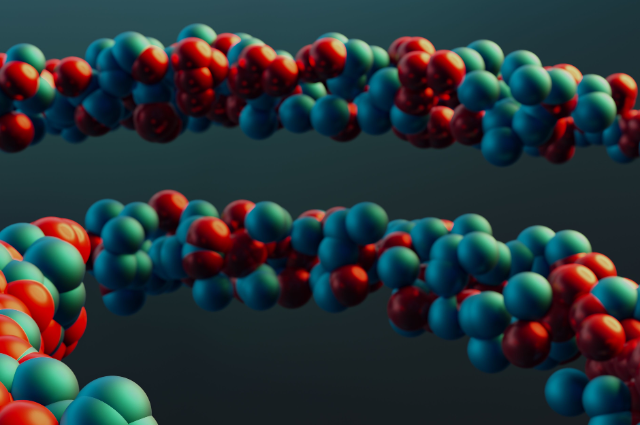
In June 2026, a profound shift shook the foundation of India’s technological landscape. Anagha Rajesh, a 24-year-old innovator, permanently shuttered her Bengaluru-based laboratory and moved her entire deep-tech startup, BioCompute, to San Francisco. Her company had achieved what many thought impossible outside the West: designing and executing an end-to-end biological prototype capable of archiving massive digital datasets inside synthetic DNA structures. Yet, at the critical juncture of manufacturing physical microchips, she met a systemic wall of risk aversion. Let’s dive into the deep insights of Anagha’s invention, and, being out of the box and making such a great breakthrough for India, she had to shut down her startup and move to the USA.
The Silent Labs of Bengaluru
In late June 2026, the quiet that settled over a specialised molecular laboratory in Bengaluru was heavy with implication. For two consecutive years, this room had hummed with a unique technological friction. It was a space where computer scientists collaborated alongside genomic engineers, speaking a hybrid tongue that seamlessly combined the nomenclature of binary machine languages with cellular biochemistry. Inside this lab, the traditional, power-hungry infrastructure of the modern internet was actively being broken down and re-engineered inside microscopic biological vials.
But by the end of that month, however, the specialised equipment sat cold. Delicate glass pipettes were catalogued and packed into shock-absorbent crates; advanced thermal cyclers were powered down; automated chemical synthesis rigs were prepared for international customs clearance.
Anagha Rajesh, a twenty-four-year-old chemist and entrepreneur, was boarding a transpacific flight to San Francisco.
Her startup, BioCompute, was executing a strategic pivot that sounded like the domain of speculative science fiction: completely abandoning silicon microchips and massive server farms to store human data within the tight helices of synthetic biological DNA. Against all staggering odds, her young team had engineered an operational, end-to-end proof-of-concept on Indian soil. They proved that dense digital archives—high-definition media, text repositories, and massive databases—could be compressed, written into genetic code, and read back out with absolute algorithmic fidelity.
Yet, precisely when the company required the capital runway to transition from this experimental laboratory milestone to manufacturing its first commercial generation of physical biological storage chips, it hit an invisible, impenetrable economic wall.
Anagha’s subsequent announcement that she was migrating the entire enterprise, including its foundational intellectual property, to Silicon Valley sent a shockwave through India’s economic ministries and venture capital boardrooms.
Her public explanation was clean, direct, and unsparing: India did not suffer from a deficit of raw engineering intellect, nor did it lack gross capital reserves. What the nation utterly lacked was a structured risk tolerance, the presence of long-term "patient capital," and a mature material ecosystem capable of nurturing high-risk physical deep tech through its volatile development cycles.
This investigative reflection analyses her departure not merely as an isolated corporate relocation, but as a critical diagnostic case study. It exposes a profound structural paradox within the Indian subcontinent: a nation that comfortably leads the developing world in digital financial transactions, consumer software, and outsourced IT services remains fundamentally hostile to funding the foundational physical architecture that will govern global technology for the next century.
The Making of an Anomaly
To understand the core systemic failure that forced BioCompute’s exodus, one must first dismantle the myth that India cannot produce baseline frontier scientists. The trajectory of Anagha Rajesh serves as a testament to the country’s premier academic incubation capabilities, while highlighting how quickly that talent runs into a domestic ceiling.
The Interdisciplinary Spark at BITS Goa
Anagha’s foundational research began during her undergraduate tenure at the Birla Institute of Technology and Science (BITS) Pilani, Goa Campus. Pursuing a primary degree in Chemistry, she resisted the traditional academic trend of hyper-specialisation. Instead, she deliberately crossed traditional intellectual boundaries, completing comprehensive minors in Philosophy, Political Science, and Economics.
This multidimensional academic exposure proved critical. It prevented her from viewing scientific breakthroughs merely as abstract exercises meant for isolated peer-reviewed journals. Instead, she viewed biotechnology through the macro lens of human infrastructure, resource allocation, and global market dynamics.
Her early leadership skills were honed outside the laboratory as well. Recognising a critical societal gap, she founded Yours Mindfully, a youth-led non-profit organisation focused entirely on mental health advocacy and structured peer support. Navigating the regulatory, human, and organisational hurdles of launching a non-profit gave her a practical education in operational management. It instilled a psychological resilience that would prove essential when she later assumed the role of a chief executive officer trying to convince sceptical venture funds to finance a biological revolution.
It was during a specialised chemistry project at BITS Goa that she began investigating the looming bottleneck threatening global technological continuity: the impending physical collapse of the global data storage matrix.
The Crisis of the Silicon Material Layer
The digital modern age is built on a fragile illusion of weightlessness. We speak of moving data to "the cloud," yet the reality is intensely material, polluting, and unsustainable. Every high-resolution video streamed, every automated transaction processed, and every large language model trained requires physical placement. This placement manifests as sprawling data centres—monuments of concrete and silicon that swallow hundreds of acres of agricultural land, drain millions of litres of local water tables every day for thermal regulation, and consume immense gigawatts of electricity from regional grids.
Furthermore, traditional storage media—solid-state drives, flash memory, and spinning magnetic tapes—possess a shockingly brief lifespan. They degrade rapidly due to magnetic decay and physical wear within five to ten years. Consequently, global technology conglomerates are trapped in an endless, multi-billion-dollar loop of data migration, constantly transferring humanity’s collective knowledge onto newer, power-hungry drives while generating mountains of toxic electronic waste.
Anagha focused her attention on a storage medium that nature had perfected over three billion years of biological evolution: Deoxyribonucleic Acid (DNA).
DNA is humanity's ultimate, hyper-dense information architecture. The entire biological blueprint for a human being—a set of instructions capable of guiding trillions of cellular operations over a lifetime—is packed into a cellular nucleus measuring mere micrometres. When translated into computing metrics, the numbers defy traditional hardware comprehension: a single gram of synthetic DNA can theoretically store approximately 215,000 Terabytes (215 Petabytes) of raw digital information. To put this in perspective, a small container of synthetic DNA could comfortably archive the entire digital footprint of humanity's recorded history.
Furthermore, DNA does not require active electricity to maintain its structural arrangement. If maintained in a stable, cool, dry environment, it remains perfectly readable for thousands of years, as proven by scientists sequencing the genomes of woolly mammoths frozen in permafrost.
Rejecting the Academic Pipeline
For an elite Indian undergraduate discovering these principles, the conventional path is heavily standardised. It involves applying for a funded PhD program at an American Ivy League or European institution, spending the better part of a decade publishing niche academic literature, and hoping that a Western biotechnology corporation eventually licenses the patent rights.
Anagha recognised that while academic institutions excel at investigating the fundamental theory of biological data systems, their bureaucratic pace is ill-suited for solving the intense engineering and cost barriers required for immediate market commercialisation.
In 2024, at just twenty-two years old, she rejected the safety net of academia and founded BioCompute. Her objective was uncompromised: she would transform an elegant biological concept into a practical, mass-manufactured computing product.
The Breakthrough in Bengaluru
Building a deep-tech company centred on frontier biology is a capital and physical impossibility within a standard co-working space or an ordinary garage. It demands heavy chemical synthesis frameworks, sterile environments, and expensive genomic (the study of an organism's complete set of DNA, including all of its genes and their interactions with each other and the environment) analysis tools.
Engineering Nature’s Hard Drive
Establishing her operations in Bengaluru, Anagha and a carefully selected team of young Indian scientists set out to build a private laboratory dedicated entirely to solving the core computational and biological bottlenecks of DNA storage. The workflow they had to build from scratch was monumentally complex:
Binary-to-Biological Transcoding: Standard computing architectures operate on a strict binary system of 1s and 0s. DNA, conversely, operates on a quaternary system composed of four nitrogenous chemical bases: Adenine (A), Cytosine (C), Guanine (G), and Thymine (T). The BioCompute team had to construct custom software algorithms that could ingest a digital file, compress it, and map those binary combinations onto an error-free text sequence of biological letters.
De Novo Chemical Synthesis (Writing): Once a digital file was transformed into a long string of genetic text (e.g., AGTCCG...), that sequence had to be physically created from scratch. The lab utilised custom chemical synthesisers to anchor and link liquid chemical nucleotides, literally printing a physical, tangible strand of DNA containing digital information.
Genomic Sequencing and Error Correction (Reading): To retrieve the stored information, the synthetic strand had to be fed into a high-throughput genomic reader. The sequence of chemical bases was mapped, passed back through the software algorithms, and translated back into its native binary form, outputting the original file onto a standard monitor.
For two gruelling years, working under immense pressure, the team executed thousands of laboratory trials. They consistently battled the primary demons of molecular engineering: genetic "stuttering" (where a chemical synthesiser accidentally duplicates a base pair, completely corrupting the downstream digital code) and structural fragmentation.
Crucially, BioCompute achieved a massive milestone that went far beyond merely copying Western academic experiments: they developed a proprietary technique that dramatically lowered the extreme costs traditionally associated with high-precision chemical DNA synthesis.
The Mirage of Local Support
During this initial evolutionary phase, the Indian entrepreneurial ecosystem appeared to be firing on all cylinders. The sheer bravado of a young Indian woman under twenty-five tackling a frontier technology that challenged global tech giants drew immediate praise and early financial support.
BioCompute successfully raised over ₹5 crore (approximately $600,000+) in early seed and grant capital. This financial runway was anchored by a cohort of progressive domestic and international investors:
The WTF Fund: A highly competitive equity vehicle launched by billionaire entrepreneur Nikhil Kamath (the co-founder of India's largest retail brokerage, Zerodha), designed explicitly to inject capital into exceptionally talented Indian founders under the age of 25.
Grad Capital: A specialised seed fund deeply linked with India’s elite academic institutions (IITs and BITS), focused on backing deep-tech intellectual property at the campus level.
The 1517 Fund: A prominent Silicon Valley venture firm that intentionally backs non-traditional innovators, college dropouts, and scientists who choose to build commercial companies rather than stay within traditional academic structures.
Emergent Ventures & Sustainability Grants: The startup also secured a critical non-equity climate innovation grant of ₹31.4 lakh, recognising that replacing coal-powered data warehouses with biological storage could profoundly reduce global carbon emissions.
By late 2025, this capital had produced undeniable proof. BioCompute announced the successful deployment of India’s first end-to-end biological data storage prototype. They proved that their software and chemical workflows functioned flawlessly within their lab. Anagha Rajesh had validated her vision, disproving dozens of senior Indian institutional investors who had privately dismissed her company as an overambitious student project.
Yet, it was at this precise peak of domestic validation that BioCompute hit the catastrophic financial abyss known in deep tech as the "Valley of Death."
The Anatomy of a Market Failure
In the global venture capital industry, the "Valley of Death" refers to the hazardous transition phase that a deep-tech company must cross after proving an invention works in a controlled laboratory environment (the prototype phase), but before it can scale production to manufacture a cost-effective, high-volume product for commercial enterprise clients (the market phase).
When Anagha Rajesh attempted to steer BioCompute across this valley from her base in Bengaluru, she discovered that the domestic financial market offered no path forward.
The Structural Risk Aversion of Indian Capital
To transform a delicate, room-sized laboratory process into an enterprise-grade computing product, BioCompute needed to transition from biology experiments to semiconductor engineering. They needed to design, execute layout tape-outs, and manufacture Version 1 of their proprietary DNA-storage microfluidic silicon chips.
This transition altered the company’s capital requirements overnight. They no longer needed lakhs for liquid chemical reagents; they needed tens of crores of rupees to lease cleanroom time, procure high-precision industrial lithography components, and secure the full-time services of rare global microfluidic and hardware manufacturing specialists.
Crucially, this phase required a multi-year development window during which the company would generate exactly zero revenue.
When Anagha approached mainstream Indian venture funds and prominent family offices for this scale-up capital, she met immediate, systematic rejection. Her subsequent public assessment hit the core of the issue: "India has money, but less patience."
The Indian venture capital ecosystem is historically and culturally optimised for low-risk, fast-return software applications. The massive fortunes generated within Bengaluru, Mumbai, and Gurgaon over the last two decades were almost entirely built on consumer-facing software, quick-commerce apps, localised fintech platforms, and software-as-a-service (SaaS) models.
Indian investment committees understand metrics like Customer Acquisition Cost (CAC), Lifetime Value (LTV), and Gross Merchandise Value (GMV). They are comfortable backing a company where the core software code is guaranteed to work, and the only real risk is execution (marketing, user adoption, and logistics).
When confronted with a hardware-reliant biological computing architecture, Indian VCs panicked due to two structural realities:
The Inability to Evaluate Technical Risk: Unlike their Silicon Valley counterparts, major Indian venture funds do not employ permanent scientific advisory boards, nor do they fill their investment partner tracks with engineering PhDs or hardware manufacturing veterans. Lacking the internal expertise to verify whether a biological chip can scale, they default to viewing all hard science as an unacceptable gamble.
The Obsession with Immediate Unit Economics: Typical Indian venture fund structures operate on highly compressed, short-term valuation milestones. Founders are expected to raise seed capital, demonstrate immediate commercial traction within 12 to 18 months, and rapidly raise a Series A round at a hyper-inflated valuation. Deep-tech physical hardware, however, operates on a 5-to-7-year research and development timeline before a commercial product can safely enter a mass market.
The Missing Material Ecosystem
The systemic barriers to keeping BioCompute within India extended far beyond the risk aversion of venture capitalists. A deep-tech company cannot survive in isolation; it requires an intense, localised network of advanced physical manufacturing infrastructure.
In Bengaluru, if an e-commerce or SaaS startup needs to scale its infrastructure, its engineers can spin up thousands of new virtual servers via Amazon Web Services or Google Cloud with a single click. But when BioCompute required custom microfluidic print heads, high-throughput automated genetic sequencers, or ultra-pure chemical compounds, they ran into agonising bureaucratic and logistical walls.
Because India lacks a mature domestic manufacturing base for advanced scientific instrumentation, virtually every single piece of high-end hardware and chemical reagent had to be imported from Western Europe, Japan, or the United States. This exposed the young startup to months of customs clearance delays, unpredictable import tariffs, and complex international supply chain friction that drained their limited seed capital.
Furthermore, India lacks a mature pool of "Alpha Customers." In advanced economies, deep-tech startups survive their early, imperfect product iterations because visionary institutions are willing to act as early adopters. Agencies like DARPA, NASA, or major private data monopolies routinely award massive pilot development contracts to unproven startups. They do this intentionally to cultivate next-generation strategic capabilities.
In stark contrast, both Indian corporate enterprises and public procurement frameworks are intensely conservative. They require startups to showcase multiple years of positive cash flows, audited corporate balance sheets, and historical mass-market success before they can even qualify to submit a project bid.
Faced with a brilliant, globally validated prototype but stuck inside an environment completely unequipped to help her build the physical hardware, Anagha Rajesh faced a brutal choice: watch BioCompute slowly starve in India's technology capital, or relocate to the United States.
The Siren Song of the Bay Area
By packing up her company and establishing her new corporate headquarters in San Francisco in mid-2026, Anagha Rajesh was not performing an act of political defiance or abandoning her roots. She was simply responding to the undeniable laws of macroeconomic gravity. Silicon Valley possesses a highly specialised institutional architecture specifically designed to absorb the intense technical shocks that crush deep-tech startups elsewhere.
The Architecture of Patient Capital
In San Francisco, an entrepreneur who presents a functional, cost-reducing biological data storage prototype is not interrogated about immediate next-quarter revenue. Instead, they gain access to a multi-billion-dollar ecosystem of dedicated deep-tech, hard-tech, and biocomputing venture funds.
These investment houses are backed by institutional limited partners—such as multi-billion-dollar university endowments and long-horizon sovereign funds—that explicitly operate on 10-to-15-year fund lifecycles. These investors understand a fundamental law of technology: out of ten deep-tech investments, nine may end up completely failing, but the single company that succeeds will secure a multi-trillion-dollar global generational monopoly (akin to the historical trajectories of Intel, Nvidia, or Genentech) that rewrites global geopolitics.
Physical Proximity to Scale
By embedding BioCompute within the Bay Area, Anagha unlocked immediate access to:
Shared Nanofabrication Cleanrooms: Advanced, open-access semiconductor and microfluidic fabrication labs (such as those at Stanford University, UC Berkeley, or private hard-tech incubators). These facilities allow early-stage startups to prototype physical microchips for a nominal hourly fee, eliminating the need to spend tens of millions of dollars building proprietary cleanrooms.
A Highly Specialised Workforce Network: Instant access to a unique calibre of talent—hardware engineers and operational executives who spent decades scaling the physical manufacturing systems of global giants like Illumina, Applied Materials, or Intel, and who know exactly how to scale a lab test-tube process into an industrial pipeline.
The "Pay-It-Forward" Founder Brain Trust: A dense community of deep-tech founders who have personally navigated the "Valley of Death" and can offer immediate, actionable guidance on international patent protections, global hardware supply chains, and structured technology licensing agreements with cloud infrastructure giants.
BioCompute did not leave India due to a lack of patriotism; they migrated because San Francisco provided the baseline material oxygen required for their physical invention to survive and scale.
The Strategic Reflections and National Lessons
The migration of Anagha Rajesh and her foundational DNA-storage technology represents a historic warning sign for India’s economic architects, science ministries, and financial elite. It exposes a dangerous systemic flaw in how the country manages innovation.
For generations, the narrative surrounding the Indian "brain drain" was framed as an educational and employment issue: bright students left the country because India lacked elite graduate programs, or because domestic corporations could not match the high salaries of Western software companies.
The BioCompute story uncovers a new, far more economically damaging paradigm: Founder Migration. These are innovators who are completely educated within India's premier domestic institutions, who actively choose to remain in India to launch their enterprises, and who successfully harness local engineering talent to build world-class technology. Yet, they are ultimately forced to leave because India’s internal financial architecture is too short-sighted to support them when they transition from a software script to physical hardware manufacturing.
If India is to break this cycle and ensure that the foundational deep-tech giants of the next century are built, scaled, and owned domestically, the ecosystem must implement four structural changes:
Reforming the Venture Capital Horizon
Indian investment houses must mature beyond the "copy-paste" startup model. For two decades, a huge percentage of India’s most celebrated tech companies were localised adaptations of business concepts already proven in the West or China: India's version of Amazon (Flipkart), its version of Uber (Ola), its version of DoorDash (Swiggy), and its versions of Western digital wallets.
While this replication strategy was highly effective for an emerging economy rapidly expanding basic consumer internet access, its macroeconomic potential is reaching a ceiling. True technological independence is anchored in hardware, materials science, and deep biology—not just clever software user interfaces.
Indian venture capitalists must actively build internal scientific capacity. They must hire PhDs and manufacturing veterans into their partnership tracks, establish permanent scientific evaluation boards, and intentionally dedicate a fixed, long-horizon portion of their capital pools to absorbing genuine technical risk.
Creating State-Backed Transition Bridges
While the Indian government has enacted highly progressive frameworks like the National Deep Tech Startup Policy and various early-stage grant mechanisms, these funds are designed almost exclusively to help a company start. They provide the early lakhs or initial crores necessary to set up a lab space or construct a basic digital prototype.
However, when a hardware startup transitions into needing 50 or 100 crore rupees to manufacture custom physical microchips, state-backed support disappears, leaving the founder entirely at the mercy of risk-averse private equity markets.
The central government must step in to build massive, multi-stage sovereign deep-tech transition funds. These vehicles must be explicitly mandated to match private deep-tech investments coin-for-coin during the scaling phase. Furthermore, public procurement frameworks must be aggressively modernised, legally forcing state industries, public utilities, and national defence sectors to issue pilot contracts to early-stage domestic deep-tech innovators.
Democratizing Advanced Physical Infrastructure
Software startups thrive in India because high-speed fibre internet and global cloud computing are incredibly cheap and universal. Deep tech will only achieve a similar explosion when advanced physical manufacturing infrastructure is similarly democratised.
The state must construct heavily subsidised, open-access national nanofabrication hubs, advanced genomic printing labs, and precision materials testing spaces across key technological centres such as Bengaluru, Hyderabad, Pune, and Delhi-NCR. A young innovator graduating from an Indian university should be able to lease hours on a multi-crore chemical synthesiser or an electron-beam lithography machine for a modest, accessible fee, entirely removing the massive capital entry barriers that currently kill early-stage physical hardware development.
Overcoming the "Indian-Origin" Complacency
There remains a widespread, highly visible cultural habit within the Indian media and political establishment to celebrate the international achievements of individuals of Indian origin. When an executive born or educated on the subcontinent ascends to become the CEO of a Silicon Valley monolith like Microsoft, Google, or Adobe, it is routinely claimed as an absolute victory for the national ethos.
Anagha Rajesh’s story exposes the hollow nature of this pride. Celebrating a brilliant scientist after they have been systematically forced to leave the country, raise foreign capital, lease American cleanrooms, and create immense equity for the American economy is a severe strategic failure masquerading as a cultural triumph.
Until India fundamentally alters its internal risk architecture, the nation will remain trapped as an intellectual training ground—systematically exporting its most valuable scientific minds and foundational intellectual property to foreign superpowers.
The Geopolitics of Memory
The technology pioneered by Anagha Rajesh and her team at BioCompute is not merely a transient consumer product or an incremental software update. It represents the foundational material layer that will archive humanity's collective historical memory for centuries to come. It is an innovation that sits at the absolute intersection of biological science, long-term planetary sustainability, and sovereign infrastructure autonomy.
The fact that an elite, operational end-to-end prototype was engineered entirely within Bengaluru by a young team on a modest budget is a definitive statement on the world-class calibre of India’s youth. The intellect is entirely present.
But as BioCompute begins mass-producing its first commercial generations of biological storage chips under the clear skies of Northern California, the final lesson for India remains uncompromised. True technological dominance cannot be achieved simply by training brilliant minds. It can only be achieved when an entire nation develops the economic courage to stand beside those minds, embrace long-term scientific uncertainty, absorb technical risk, and back them all the way to the finish line.
Until that profound structural transformation occurs, India’s greatest innovations will continue to be initiated at home—but ultimately owned by the world.
Verified Reference and Citation Guide
To ensure high academic authority and factual verification for your competition submission, use the following structured references to support the claims, metrics, and events detailed in the article:
Corporate Identity and Scientific Thesis
The Entity: BioCompute Inc. is a registered deep-tech enterprise explicitly dedicated to commercialising DNA-based data storage architectures by developing proprietary transcoding software and microfluidic hardware interfaces.
Primary Source: Verified via the Official BioCompute Corporate Portal. This repository confirms the company’s vision of replacing standard silicon storage media with high-density synthetic biological DNA.
Foundational Profiles and Academic History
The Innovator: Anagha Rajesh is the official founder and chief executive officer of BioCompute. Her documented history includes an undergraduate tenure at BITS Pilani, Goa Campus, where she maintained a cross-disciplinary focus in Chemistry alongside humanities tracks. Her early leadership includes founding the youth mental health organisation Yours Mindfully.
Primary Source: Verified via the comprehensive biographical and operational feature published in The Times of India (Education News). This profile chronicles her transition from campus research to launching a deep-tech company and details her subsequent relocation to Silicon Valley.
Capital Milestones and Investor Cohorts
The Financial Data: BioCompute’s early phase in India was supported by a seed and grant capital pool exceeding ₹5 crore, including an explicit ₹31.4 lakh non-equity climate startup grant.
The Backers: The investment round comprised prominent vehicles including Nikhil Kamath’s WTF Fund (targeting entrepreneurs under 25), Grad Capital (deep-tech campus accelerator), and the Silicon Valley-based 1517 Fund (backing non-traditional and academic-alternative innovators).
Primary Source: Documented and verified via national business archives and the investigative profile outlining her fundraising mechanics and strategic reasons for shifting physical hardware execution to San Francisco in mid-2026, as detailed in The Times of India Coverage
Reference: