
When Tiyasa wakes up, it’s close to dawn. Early morning calls from birds urge her to look out. From the window. She realises that it’s Spring. Koels and Bulbuls are singing a happy tune.
Tiyasa, with a melody in her heart and a feeling of happiness hovering around her eyelids, realises that her day’s just begun. Slowly … so very slowly, she arranges herself and the things around her, into order. She brushes, washes her face and applies some amount of moisturiser to make her skin smooth and retain its freshness. It’s only then … while looking at herself in the mirror, she realises that a stranger is standing in front. A person who’s a stranger … Someone whom she fails to recognise. Yet … ‘That one standing in front, MUST be ME.’ Tiyasa hears herself speaking these words aloud. Creases appear around her brows, and she knows, in her heart of hearts, that she’d been neglecting herself, as most Indian women, for whom fate and fortune change after their marriage.
Tiyasa, a Bengali by birth, married after seven years of courtship. She, instead of the other way round, successfully hung Piyush till he had to fall to her very knees. Something unusual, to say the least. Piyush Sharma is a journalist with The Times of India. Tiyasa and Piyush’s story of courtship could have meandered into the pages of one of Ruskin Bond’s masterpieces.
I have my day off today. Let’s go for a movie together’, Piyush said yesterday, while finishing breakfast. Something the two always make it a point to have together. Tiyasa reacted with a vehement ‘No’. She had the problem of her maid, who was taking a day off, at the back of her mind. ‘You and your perpetual maid problem!’ Piyush said rather angrily yesterday. But this isn’t the first time. And Tiyasa’s husband, for close to twelve years, Piyush, knows that too well. But he is a proud person, one who knows that women like Tiyasa are hard to find in our society today. We are more self-centred than we were even a decade ago.
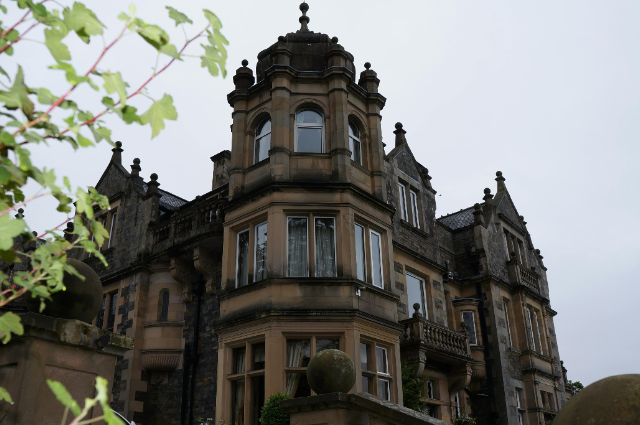
Tiyasa - in a moment of epiphanic revelation - realises that she’s travelled…many moons ago …. to her parental place. An abode in childhood and the entire adolescent years. At Pathuriaghata in North Calcutta. Yes, the same region where the famous ‘Babu culture’ of Calcutta originated. Tiyasa’s parents and her grandparents lived in a four-storied structure, which was akin to their hearts. The little Tiyasa, aged ten, fell on its staircase one day– a long, winding beauty – attached to the superstructure, all of them called ‘their very own axle’. She bruised her ankle. But the same made such a deep impression of sadness in her granddad’s mind that he immediately ordered for the removal and replanning of the entire architecture. Surely their house was a living specimen of ‘Neighbour’s envy; Owner’s pride’. They parried when the first decade of a new century arrived. That’s when Tiyasa’s granddad left for his own heavenly abode. But the hungry eyes of a rising brigand – ‘Promoters’ – can hardly be evaded or subdued. That too for long …
Having parried for l-o-n-g, l-o-n-g years, and witnessing such incidents as deaths and births occurring almost simultaneously, even though opposites attract and gravitate towards each other, yet when they arrive, we mostly are unprepared for them, Tiyasa’s household bowed down as the lure of lucre grew with the passage of Time.
‘But a building with such an ornate architecture must surely be hard to find here. As you are exploiting our failure to keep up its maintenance, we feel you and your Real Estate Company are offering a too paltry amount.’
‘We are giving you and your family members enough to sustain yourself for your entire lifespan. If you people do not accept the amount offered, or defer from the initial agreement that we’d signed in front of an attorney, then we possess other means, by which we mean men and muscles, to forcibly acquire the property.’
Conversations like these were frequently held within closed doors of their drawing room, which, even these businessmen of devious intents and portents knew, had witnessed better and more glorious days previously! Their ancestral residence, having withstood the ravages of time, decides to cave in!!! The one which acted, till date, like ‘the Boro Ghori’- twin-faced overhead clock at the Howrah station in Calcutta, travellers see while embarking or disembarking from trains.
Tiyasa, that very morning with the Spring air in the hearts of both birds and men, suddenly remembers the large front edifice of her paternal house where she grew up, where she met and married her long-time boyfriend, later husband, Piyush Sharma. She stares, soundlessly and seriously, at the blueness beyond, with a sinking soul. Her ancestral home is crumbling, and the grand dame is falling to earth. What she’d feared all along her life is turning out to be a brutal reality. Rumours of the rise of the clan of people, known as land mafias, are doing brisk business in the name of real estate. No, absolutely NO, remedy known to man has been effective in halting their rise and subsequent growth. These men are spreading the virus of ‘hunger for extra coffers, gold, etc.’ among men with avarice in their eyes and deception in their souls. Most of these men with deceit in their souls often belong to the members of families residing in their residential buildings, that’s seen the golden days of yore. The sight or the chimaera of wealth acquisition is a temptation that most toiling men, sweating and working round the clock in extreme surroundings, find hard to resist.
For Tiyasa, their residence has a different story to tell spectators altogether. ‘The very own axle’ around their past and their residence, the exteriors, as well as the concrete slabs, adopted the idea and the eventual reality of modernisation. Mutually. Its present members, including Tiyasa’s Jethu, Jethima, Kaku and Kakima, along with their children, by mutual love and agreement, embraced the overhaul of the edifice. They decide to keep her out of the inheritance, because she’s been married. But she visited occasionally, sometimes with Piyush or at other times all by herself, for as the saying goes, ‘memories die hard’.
‘Baba and Ma married when the entire nation was reeling under Mrs Indira Gandhi’s imposition of the Emergency. They, I was told later on, did not have a proper ceremony to consecrate their nuptials. Rather, the mutual families resorted to a quiet ceremony, solemnised by priests from their respective households. A handful of guests witnessed the marriage ceremony, an occasion that was held during an evening when a blackout was declared in the city. Terror and darkness ruled supreme when the only major lights of decoration were those coming from the candles, which my maternal grandmother prepared by melting and sealing the wax from all the diyas that she used every day during her puja.’
Tiyasa, she remembers, told her future husband, Piyush, this family anecdote when he proposed to her, sitting under a wooden bench near the portals of the College Street campus of Calcutta University. Both of them were studying for their Master's in English Literature, after having secured good marks at their Graduation levels. Tiyasa and Piyush were neighbours, at one point in time, but when the latter’s family moved away from the Pathuriaghata vicinity – something which Tiyasa’s family interpreted as having ‘fear in their hearts and foolishness in their minds’ – the future couple kept in touch when Piyush decided to study English Literature. This he did with the simple objective: He Cherished - and Cherished - the sheer Proximity of his girlfriend, someone he promised to make his wife, soon. Their courtship years became the gossip of the neighbourhood quite early. But the parents of Tiyasa harboured the foreboding that Piyush, a regular at their premises, would become an outcast once their marriage was solemnised. As Piyush Sharma, a Punjabi and a strict vegetarian, loved their home-cooked Bengali recipes like Bhaja Moonger Dal and Koraishutir Kochuri, their daughter Tiyasa’s luck in a household other than a familiar one will surely be difficult, to say the least. Keeping aside the fact that the parents of Piyush grew a strong dislike for their Tiyasa for the simple reason that the latter loved to wear Tangail saris – a trademark Bengali fashion statement. They, Tiyasa’s parents, harboured a strong dislike for Piyush’s parents as well. But the same gravitated towards mutual reverence, as both these families, belonging to different cultures and traditions, came closer to each other.
Tiyasa, as she sits pondering over her thoughts and her ruminations today, realises the urge and the necessity to travel back in time.
‘I am going out for the day. Can you arrange the afternoon meal for Dada, all on your own? The fridge is stocked with fresh veggies that I purchased the day before. It isn’t that hot now, for them to rot or to dry up! So, they can be cooked well in a proper gravy. I think you can prepare Aloo Paratha to accompany the Shahi Paneer Curry, which I cooked yesterday. Isn’t that so?’
Tiyasa calls out to their maid, a young Maharashtrian girl of nineteen, more adept at cooking than Tiyasa and her own mother put together.
Tambi, the maid, replies with a loud ‘OK! Mam! Loud enough for the entire neighbourhood to hear.
Tiyasa, instead of being a happy and contented wife, is essentially a loner at heart. Her in-laws opposed the idea of her going out of the household. Something that they reasoned as ‘A working woman simply has an excuse to show off and dress on the pretence of doing a job’. Tiyasa’s intention to pursue her doctoral studies came to a full stop after her marriage to Piyush. She accepted her fate as being the only inevitable.
Today, as she looks out of her window only to find her mind singing a happy tune in tandem with the tempo of the birds’ calls, Tiyasa fathoms and understands her desperate need to go out and visit her paternal house before it gets too late to do so. To that very end, she takes out a simple brown and maroon salwar kameez and matches it with a silk tussar dupatta. Throwing one last look at herself in the mirror, she books an Ola cab, and as soon as the driver contacts her, she puts on her Bata covered shoes, bracing herself for the ordeal ahead.
Following the directions from the GPS map of the address she provides, the Ola cab driver manoeuvred his vehicle towards the Pathuriaghata neighbourhood. Tiyasa paid the amount, opening the purse that her mother gave her on their fifth wedding anniversary. It is a beautiful purse with gold borders and can be used both as a sling bag and as a clutch purse. Tiyasa decided that she would keep the gift by her bedside and use it only for special occasions. Today is one such special day.
Tiyasa disembarks, with trepidation in her heart and a blind foreboding of ‘something disastrous about to happen!’ She didn’t know why she had that gut feeling, but she did. Slowly, so very slowly, she approaches the iron gates of the grand building where she was born and grew up, till it’s time to marry her off to a boy who soon turned out to be ‘the son’ that her parents never had. Piyush also, in his own way, felt a sense of ‘belonging’ that, he confessed to his wife later on, he’d never experienced before any where from any one in his own family members. As soon as Tiyasa tries to push open the wrought-iron gates with a feeling of déjà vu, she stares and stares! …. At the scene that unfolds before her eyes, just like the opening shot of a film that follows the title track. Sitting inside the movie theatre, the gathered hundreds gape, wide-eyed and with disbelief, at the make-believe world slowly opening up in front. Similarly, Tiyasa experiences the same moment of gaping wonder.
….. Her paternal house is crumbling … Machines litter the entire grounds, and big vehicles, carrying heaps of mortar and cement, are running helter-skelter, doing a brisk business of deconstruction of her childhood and reconstruction of the era of modern technology, devoid of love and emotion, but full of lust and ebullience. No one, repeat NO ONE, is seen in the immediate vicinity of the site. Tiyasa feels tears welling up inside her eyes, which, she knows, will be useless to shed. With her parents leaving for their heavenly abode, one soon following the other, her uncles, Tiyasa is well aware, hardly take care of the maintenance of the premises, which has now turned into just a memory.
She slowly treads her way out of the deconstruction site. With a heavy heart and a weary body, Tiyasa decides that she’s going to go back home on foot. She starts walking …
Suddenly … An idea takes shape inside her brain. Why not turn her experiences on the history of Calcutta, based on her research papers that she’s preserved properly, within the locker cabinet of their almirah, with her memories of having lived in a house that the new generation would name as ‘dilapidated’, into a book? Turning thought into meaningful action, and after having washed her hands and face very well in their spotlessly clean washroom, Tiyasa sits down near Piyush’s work table, with a bundle of loose cyclo-styled sheets and a pen, clutched inside her palms like an armour, and begins to write words and then paragraphs. Soon, she begins to enjoy the very act of reliving the past. The rest, as the saying goes, is history ….