
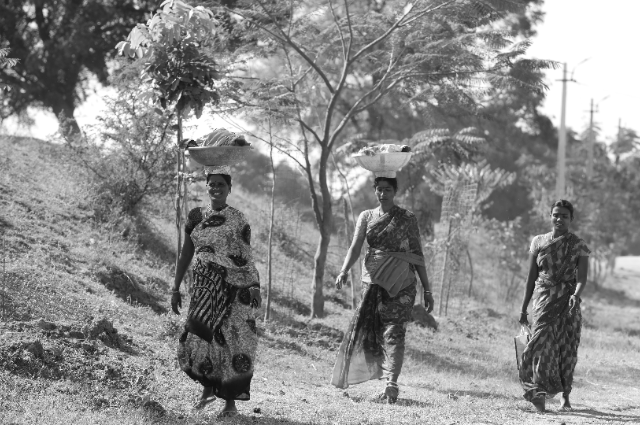
In the vast cultural landscape of India, there are many festivals that most people have heard about, like Diwali or Holi, but there are also some traditions that remain deeply rooted in the memories of local communities and rarely appear on the national stage. One of those rare and powerful traditions is Mukka Sendra, also known as Jani Shikar. This tribal celebration is practised by the Oraon (Kurukh) tribe across parts of Jharkhand, Odisha, and Chhattisgarh, and it draws people together with a shared sense of history, identity, and collective memory. Unlike most Indian festivals that are observed every year, Jani Shikar happens only once every twelve years, giving it an almost sacred cyclical importance similar to the twelve-year rhythm of the Mahakumbh Mela.
At its core, Jani Shikar is a celebration of women’s power and a ritual that brings entire tribal communities together in a form of social solidarity that transcends villages and even state boundaries. It is not an event driven by modern tourism or media attention. Instead, it persists because the tribal people themselves remember why it exists. In the months leading up to the twelve-year cycle, villages begin preparing with anticipation. Families make traditional weapons ready, younger women learn the stories from elders, and ancestral pride begins to circulate in the air of each settlement.
The roots of this tradition lie in a legendary moment of collective defence that took place roughly five centuries ago at Rohtasgarh Fort, located in the region that is now part of Bihar. According to tribal oral history, Rohtasgarh was once under threat from invading forces, often described in tradition as Mughal or Turk attackers, who planned to attack the tribal villages after a major spring festival called Sarhul. The invaders believed that the day after the festival, tribal men would be incapacitated from drinking hadia, the traditional rice beer, and the village would be easy to conquer.
On the morning the attack was expected, the tribal men were indeed asleep from the night’s celebration, but three brave women refused to watch their community fall. Princess Sinagi Dai and her companions, Kaili Dai and Champa Dai, gathered the women together, tied turbans on their heads, and dressed them in men’s clothing so they would appear like a full war party ready to defend the fort. The women took up whatever weapons they could find—bows, arrows, spears, and daos—and positioned themselves along the fort walls. When the invaders arrived, they were taken by surprise. They saw what looked like a full army ready to fight, and on the first and second attempt they were driven back. The women fought with such courage and tactical skill that the invaders were confused and intimidated. It was only on the third day, when a spy noticed that the warriors were washing their faces and saw subtle signs of femininity, that the disguise was discovered. Even then, the women fought so fiercely that their moment of recognition did not erase the legend of their courage.
The battle at Rohtasgarh may be wrapped in layers of oral tradition and symbolic memory, but what has endured is the meaning the tribe places on it. What could have been remembered as a moment of loss became a celebration of female leadership and collective resistance instead.
That is why when the festival comes around every twelve years, the women of the tribe dress in male clothing and take the lead. In older times, they wore traditional male attire like the karea, but in more recent celebrations, they often wear modern shirts and trousers along with caps, blending the traditional with the contemporary. Men, by strict tradition, are forbidden from participating in the hunt or even eating the feast prepared from the catch. Their role for the day is to stay back at home and take on domestic responsibilities while the women enact the symbolic hunt.
The ritual itself is not chaotic or random. It follows a relay pattern that moves from one village to the next. Women set out from their own village at dawn, weapons in hand, and march toward the neighbouring settlement. When they arrive, the host village welcomes them, washes their feet, and offers them a feast as a sign of respect and solidarity. After this ceremonial welcome, the women from the host village take up the weapons and continue the journey to the next village. This relay continues, creating a sense of unity and shared purpose across the tribal region. Originally, the hunt involved tracking down and killing wild animals, but in recent times, due to wildlife protection laws and changing environmental conditions, many communities practice a symbolic hunt where specific animals like goats, pigs, or poultry are set aside for ritual purposes rather than actual forest hunting.
Beyond the hunt and the ceremony, one of the most poignant symbols of this tradition is the three-dot tattoo that many tribal women wear on their foreheads. According to the oral history, when the captured women were branded by their enemies with three dots to mark them as rebels, the Oraon community chose not to see the mark as a sign of shame. Instead, they reclaimed it as a symbol of honour, resistance, and collective memory. Today, these three dots are a powerful reminder of where the tribe came from, what it endured, and the way in which women’s courage shaped their survival.
Jani Shikar is more than just a festival. It is a living story of solidarity and identity. For many Oraon families, the memory of the Rohtasgarh defence is passed down from mother to daughter and from grandmother to granddaughter. It is taught not as a myth but as an affirmation of strength and dignity.
In an era where tribal cultures are increasingly under pressure from globalisation, urbanisation, and changing social norms, traditions like Jani Shikar play a vital role in preserving community bonds and reminding younger generations of their roots.
For outsiders and researchers interested in India’s diverse cultural heritage, Jani Shikar offers a rare glimpse into how history, ritual, gender roles, and tribal solidarity intertwine in a way that is uniquely local and deeply human. It is not a spectacle for tourists, but it remains one of the most meaningful traditions for the tribal people themselves because it is anchored in lived memory, collective identity, and an enduring sense of unity.
References
- Reflections. live — The Secret of Mukka Sendra (Jani Shikar) https://reflections.live
- Hindustan Times
- Reflections. live