
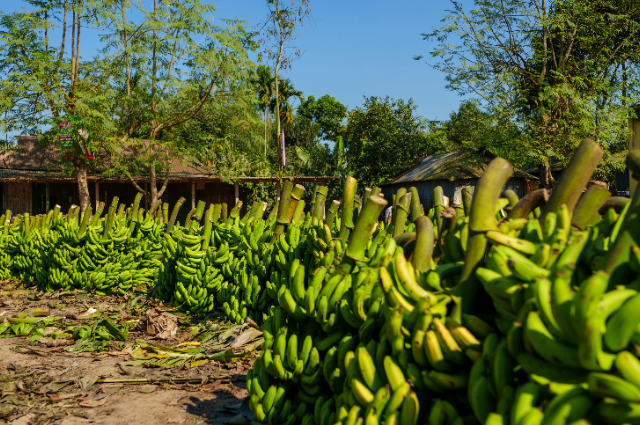
Nature is amazing. It provides us with so much, but it also leaves a lot behind. Let's think about banana farms. We enjoy bananas, but most of us don't consider what happens to the peels after we toss them away. Every bunch of bananas has a sturdy stem that supports them as they grow. This stem is a key part of the banana plant, but once the bananas are picked, the stem is no longer needed.
Farmers cut down the stem, but they either burn it or let it rot in the fields. Banana farms have many of these stems, and farmers are unsure how to deal with them after the bananas are harvested. Banana plants are fascinating, yet the leftover stems are often discarded. For every kilogram of bananas we consume, there are ten kilograms of plant material left behind. That’s a significant amount of biomass accumulating in fields worldwide. The trouble with bananas is that the leftover plant material, when left to decay, creates methane. This gas is much more harmful to our atmosphere than carbon dioxide because it traps more heat.
So, bananas and their waste contribute to an environmental issue, even if the leftover material seems harmless. The plant material from bananas actually holds potential.
What if we could turn that waste into something valuable? What if it could benefit the environment? This might sound far-fetched, but that’s exactly what people like Jinali Mody are doing. Jinali Mody, from India, starts companies aimed at helping the environment. She looked at banana stems that people discard and saw something remarkable. Instead of trash, she recognised their strength and fibres, which could be made into fabric. Jinali Mody transformed banana stems into something sustainable. She created a fabric that looks, feels, and even smells like leather. This marked the start of what we now call banana leather — a material that turns waste into luxury.
Jinali became curious when she learned about biochemistry and sustainability. This led her to explore the issue of waste from farming leftovers. Bananas are a major crop in many countries, especially in India, one of the largest producers. After harvesting, the stems left behind are large and bulky, so farmers typically burn them or let them decompose. Jinali noticed that these banana stems contained strong fibres that could be repurposed. She found the banana stems intriguing because they could be reused if people recognised their potential. Instead of letting them go to waste, Jinali and her team discovered how to extract these fibres and create a new kind of material — plant-based leather.
The process is simple yet impactful. First, workers pick the stems and remove the long fibres inside. They ensure the fibres are clean. Then they mix them with natural substances, like tree sap and plant starch. Unlike traditional leather production, they avoid harmful chemicals. Once combined, the mix is pressed into sheets and dyed with natural colours. This makes the material resemble animal leather. The transformation of the fibres is what makes this material special. The way the fibres are utilised gives it a leather-like appearance. The texture is soft yet durable, and many people say it even has a leather-like scent. It can be used to make bags, wallets, jackets, and shoes — anything you'd expect from standard leather, but without harming animals or polluting the environment.
Banana leather is indeed better for the planet. Traditional leather production is harmful to the environment. It consumes over 10,000 litres of water just to make one bag. It also employs harmful chemicals that contaminate our rivers and soil. In contrast, banana leather uses 95 per cent less water and generates minimal waste. It helps reduce the pollutants we release into the atmosphere. Additionally, it prevents significant amounts of methane from being produced when banana stems are burned or allowed to rot. In a world where the fashion industry faces increasing pressure to adopt environmentally friendly practices, banana leather provides a viable alternative.
This story is inspiring because it supports the people who cultivate our food. Banana farmers previously struggled with leftover stems, having no way to profit from them. In fact, they often had to pay someone to dispose of the waste in their fields. Now, with banana leather, those stems have value. Companies like Jinali's purchase the stems from banana farmers, providing them with income. For some farmers, this means a 30% increase in earnings from selling banana leather. Banana farmers genuinely benefit from this innovation. It’s not charity; it’s a fair trade that restores dignity and brings genuine financial support to farming communities. What was once a burden now serves as a source of livelihood.
The fashion industry is excited about this discovery. People have been seeking alternative leather sources for a long time. Some opt for vegan leather instead of real animal hides. However, most vegan leather is made from plastic, like PVC or PU. This doesn't harm animals, but it's harmful to the planet since it's made from oil and doesn’t decompose naturally. Banana leather stands out as it contains no plastic, causing no harm to animals. It breaks down naturally when disposed of. The fashion industry appreciates banana leather because it is a responsible choice for the earth and animals. Banana leather serves as an alternative to both genuine leather and other types of vegan leather. Designers and brands are realising they don’t have to choose between style and sustainability; they can have both.
In 2025, Jinali's work gained international recognition. She received an honour by being named one of the UNEP Young Champions of the Earth. This prestigious award celebrates young individuals who contribute innovative ideas to protect the environment.
Jinali's work and the concept of viewing waste as a resource captured attention worldwide. The UNEP Young Champions of the Earth award highlights that Jinali's efforts are making a significant impact. It demonstrates that innovation doesn't always come from expensive labs or high-tech equipment — sometimes it emerges from reevaluating what we already have and asking, “What if?”
Today, banana leather is more than just a material; it's a story of transformation. It illustrates how something once overlooked can become valuable, how sustainability can resonate with beauty, and how caring for the planet can bring meaningful change to people's lives. In every bag, shoe, or wallet made from banana leather, there's a mix of creativity, care for the earth, and a powerful reminder that nothing is truly waste until we find its value.
REFERENCES:
- https://www.banofileather.com
- https://www.unep.org
- https://www.unep.org
- https://youtu.be
- https://reflections.live